
When Should Tyres Be Replaced?

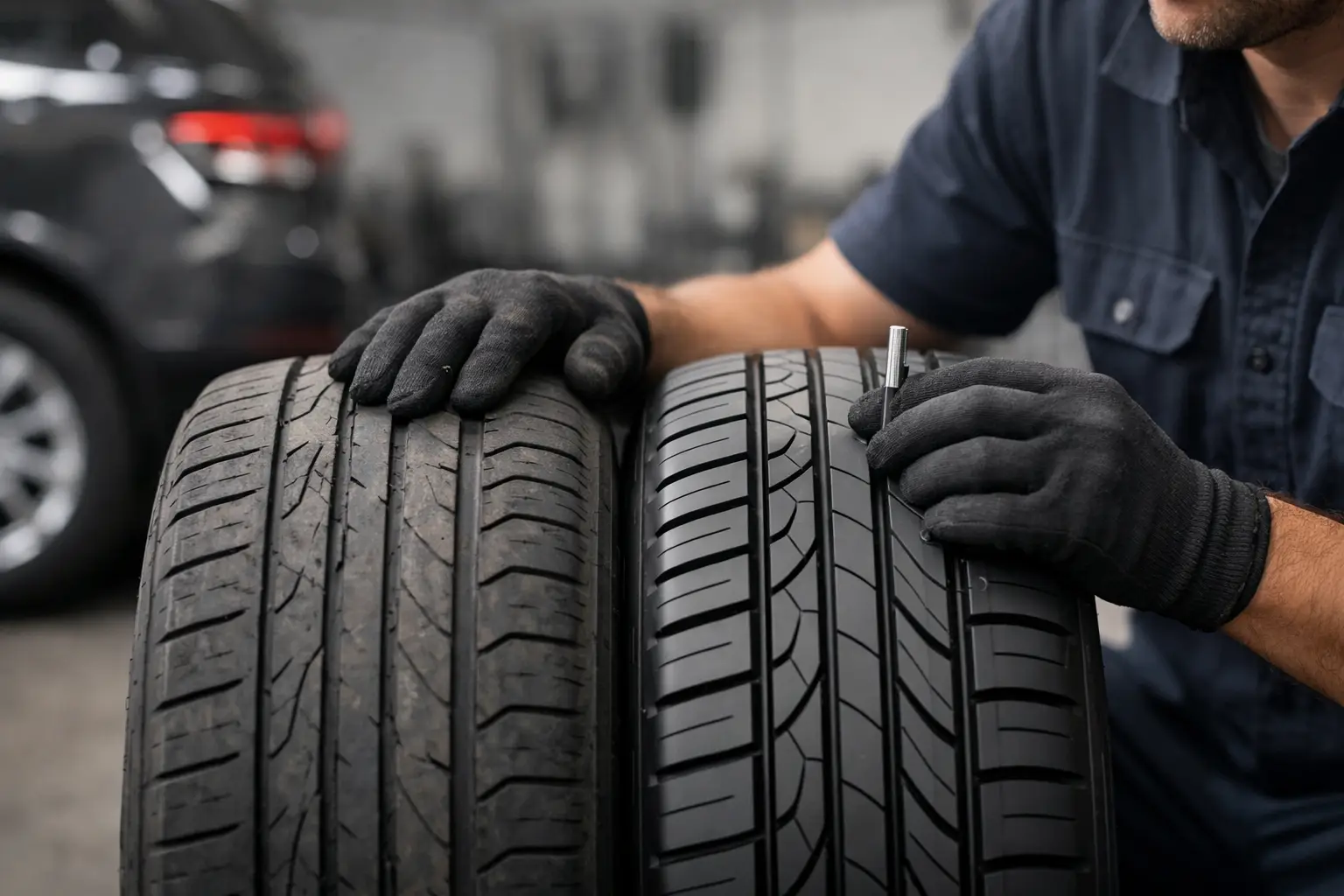
A tyre can look passable on the driveway and still be the weak point of the car at 70mph in heavy rain. If you are asking when should tyres be replaced, the honest answer is not just when they go flat or fail an MOT. Wear, age, damage, and how the vehicle is used all matter.
For some drivers, replacement comes down to tread depth. For others, it is sidewall damage, uneven wear caused by alignment issues, or cracking that shows the rubber is past its best. The right time to replace a tyre depends on condition, not guesswork, and getting it right affects braking, grip, comfort, and safety.
When should tyres be replaced by law?
In the UK, the legal minimum tread depth for car tyres is 1.6mm across the central three-quarters of the tyre, around the entire circumference. If a tyre drops below that, it is illegal for road use. That is the hard legal line, but it should not be your target.
A tyre at 1.6mm has far less wet-weather performance than the same tyre at 3mm. Stopping distances increase, aquaplaning resistance drops, and the car can feel less secure in standing water. That is why many specialists recommend planning replacement before the legal limit is reached, especially if you do regular motorway miles or carry family, tools, or heavy loads.
If you drive a van or a heavier vehicle, tyre condition matters even more. Extra weight puts more stress on the casing and can accelerate wear. Commercial users should keep a close eye on tread depth and shoulder wear rather than waiting for the annual test to flag an issue.
When should tyres be replaced for safety rather than legality?
The practical answer is often earlier than people expect. Once a tyre is down to around 3mm, wet grip starts to fall away more noticeably. In dry conditions, many drivers may not feel a dramatic difference, which is part of the problem. Tyres usually become less capable gradually, so performance can deteriorate before the driver realises it.
If most of your driving is local and low speed, you may decide to use more of the tyre’s remaining life. If you spend a lot of time on A-roads, motorways, or rural roads in poor weather, replacing earlier is the better call. The same applies to performance cars, SUVs, and premium vehicles where tyre choice and condition have a clear effect on handling and braking.
This is where expert inspection matters. Two tyres with the same measured tread can behave differently if one has hardened with age, suffered impact damage, or worn unevenly due to incorrect pressures.
Signs your tyres need replacing
Tread depth is only one part of the picture. A tyre should also be replaced if there is visible damage or deterioration that affects its structure.
Cuts, bulges, and exposed cords are straightforward warning signs. A bulge in the sidewall usually means internal damage, often from a pothole or kerb impact. That tyre is no longer trustworthy and should be changed, not monitored.
Cracking is another common issue, especially on vehicles that cover low annual mileage, sit for long periods, or are used seasonally. Fine surface cracking does not always mean immediate failure, but if cracks are widespread or deep, the rubber is ageing and losing flexibility.
Uneven wear is also a reason to act. If the inside edge is bald while the rest of the tread looks usable, the tyre may technically still have life in places, but it is no longer wearing correctly. That usually points to alignment, suspension, or pressure problems. Replacing the tyre without addressing the cause just leads to the same result again.
Tyres can also become noisy, harsh, or vague through age and wear. Drivers often put that down to road surfaces or assume the car is just getting older. In reality, a worn or hardened tyre can make the whole vehicle feel less composed.
How old is too old?
Tyre age is one of the most overlooked factors. Even if tread depth looks healthy, rubber changes over time. Heat cycles, UV exposure, storage conditions, and lack of use all affect the compound.
There is no single age at which every tyre must be replaced regardless of condition, but age should absolutely be part of the decision. Many manufacturers and industry bodies advise close inspection from around five years old, with replacement often considered around the ten-year mark at the latest. In practice, plenty of tyres should be replaced earlier because condition, not calendar age alone, is what counts.
This catches out owners of second cars, caravans, performance cars used only in summer, and low-mileage vehicles. They may have plenty of tread left but still be running on old rubber that has started to harden and crack. A tyre with 6mm of tread is not automatically a good tyre if it is ageing badly.
You can check tyre age from the DOT code on the sidewall. The last four digits show the week and year of manufacture. For example, 2421 means week 24 of 2021.
When should tyres be replaced in pairs or as a full set?
If one tyre is damaged beyond repair, replacing a single tyre may be possible, but only if the matching tyre on the same axle is in good condition and has similar remaining tread. In many cases, replacing tyres in pairs is the better option.
That is because tyres on the same axle should have closely matched grip levels and rolling characteristics. Mixing a brand new tyre with a heavily worn one can upset balance and predictability, particularly in wet conditions. On performance and four-wheel-drive vehicles, tread difference matters even more and can affect drivetrain behaviour.
A full set is not always necessary, but it can make sense if all four are from the same age range and nearing replacement anyway. It also gives you a clean baseline for rotation, alignment checks, and consistent handling.
What shortens tyre life?
Some tyres wear out early because of mileage. Others wear out early because something is wrong.
Incorrect tyre pressures are one of the biggest causes. Underinflation increases heat and shoulder wear. Overinflation can reduce the contact patch and wear the centre tread faster. Fast road driving, heavy loads, repeated kerb contact, poor alignment, and worn suspension components all take a toll as well.
Tyre choice matters too. A softer compound performance tyre will not last like a touring tyre, but that trade-off is built into the design. If you want sharper grip and steering response, shorter life is often part of the package. The key is choosing the right tyre for the vehicle and the way it is actually driven, not just the cheapest or the sportiest option on paper.
Can a damaged tyre be repaired instead of replaced?
Sometimes, yes. A simple puncture in the central tread area may be repairable if the tyre has not been driven on while flat and the internal structure is sound. But repairs have limits.
If the damage is in the sidewall, near the shoulder, or the tyre has suffered internal deterioration, replacement is the correct answer. The same goes for bulges, splits, exposed cords, or severe irregular wear. A proper inspection from the inside is often the only way to know whether a repair is safe.
This is why a quick look in a car park is not enough. A tyre may hold air and still be unfit for continued use.
When should tyres be replaced if you are upgrading wheels?
Wheel changes are a good time to reassess tyre condition properly. If you are moving to a different wheel size, changing to a wider fitment, or fitting refurbished alloys, worn or ageing tyres can spoil the result.
This applies just as much to premium marques and enthusiast cars as it does to everyday vehicles. Correct load rating, speed rating, rolling radius, and physical clearance all need to be right. A tyre that is technically the right size but poorly suited to the wheel or vehicle can cause rubbing, vague steering, or unnecessary wear.
If you are already spending money on wheels or workshop fitting, it often makes more sense to fit tyres that match the job rather than reusing rubber that is halfway through its life or already showing signs of age.
A practical rule of thumb
If a tyre is below 3mm, visibly damaged, cracking with age, or wearing unevenly, it is time to stop stretching it and start planning replacement. If you are unsure, have the tyres checked properly rather than relying on appearance alone.
Good tyres do more than keep the car legal. They protect the way it brakes, steers, and puts power down when the road turns greasy, the potholes get deeper, or the load in the boot is heavier than usual. Replacing them at the right time is not being cautious for the sake of it. It is simply keeping the vehicle working as it should.