
Commercial Tyre Sizes Explained for UK Fleets

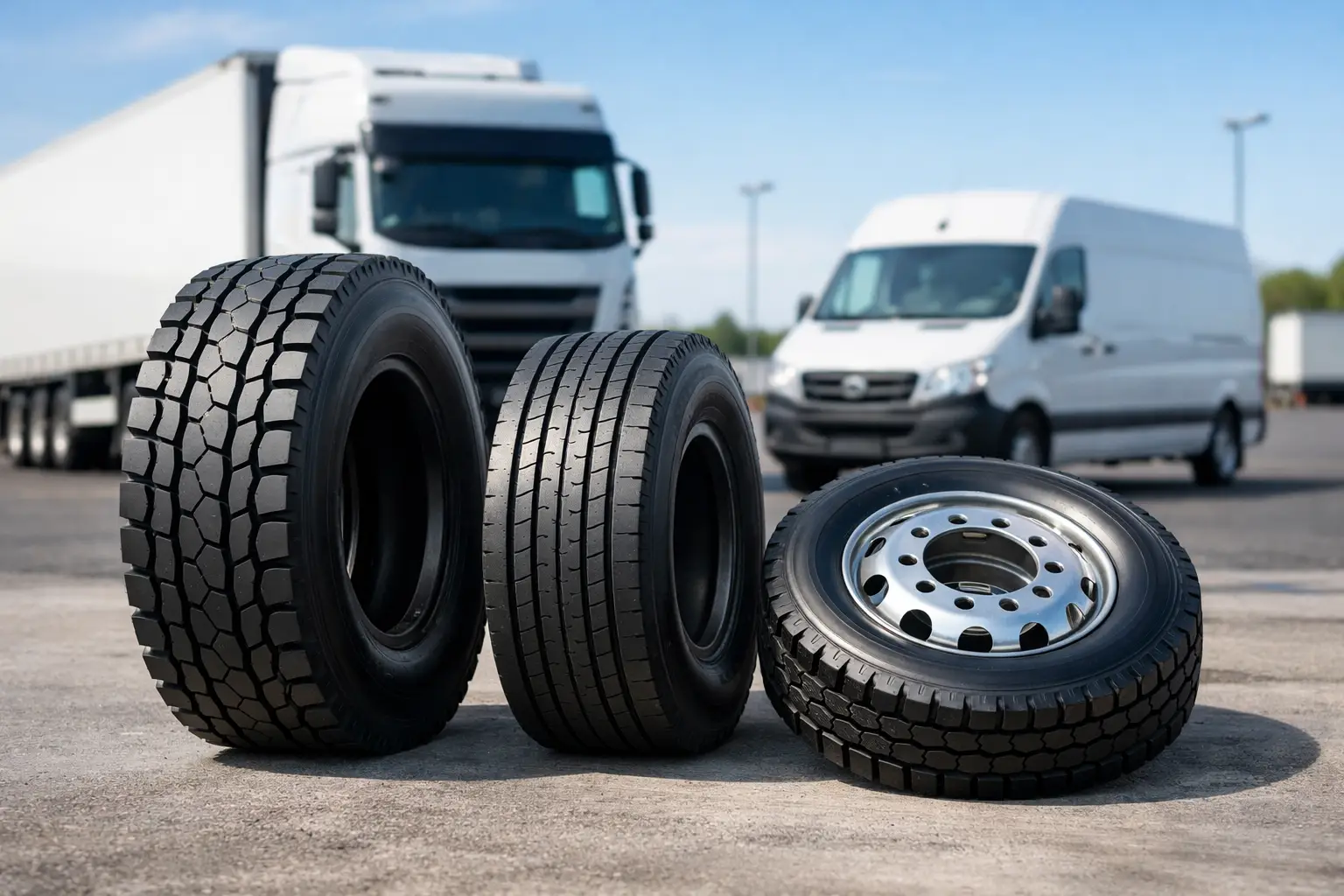
A van tyre that looks right is not necessarily rated for the job. Loading a standard passenger-car tyre onto a working van can lead to excessive flex, uneven wear and, in the worst case, tyre failure. Commercial tyre sizes tell you far more than the diameter of the wheel – they identify the tyre’s width, profile, construction, load capacity and permitted speed.
For tradespeople, delivery drivers and fleet operators, choosing the correct commercial tyre sizes is a practical safety decision. The right specification helps the vehicle carry its load predictably, brake effectively and stay productive between tyre changes. It also avoids the false economy of fitting a cheaper tyre that is not designed for commercial use.
How to read commercial tyre sizes
Take a common example: 215/65 R16C 109/107T. Every part of this marking matters.
215 is the tyre’s nominal width in millimetres. 65 is the aspect ratio, meaning the sidewall height is 65% of the tyre width. A lower number generally means a shorter, firmer sidewall, while a higher number gives more sidewall depth.
R16 means radial construction for a 16-inch wheel. Nearly every modern van tyre is radial, but the rim diameter must match exactly. A 16-inch tyre will not fit a 15-inch or 17-inch wheel, regardless of how close the rest of the figures appear.
The C is especially relevant. It stands for commercial and identifies a tyre built for light commercial vehicle use. Compared with a typical car tyre, a C-rated tyre usually has stronger casing construction and is intended to cope with higher loads and sustained working use.
Finally, 109/107T gives the load and speed information. The two load figures are common on tyres suitable for single and twin rear-wheel applications. The speed symbol, T in this case, indicates the tyre’s maximum approved speed when used within its load and inflation limits.
Why the load index matters more than the tread pattern
It is easy to focus on tread design, brand or price first. For a commercial vehicle, load index must come before all of them. The load index is a coded figure that corresponds to the maximum weight one tyre can carry at its stated pressure.
The vehicle manufacturer’s handbook, door shut sticker or tyre placard will show the approved tyre specification and pressures. This is the starting point, not a suggestion. A replacement tyre should meet or exceed the required load index, unless a vehicle manufacturer-approved alternative has been specified.
A van may feel perfectly normal when empty on an under-rated tyre. The problem appears when it is loaded with tools, stock, equipment or towing weight. The tyre then runs hotter, its sidewall works harder and its ability to deal with potholes and kerbs is reduced. Commercial vehicles often operate close to their weight limits, so there is little room for guesswork.
Extra Load, marked XL, and commercial, marked C, are not interchangeable labels. An XL passenger tyre has a higher load capability than a standard passenger tyre of the same size, but it is not automatically the correct replacement for a C-rated van tyre. Check the vehicle requirement, load index, speed rating and intended use as a complete specification.
Single and twin rear-wheel tyres
Some larger vans use twin rear wheels on the rear axle. Their tyres may show two load indices, such as 109/107. The higher figure applies when the tyre is used singly, while the lower figure applies in a twin-wheel arrangement. This is because two tyres fitted closely together generate more heat and do not carry load in precisely the same way as a single tyre.
If you run a twin-wheel van, matching tyres across each axle is particularly important. Differences in size, tread depth or construction can affect how the load is shared and accelerate wear.
Size changes: what is safe and what causes problems?
There are occasions when an alternative commercial tyre size is suitable, particularly where a manufacturer has approved more than one wheel and tyre package. However, changing size simply because another tyre is available or cheaper can create issues with clearance, speedometer accuracy, handling and insurance.
The overall rolling diameter is the key figure. A substantially taller tyre can contact the wheel arch, suspension or steering components, especially at full lock or under load. A smaller rolling diameter can make the speedometer read differently and may alter gearing. On an ABS- and traction-control-equipped van, a poorly chosen size can also interfere with how electronic systems interpret wheel speed.
Wheel width and offset matter as well. A tyre may technically mount to a wheel but still sit incorrectly under the arch. This is one reason tyre and wheel fitment should be considered together rather than as separate purchases.
For working vans, retaining the manufacturer size is usually the most straightforward route. Where an approved alternative is being considered, check the load rating, rolling circumference, wheel suitability and clearance before ordering.
Choosing the right commercial tyre for the work
The correct commercial tyre is not always the most expensive one or the one with the most aggressive-looking tread. It depends on the vehicle’s daily work.
A local plumber’s compact van, used mostly on urban roads with regular stop-start driving, will have different demands from a long-wheelbase delivery van covering motorway miles. The first may prioritise kerb resistance, wet braking and durability through repeated manoeuvres. The second may benefit more from low rolling resistance, stable loaded handling and long, even wear.
For vehicles that regularly visit muddy sites, farms or unmade access roads, an all-season or all-terrain commercial pattern can be a sensible choice. There is a trade-off: tyres designed for loose surfaces may create more road noise or use more fuel than a road-focused pattern. They should be chosen for the conditions actually encountered, not the occasional difficult lane.
Seasonal use deserves attention too. UK winter weather is often wet rather than deeply snowy, but a properly rated all-season commercial tyre can offer reassuring grip when temperatures fall and roads become cold, greasy or slushy. For vans operating year-round with no spare vehicle, that extra margin can be valuable.
Inflation pressure is part of tyre fitment
A correctly sized commercial tyre still needs the correct pressure. Under-inflation is one of the fastest ways to damage a van tyre because it increases heat and wears the shoulders of the tread. Over-inflation can reduce the contact patch, make the ride harsher and wear the centre of the tread more quickly.
Many vans have different recommended pressures for light-load and fully laden use. Use the vehicle-specific information, check pressures when tyres are cold and include the spare wheel where fitted. A monthly check is sensible, but high-mileage commercial vehicles should be checked more often.
After fitting, watch for steering pull, vibration or unusual wear. These can point to wheel alignment, suspension wear, incorrect balancing or damage caused by kerb strikes. Replacing tyres without correcting the underlying issue only shortens the life of the next set.
When matching tyres matters
On a two-wheel-drive van, matching tyres across the same axle is good practice for balanced braking and handling. On four-wheel-drive vehicles, it becomes even more critical. Significant differences in tyre size or tread depth can place unwanted strain on the drivetrain, depending on the vehicle system.
Part-worn commercial tyres can offer value in the right circumstances, but they need particularly careful inspection. The tyre must have adequate legal tread depth, no structural damage, no unsafe repairs and a load and speed rating suitable for the vehicle. For heavily loaded or long-distance work, many operators prefer new tyres for the reassurance of known history and full usable tread.
The Tyre Barn can help confirm the right commercial tyre size, load rating and fitment for your van or fleet vehicle before fitting. Bring the vehicle registration, current tyre markings and a clear idea of how the vehicle is loaded and used. That short conversation can prevent a costly mismatch and keep the van doing the work it was bought for.