
Choosing Tyres for Mercedes C Class Properly

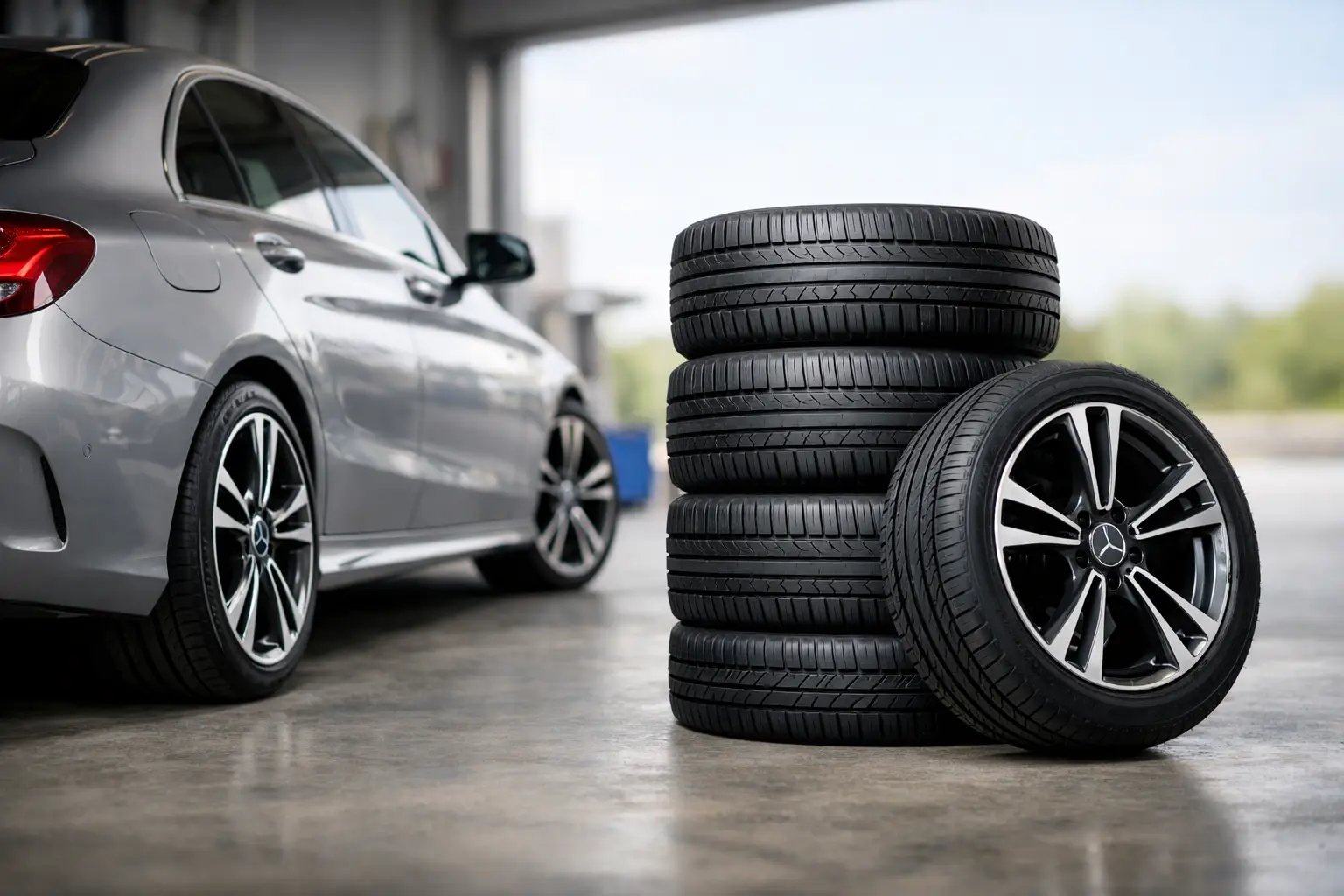
A Mercedes C-Class can feel noticeably different after a tyre change. Sharper steering, a quieter motorway run and better wet-weather confidence are all possible – but only when the specification is right. Choosing tyres for Mercedes C Class is not simply a matter of matching the diameter shown on the sidewall. The model generation, wheel size, engine output, suspension set-up and whether the car has staggered wheels can all affect the correct choice.
For everyday replacement tyres, the aim is straightforward: retain the vehicle’s approved size, load index and speed rating, then choose a tyre that suits how and where you drive. For an AMG-line car, a performance model or a C-Class fitted with aftermarket alloys, fitment needs a closer look before anything is ordered or fitted.
Start with the tyre size fitted to your C-Class
The tyre size is printed on the sidewall in a format such as 225/45 R18 95Y. The first figure is the tyre width in millimetres, the second is the profile, R18 is the wheel diameter, and the final figures show the load and speed ratings. Every part of that marking matters.
C-Class tyre sizes vary considerably. Depending on the age and specification of the car, factory wheel diameters may range from smaller 16-inch wheels to 18- or 19-inch options. A standard saloon may use the same size front and rear, while a sportier specification can have a wider rear wheel and tyre. The C-Class Estate can also have different approved options from the saloon.
The most reliable starting points are the tyre placard, usually found inside the driver’s door area or fuel filler flap, and the vehicle handbook. These show the sizes approved for that particular car. The existing tyres can be useful reference, but do not assume they are correct just because they are already fitted. Cars with used wheels or previous aftermarket work sometimes arrive with a size that is unsuitable for the rim, arch clearance or intended load.
Why load and speed ratings are not optional details
A tyre’s load index shows the maximum weight it can support, while its speed rating indicates the maximum speed it is designed to handle under controlled conditions. Both must meet or exceed Mercedes’ specification for the vehicle.
It can be tempting to focus only on width and diameter, especially when comparing prices. A tyre with the right physical size but an insufficient load rating is not an equivalent replacement. This is particularly relevant for diesel models, plug-in hybrids and estates regularly carrying passengers, tools or luggage.
Speed ratings are equally relevant, even if you never intend to approach the rating itself. They form part of the tyre’s overall construction and capability. Reducing the rating to save money can compromise compliance and the driving characteristics Mercedes engineered into the car.
If you are fitting winter tyres, there are circumstances where a different speed rating may be appropriate, provided this is handled properly and complies with the vehicle requirements. That is a fitment question worth checking rather than guessing.
Mercedes markings and run-flat tyres
Some tyres are supplied with Mercedes-Benz approval markings, commonly including MO, while certain extended-mobility tyres may carry MOE markings. These tyres have been developed and approved for particular Mercedes applications. They can be an excellent choice where the correct marked tyre is available, especially for owners wanting to retain the original driving feel.
However, an MO marking is not the only route to a suitable tyre. A quality tyre in the correct approved size, load and speed rating can also be appropriate. The best option depends on the car, whether it has run-flat tyres from factory, your wheel specification and your priorities for comfort, grip and cost.
Run-flat tyres deserve particular care. Some C-Class models use them alongside a tyre pressure monitoring system and may not have a spare wheel. Changing from run-flats to conventional tyres can improve ride comfort and sometimes reduce cost, but it changes what happens after a puncture. You may need a suitable repair kit, space-saver arrangement or roadside assistance plan. It is a practical decision, not just a tyre choice.
Match the tyre to the way you use the car
The right tyres for a C-Class used for short local trips will not always be the same as the best set for regular motorway mileage or enthusiastic weekend driving.
A premium touring tyre is usually a strong all-round choice for most drivers. It is designed to balance wet grip, road noise, ride quality and tread life. This suits the C-Class well, as the car is expected to be refined without feeling detached from the road.
Performance tyres make sense for drivers who value turn-in response, braking feel and grip on a more powerful C-Class or AMG variant. The trade-off can be faster wear, firmer ride quality and a higher purchase price. A very sporty tyre is not automatically the sensible option for a car covering high annual mileage on uneven local roads.
Budget tyres can reduce the immediate cost, but performance can vary widely, particularly in heavy rain and colder temperatures. Tyres are the only contact between the car and the road, so their quality has a direct effect on stopping distance and stability. A mid-range or premium tyre can represent better value over its life when it offers more predictable grip and wears evenly.
For low-mileage vehicles, part-worn tyres may be a practical option when sourced from a reputable specialist. The tyre must be properly inspected for repairs, damage, uneven wear, age and remaining tread depth. It also still needs to match the correct size, load and speed specification. A cheap tyre is not a saving if it creates a safety or fitment problem.
Staggered tyres and AMG wheel set-ups
Many C-Class owners choose larger alloys for appearance and handling, and some factory AMG-line or AMG models are fitted with staggered wheels. This means the rear wheels and tyres are wider than those at the front.
A staggered arrangement can give a planted rear-end feel and suit the proportions of the car, but it removes the option to rotate tyres front to rear. Rear tyres may therefore wear faster, particularly on rear-wheel-drive C-Class models. The front and rear tyre sizes must be matched to the wheel widths and rolling-radius requirements, not selected simply because they look aggressive.
When changing wheel diameter, the tyre profile normally needs to reduce to keep the overall rolling circumference close to standard. Getting this wrong can affect speedometer accuracy, gearing, wheel-arch clearance and the operation of driver-assistance systems. Offset, centre bore, bolt pattern and brake clearance matter just as much as tyre size when fitting replacement or upgraded alloys.
This is where specialist advice saves time. A properly matched wheel and tyre package should clear the brakes and arches, sit correctly on the hub and maintain sensible rolling dimensions without relying on guesswork.
Check condition before replacing only one tyre
A puncture does not always mean a full set is needed. If the opposite tyre on the same axle has plenty of even wear remaining, replacing one may be possible. Yet it is often better to replace tyres in axle pairs, particularly when the remaining tyre is significantly worn or when the car is sensitive to differences in grip and circumference.
On a rear-wheel-drive C-Class, fitting the better pair at the rear can help maintain stability in wet conditions. On 4MATIC models, tyre circumference is more critical because substantial differences in wear or size can place unnecessary strain on drivetrain components. Always check the manufacturer guidance and seek advice if one tyre needs replacing on an all-wheel-drive vehicle.
Tyres should also be checked for inner-edge wear, sidewall damage, cracks and irregular tread patterns. Uneven wear can point to incorrect alignment, worn suspension components or a wheel issue. Replacing tyres without addressing the cause can lead to the new set wearing prematurely.
Do not wait for the legal minimum
The UK legal minimum tread depth is 1.6mm across the central three-quarters of the tyre, around its full circumference. By that point, wet-weather performance can be markedly reduced. Many drivers choose to replace tyres closer to 3mm, particularly before autumn and winter when standing water is more common.
Pressure checks matter too. Underinflation increases shoulder wear, fuel use and heat build-up, while overinflation can reduce the contact patch and wear the centre of the tread. Check pressures when the tyres are cold and use the settings specified for your C-Class load condition.
For C-Class owners in Dorset, a fitting inspection can also be useful after pothole damage or kerb contact. A tyre may look fine at first glance while the wheel has a slight buckle, the sidewall has been weakened or the alignment has shifted.
The Tyre Barn can help match the right tyre size to your Mercedes wheels, whether you need a single replacement, a complete set, part-worn options or advice on an alloy upgrade. Bring the vehicle details, current tyre markings and any wheel specifications you have – a few minutes spent confirming fitment is far better than living with the wrong tyres for thousands of miles.