
How to Find Tyre Age: Read the DOT Date Code

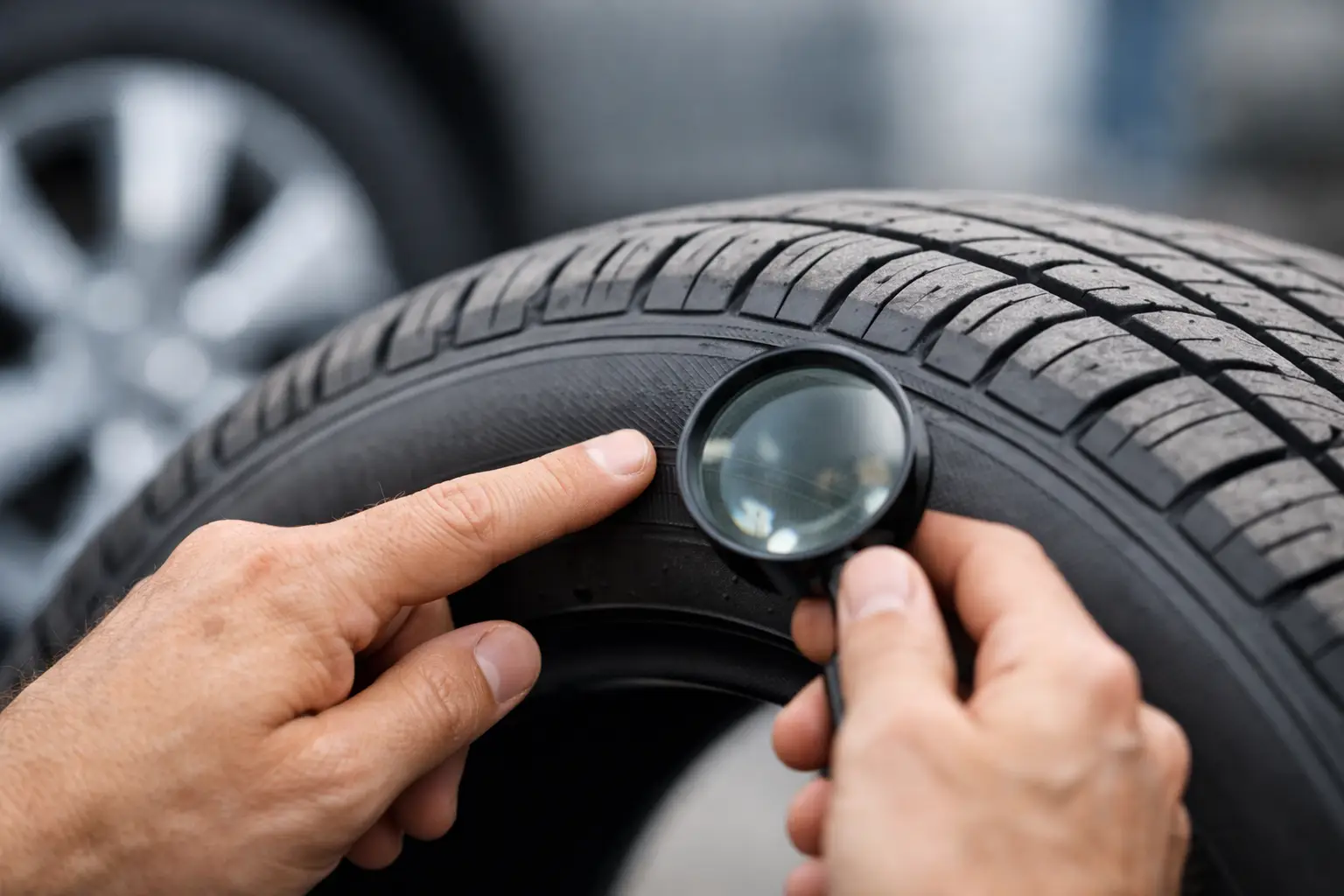
A tyre can look almost new and still be far older than you expect. This matters most when buying part-worn tyres, fitting a spare that has lived in the boot for years, or assessing a car that has covered very few miles. Learning how to find tyre age takes less than a minute once you know where to look, but the date is only one part of deciding whether that tyre is suitable for the road.
How to find tyre age on the sidewall
Look closely at the tyre sidewall for a sequence beginning with DOT. This is the Department of Transportation marking, and the final four digits of that code show when the tyre was manufactured.
The date is written as a week number followed by a year. For example, a tyre ending in 2323 was made in the 23rd week of 2023. A code of 4819 means the 48th week of 2019.
The complete DOT code is often quite long, containing factory and product information before the date. You only need the final four digits. They may be stamped inside a small oval shape at the end of the sequence.
On many tyres, the full date code appears on one sidewall only. If you cannot find it on the outward-facing side, turn the steering to inspect the inner edge on the front tyres, or check the inside face when the wheel is removed. This is particularly common with tyres fitted to alloy wheels where the external sidewall is designed to look cleaner.
What if there are only three digits?
A three-digit date code means the tyre was made before 2000. For example, 328 would refer to the 32nd week of a year ending in 8. There is no practical case for fitting a tyre of this age to a road vehicle, regardless of how much tread appears to remain. Rubber, bonding materials and internal construction all deteriorate with time.
If the sidewall is too dirty to read, wipe it with a damp cloth rather than using aggressive chemicals. The code is moulded into the rubber, so it should become clear once road grime is removed.
Why tyre age matters alongside tread depth
Tread depth tells you how much usable pattern is left. Tyre age gives you a clue about the condition of the rubber and the materials beneath it. Both matter.
As tyres get older, exposure to oxygen, heat, sunlight and repeated flexing can cause the compound to harden. The tyre may lose some of the grip and wet-weather performance it had when new. Fine cracking can develop in the sidewall, around the tread blocks or between grooves. In more serious cases, the bonds within the tyre can weaken.
A lightly used car is not automatically kinder to its tyres. A vehicle that spends long periods parked outside, or one used only for short local trips, may wear very little tread while its tyres continue to age. The same applies to caravans, trailers, motorhomes and spare wheels.
There is no single birthday at which every tyre becomes unsafe. Storage conditions, mileage, driving style, tyre quality and previous repairs all affect the decision. A correctly stored, unused tyre may remain in better condition than a neglected tyre of the same age that has spent years exposed to weather. That said, age should prompt a more careful inspection, not be ignored because the tread looks healthy.
A practical way to assess an older tyre
Once you have checked the manufacture date, inspect the tyre in good light. Look for cracking on both sidewalls, cuts, bulges, exposed cords, irregular tread wear and objects embedded in the rubber. Check the grooves as well as the shoulder, where damage and wear can be missed at a quick glance.
Pay particular attention to cracking near the bead area and between tread blocks. Surface marks are not always a reason to replace a tyre immediately, but deeper splits, widespread cracking or any bulge require professional assessment. A bulge can indicate damaged internal cords and should not be treated as a cosmetic issue.
Also consider how the tyre has been used. A tyre from a high-performance car may have good central tread but show heavy shoulder wear from enthusiastic cornering. Tyres on heavy SUVs, electric vehicles and vans can also carry greater loads, so their load rating, wear pattern and general condition deserve close scrutiny.
For road use in the UK, the legal minimum tread depth is 1.6mm across the central three-quarters of the tread, around the full circumference. However, waiting until a tyre reaches the legal limit is rarely the best plan for wet-weather confidence. Drainage and grip reduce as the grooves become shallower, particularly in standing water.
Tyre age when buying part-worn tyres
Part-worn tyres can be a sensible option when budget is tight or when you need to match an existing tyre on an axle. They are not all equal, though. The manufacture date should always be checked alongside tread depth, brand, damage history and the reason the tyre was removed from its previous vehicle.
A newer premium part-worn tyre with even wear and a clean inspection history can be a better choice than a much older tyre with deeper tread. Equally, a tyre that is only a few years old may still be unsuitable if it has repairs in the wrong area, signs of structural damage or an incorrect load or speed rating for your vehicle.
Avoid buying based on photographs alone where possible. The date code may not be visible in an image, and small cracks can be difficult to judge remotely. If you are selecting tyres for a four-wheel-drive vehicle, a performance car or a vehicle with staggered wheel sizes, matching size, specification and rolling circumference is especially important. The cheapest available tyre is not necessarily the right fitment.
Do not forget the spare tyre
The spare is often the oldest tyre on the vehicle. It may have covered no miles at all, but it has still been exposed to temperature changes, moisture and years of storage. Check its date code when you check the other four tyres, particularly before a long journey or holiday.
If your vehicle has a space-saver spare, follow the speed and distance restrictions marked on its sidewall or wheel. It is designed to get you safely to a repair or replacement, not to become a permanent fifth tyre.
When to ask for a professional inspection
Seek advice if the tyre is older than you expected, has visible cracking, has been stored for a long period, or you are unsure whether a mark is superficial. This is also sensible after a heavy pothole impact, kerb strike or puncture, as internal damage is not always visible from the outside.
A proper inspection should consider more than the date code. A technician can check for uneven wear caused by alignment issues, assess whether a puncture repair meets the correct standard, confirm load and speed ratings, and make sure the tyre is suitable for the wheel and vehicle. This is valuable when changing wheel sizes or fitting used alloys, where tyre clearance and fitment must be right.
At The Tyre Barn in Wimborne, our team can inspect tyres during fitting and help you choose a suitable new or part-worn replacement for your vehicle. Bring the vehicle in if you are uncertain – a clear view of the tyre, wheel and wear pattern gives far better guidance than a date code alone.
A date stamp gives you the tyre’s starting point, not its full story. Read it, inspect the rubber carefully and use a trusted fitter when there is any doubt. That small check can prevent an older-looking-good tyre from becoming an expensive or unsafe surprise.