
Summer Tyres vs All Season: Which Fits?

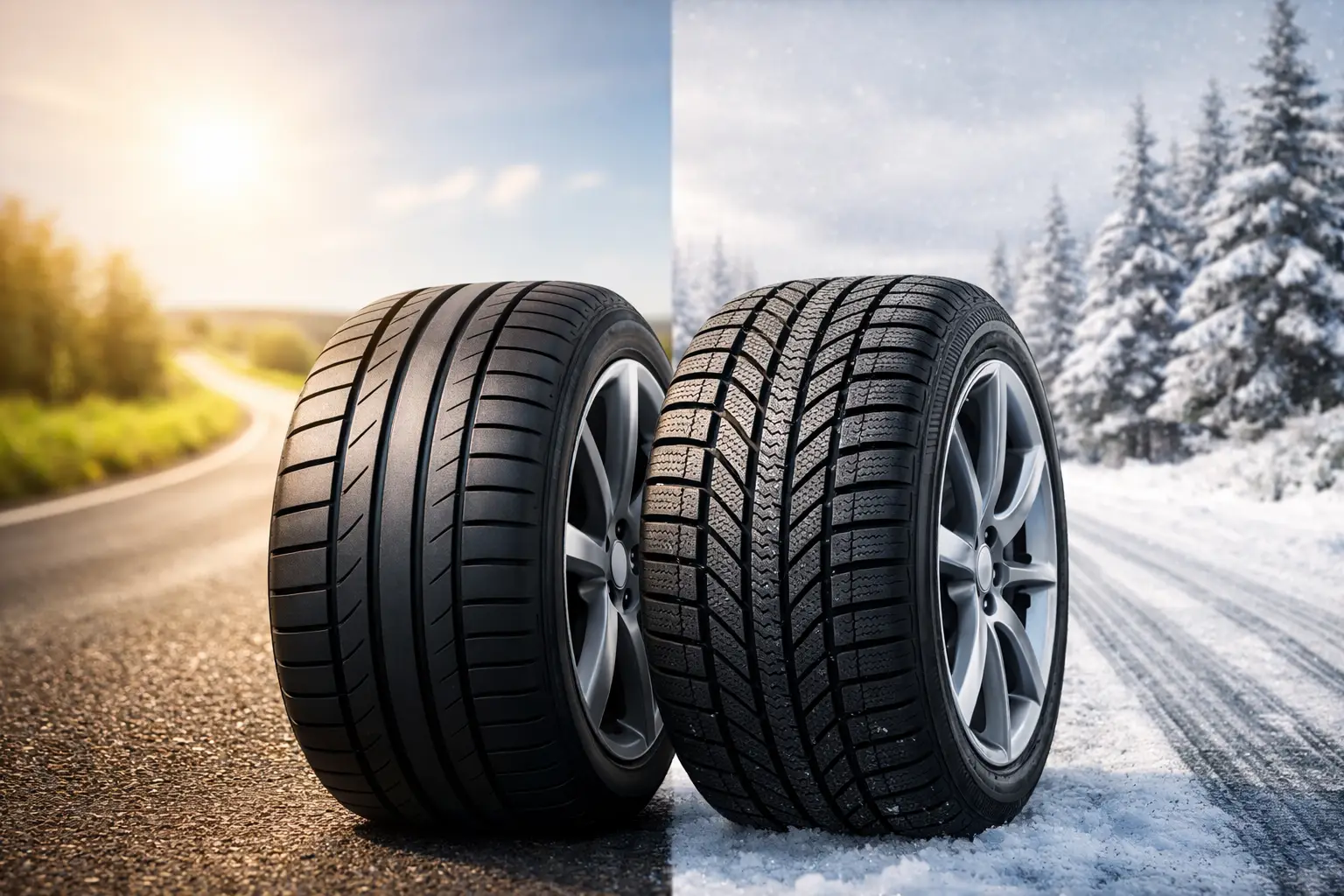
You usually notice the difference between tyre types on a damp roundabout, a hot motorway run, or the first cold snap of the year. That is where the summer tyres vs all season question stops being theoretical and starts affecting braking distance, steering feel and day-to-day confidence.
For UK drivers, the right answer is not always the same. It depends on your car, your mileage, where you drive and whether you want the best performance in a narrower set of conditions or good-enough performance across a wider range. If you drive a premium saloon, a fast hatch or an SUV with larger wheels, tyre choice becomes even more noticeable because weight, power and fitment all make bigger demands on the rubber.
Summer tyres vs all season: the real difference
Summer tyres are built to work best in warmer conditions. Their rubber compound stays firmer at higher temperatures and their tread pattern is designed to maximise contact with the road. That usually means stronger dry grip, sharper steering response and shorter braking distances in mild to hot weather. In heavy rain, a quality summer tyre can also be excellent because the grooves are designed to clear water efficiently while keeping the tread stable.
All season tyres are a compromise by design, but that is not necessarily a criticism. They use a compound that stays more flexible when temperatures drop, and their tread pattern tends to include extra siping to help in cold, wet and lightly wintry conditions. The goal is broad usability rather than peak performance in one season.
If you want the short version, summer tyres tend to be better when temperatures are consistently above 7C and you value precision, grip and braking. All season tyres tend to suit drivers who want one set of tyres left on all year and who regularly face mixed conditions.
Where summer tyres make more sense
If most of your driving is standard UK commuting, A-roads, motorway miles and fair-weather family use, summer tyres often remain the strongest option for much of the year. They generally feel more stable under load, particularly on heavier cars and performance models. If you drive an Audi, BMW, Mercedes or Porsche, you will often notice that summer tyres preserve the steering character and road manners the car was designed around.
They also tend to cope better with enthusiastic driving. That does not mean track use alone. It can simply mean brisk road driving, overtaking on country roads or carrying speed confidently through long bends. A good summer tyre gives clearer feedback and usually resists tread squirm better than an all season equivalent.
There is also the matter of braking. In warm and wet conditions, summer tyres often stop shorter. That matters more than outright cornering grip for most drivers. If your priority is emergency stopping performance in spring, summer and early autumn, summer tyres are usually ahead.
The trade-off is cold weather. Once temperatures drop properly, summer compounds lose some flexibility. Grip can reduce, and the tyre may feel less settled on very cold mornings. That does not make them unsafe when used properly and with legal tread, but it does mean they are no longer operating in their ideal window.
When all season tyres are the better fit
All season tyres suit drivers who want simplicity. If you do not want the hassle or cost of changing between seasonal sets, they offer a practical middle ground. In the UK, where winters are often cold, wet and inconsistent rather than extreme, that can make a lot of sense.
They are particularly useful if your driving starts early in the morning, includes untreated side roads, or takes you into rural areas where frost and occasional snow are more likely. A decent all season tyre gives more reassurance in those marginal conditions than a summer tyre usually can.
They can also be a sensible choice for lower annual mileage. If you are not pushing the car hard and you simply want dependable all-year usability, the slight loss in steering sharpness may not matter much to you. Many family hatchbacks, crossovers and daily-driven estates work very well on all season tyres.
That said, all season tyres are still a compromise. In hot weather, they can feel softer and less precise. On more powerful cars, that can become obvious quite quickly. They may also wear differently depending on how and where you drive. A driver who spends long stretches on motorways in summer may find that a proper summer tyre remains the more natural fit.
UK weather complicates the choice
The UK is awkward because it rarely gives you a clean, textbook season. A July downpour can be torrential, and a November morning can start close to freezing then rise into mild afternoon temperatures. That is exactly why the summer tyres vs all season debate is so common.
People often assume all season tyres are automatically better in the UK because it rains so much. That is too simplistic. Wet performance is not the same as winter performance. Many premium summer tyres are excellent in the wet when temperatures are moderate. The difference shows up more when the weather turns properly cold.
So the better question is not whether Britain is wet. It is how often you drive in cold conditions, and how much that matters compared with your need for sharper handling and stronger warm-weather braking.
Think about your car as well as the climate
Tyres do not behave the same way across every vehicle. A lightweight supermini on 16-inch wheels is far less demanding than a heavy SUV on 21-inch alloys. Vehicle weight, power output, suspension setup and wheel size all influence what works best.
On larger premium vehicles, summer tyres often support the chassis more effectively. They feel cleaner through the steering and more controlled under braking. If the car left the factory on a summer-focused fitment, replacing like for like usually preserves the intended balance better than moving to an all season option.
On practical daily drivers, especially those used more for school runs, commuting and shopping than fast road use, all season tyres can be a smart fit. They deliver broad capability without asking the owner to manage two sets.
Fitment accuracy matters too. Load rating, speed rating, sidewall profile and approved sizing all need to be correct. Choosing between summer and all season is only part of the job. The tyre still has to suit the vehicle properly.
Cost, wear and value over time
Many buyers start with price, which is understandable, but tyre value is wider than the cost on the invoice. You need to consider lifespan, fuel efficiency, performance and whether the tyre suits your use in the first place.
Summer tyres can offer very good value if you mostly drive in warmer conditions because you are using the tyre in the environment it was designed for. All season tyres can offer good value if they save you from seasonal swaps and keep you confident year-round.
Neither category is always cheaper to run. Wear depends heavily on driving style, alignment, vehicle weight and tyre quality. Cheap all season tyres often do not deliver the balanced performance people expect, and cheap summer tyres can be noisy, short-lived or poor in the wet. The smarter approach is to buy the right tyre type from a quality range rather than chase the lowest price point.
So which should you choose?
Choose summer tyres if you want the best steering response, stronger warm-weather braking and a tyre that suits motorway use, daily road driving and performance-minded cars when temperatures are mostly above 7C. They are often the right answer for drivers who care how the car feels and who want to keep the vehicle driving as intended.
Choose all season tyres if you want one set all year, regularly drive in cold or mixed conditions, and value convenience as much as outright precision. They make particular sense for practical daily use where winter confidence matters more than the last degree of handling sharpness.
If you are still undecided, think about the weeks of the year when your current tyres feel least convincing. That usually tells you more than any brochure ever will. And if your car has a more specialist fitment, larger wheels or premium manufacturer requirements, getting proper advice before ordering is money well spent.
The right tyre is not the one with the broadest marketing claim. It is the one that matches your car, your roads and the way you actually drive.