
Van Tyre Fitting Dorset That Keeps You Moving

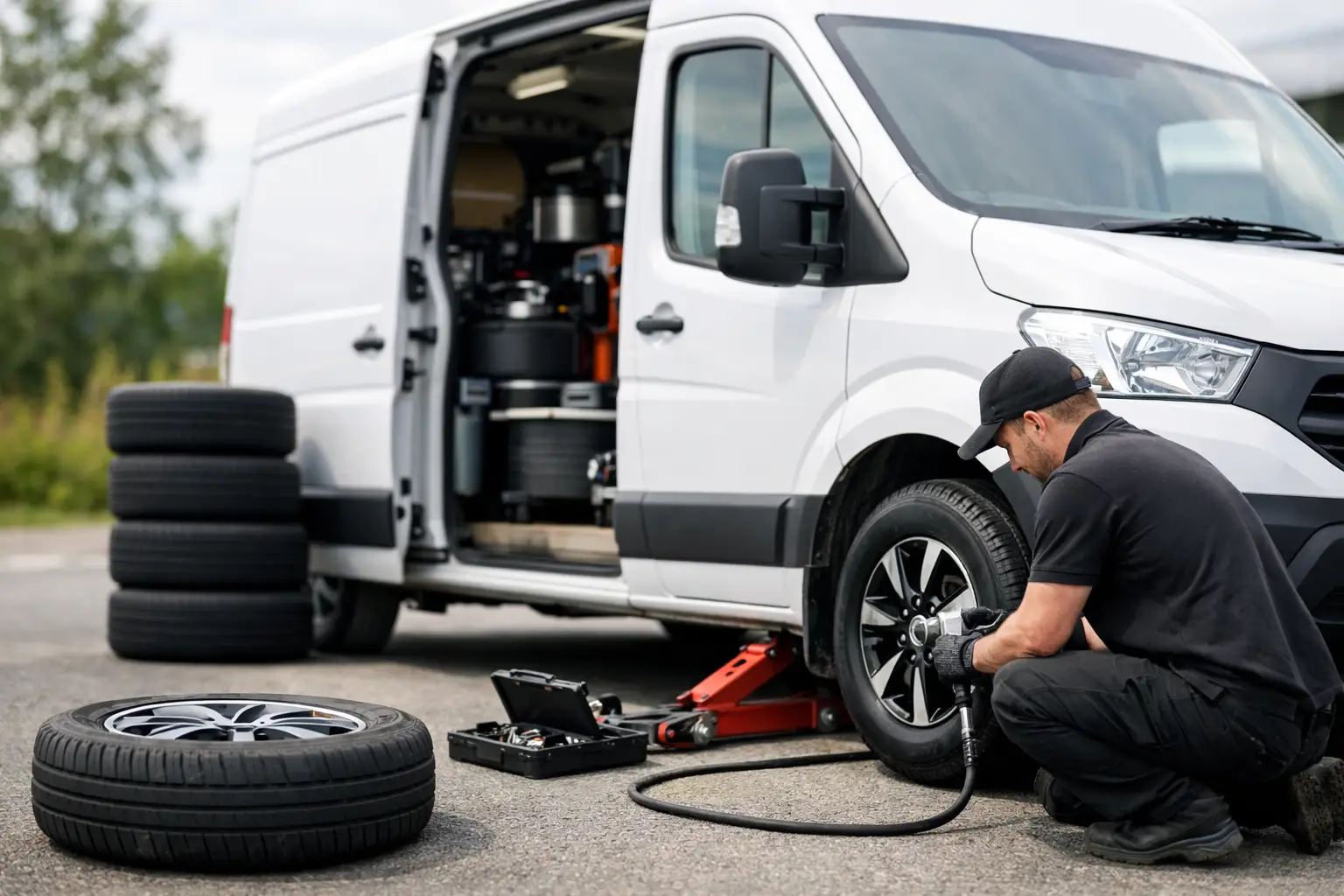
A van tyre failure rarely happens at a convenient time. It happens before an early delivery, halfway through a full day of site visits, or when the vehicle is loaded with tools you cannot leave behind. Proper van tyre fitting Dorset is about more than replacing worn rubber. It is about choosing tyres that suit the weight, mileage and working conditions of the vehicle, then fitting them accurately so the van stays dependable.
For sole traders, fleet managers and businesses with one hard-working van, tyres are a running cost that directly affects safety, fuel use and downtime. The cheapest option can look attractive at the point of purchase, but it is rarely good value if it wears quickly, struggles under load or leaves the vehicle off the road.
Why van tyres need a different approach
A van is not simply a heavier car. Its tyres regularly carry more weight, spend more time on the road and are often used with a changing load. A plumber’s van may be relatively light in the morning and fully laden by lunchtime. A courier vehicle can cover high mileage with frequent stopping, kerb contact and urban driving. A catering or trade van may sit at its maximum working weight for much of the week.
That is why the correct load rating matters. The numbers and letters on a tyre sidewall are not just technical detail. They show the maximum load a tyre is designed to carry and the speed at which it can safely operate at that load. Fitting a tyre with an unsuitable specification can compromise handling, accelerate wear and create an avoidable safety risk.
Commercial tyres are commonly marked with a C, meaning they are constructed for van and light commercial use. Some newer specifications use reinforced or extra-load markings. What is suitable depends on the vehicle, its axle weights, the original equipment specification and how it is actually used. A van that spends most of its life empty may have different needs from one carrying stock, machinery or a regular crew.
Van tyre fitting in Dorset: getting the specification right
Before tyre fitting starts, the right choice should be based on more than wheel diameter. The tyre size, load index and speed rating must match the vehicle’s requirements. You will find this information in the handbook, on the tyre placard or on the existing tyres, although existing tyres should not be treated as proof that the specification is correct.
A professional fitting centre will also consider tyre type. A long-distance motorway van may benefit from a tyre designed for efficient, even wear and lower rolling resistance. A vehicle used around building sites or rural lanes may need stronger sidewalls and a tread pattern that copes better with rougher ground. For local work involving constant starts and stops, durability and wet-weather grip can be more valuable than a headline fuel-saving claim.
Seasonal conditions also deserve thought. Dorset’s coastal roads, rural routes and wet winter mornings can expose the limits of worn or poor-quality tyres quickly. Good water clearance and dependable wet grip are particularly useful when a loaded van is braking on a greasy road. It is worth balancing that against expected mileage and budget rather than buying solely on brand name or the lowest price.
Matching tyres across an axle
Where possible, tyres on the same axle should be the same size, construction and pattern. This gives more predictable braking and handling, particularly when the van is loaded. If only one tyre needs replacing, the matching tyre on the other side should be inspected for age, tread depth, damage and uneven wear before deciding whether a pair is the better option.
For front-wheel-drive vans, the front tyres often wear faster because they handle steering, braking and drive. Rear-wheel-drive vehicles may show a different pattern. Rotation can help in some cases, but only if the manufacturer permits it and the tyres are not directional or staggered. The key is not to move tyres around automatically, but to make the decision based on condition and vehicle requirements.
What proper fitting should include
Tyre fitting is a workshop job where small details matter. The old tyre needs to be removed without damaging the wheel, the bead seats should be checked and cleaned, and the new tyre must be mounted in the correct orientation. A directional or asymmetric tyre fitted incorrectly will not perform as intended.
The wheel should then be balanced. An imbalance may start as a minor vibration through the steering wheel, but over time it can make driving tiring and contribute to irregular tyre wear. The wheel must also be refitted using the correct tightening procedure. Wheel bolts or nuts that are too loose or overtightened can both cause problems.
A useful appointment should include a visual inspection of the tyre and wheel assembly, including the valve condition. Slow pressure loss is often blamed on the tyre itself when the valve, wheel rim or bead seal is the real cause. This is especially relevant for working vans, where kerbs, potholes and site access roads can damage wheels over time.
At The Tyre Barn, the benefit of a specialist fitting centre is that tyre selection, wheel condition and practical fitment checks can be considered together rather than treated as separate jobs.
Do not ignore uneven tyre wear
Replacing a tyre without understanding why it wore out can mean paying for another replacement sooner than expected. Wear concentrated on one edge can point to alignment issues, while wear across both shoulders often suggests persistent underinflation. Excessive wear through the centre may indicate overinflation. Cupping or scalloped wear can be linked to worn suspension components, imbalance or poor damping.
A loaded van exaggerates these issues. Incorrect pressures allow the tyre to flex more than intended, building heat and reducing stability. Overinflation can reduce the contact patch and make the ride harsher, particularly when the vehicle is empty. Manufacturers often provide separate pressure recommendations for normal and fully laden use, so check which applies before setting off.
If the steering wheel is off-centre, the van pulls to one side, or a new tyre starts wearing unevenly, arrange an alignment check. Alignment is not a sales add-on when there is a genuine fault. It is a practical way to protect a new set of tyres and improve the vehicle’s straight-line behaviour.
Choosing between premium, mid-range and part-worn tyres
There is no single answer for every van. Premium tyres can make sense for high-mileage vehicles, heavier loads and businesses where reliability is worth paying for. They are often developed for longer wear, wet grip and consistent performance, though the real value depends on how the van is driven and maintained.
A reputable mid-range tyre can be a sensible choice for lower-mileage vans or owners balancing several running costs. The important point is that it still meets the required size and load specification. Saving money by fitting a passenger-car tyre or a tyre with an inadequate load rating is a false economy.
Part-worn tyres can suit certain budgets, but they need careful assessment. Tread depth alone does not tell the full story. The tyre should be checked for repairs, age-related cracking, uneven wear, sidewall damage and evidence of previous stress. For a commercial vehicle working long hours or carrying heavy loads, a new tyre is often the more reassuring option.
Practical checks between fitting appointments
Tyres last longer when they are monitored, not just replaced at the legal limit. Check pressures when the tyres are cold, ideally every couple of weeks and before long journeys. Include the spare if the van has one. Look for nails, cuts, bulges, damaged sidewalls and stones lodged in the tread.
Also pay attention to how the van feels. New vibration, a pull under braking, reduced steering precision or frequent pressure loss should be investigated rather than worked around. Catching a problem early can prevent a roadside failure and may save a wheel, tyre or suspension repair.
The right van tyre is the one that matches the vehicle’s specification and the work it does every day. Choose accurately, keep pressures correct and act on unusual wear early, and your tyres will do what they should: help the van turn up, carry the load and get home again.