
How Long Does It Take to Fit 4 New Tyres?

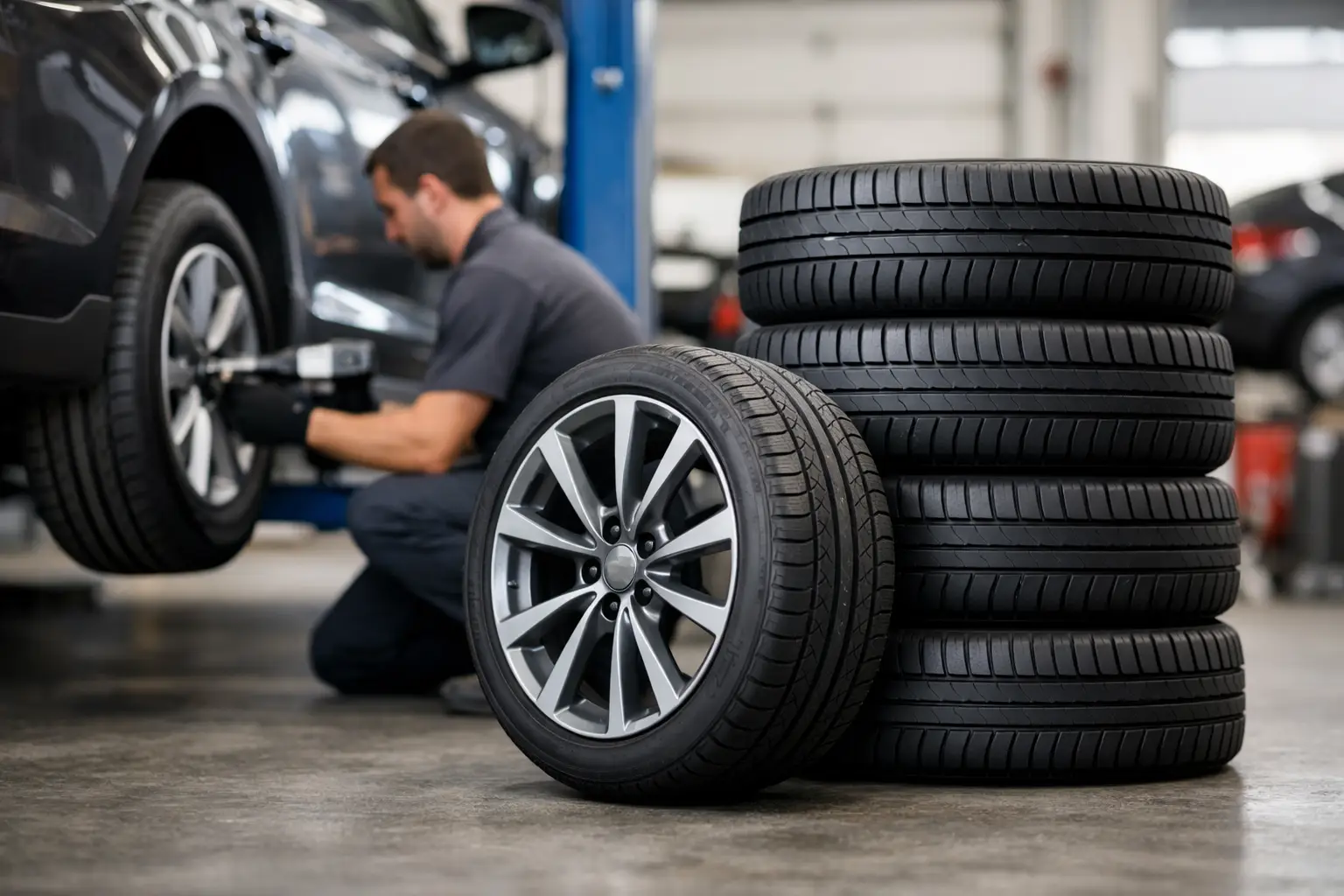
You have booked the car in, cleared an hour in your day, and now you want a straight answer – how long does it take to fit 4 new tyres? In most cases, you should allow 45 to 90 minutes for a full set. That is the realistic window for removing the old tyres, fitting the new ones, balancing all four wheels, refitting them to the vehicle, and carrying out the usual checks.
That said, tyre fitting is one of those jobs where the headline answer is only half the story. Some vehicles are straightforward and can be turned around quickly. Others need extra time because of wheel size, low-profile tyres, locking wheel nut issues, corrosion on the hubs, tyre pressure monitoring systems, or alignment checks. If you are trying to plan your day properly, it helps to know what happens during the appointment and what can slow things down.
How long does it take to fit 4 new tyres in practice?
For a typical passenger car with standard road wheels, fitting 4 new tyres often takes around an hour. If everything comes apart cleanly, the correct tyres are already on site, and there are no complications with balancing or valves, some jobs can be completed a bit quicker.
For larger SUVs, performance cars, vans, and vehicles with bigger alloy wheels, it is sensible to expect closer to 75 to 90 minutes. Wider tyres and stiffer sidewalls usually take more care on the machine, especially where premium wheels need to be handled properly to avoid damage.
If you are also having wheel alignment checked or adjusted, you should factor in extra time. A front tracking adjustment may only add a short delay, but a full geometry check and correction can push the appointment beyond the basic fitting window.
What happens during a 4-tyre fitting appointment?
A proper fitting is more than just swapping rubber over. The vehicle is brought into the workshop, lifted safely, and the wheels are removed. The old tyres come off the rims, the wheel condition is checked, and new valves or service parts are fitted where required.
The new tyres are then mounted, inflated correctly, and balanced. After that, the wheels go back on the vehicle with the correct torque settings. On many modern cars, the fitter will also check or reset the tyre pressure monitoring system if needed.
That process sounds quick on paper, but every step matters. Balancing alone can take longer if a wheel is slightly buckled, has old adhesive residue from previous weights, or needs more careful setup to run smoothly at speed.
What can make tyre fitting take longer?
The biggest reason for delays is usually not the tyres themselves. It is the condition of the wheels and the vehicle hardware.
Locking wheel nuts are a common one. If the key is missing, damaged, or rounded off, the job can slow down very quickly. Corroded wheel hubs or overtightened nuts can also add time, particularly on cars that have not had the wheels off in a while.
Tyre type matters as well. Run-flat tyres and extra-load fitments can be more time-consuming than standard passenger tyres because the sidewalls are stiffer and less forgiving on the machine. Low-profile tyres fitted to larger alloy wheels also need careful handling. That is especially true on premium or refurbished wheels where customers quite rightly expect them to come back without marks.
TPMS can add another layer. Some vehicles simply need sensor awareness and a reset procedure, while others may need valve-mounted sensors transferring or replacing. That is routine work for a specialist, but it still adds minutes to the job.
Then there is alignment. If your old tyres have worn unevenly, your fitter may recommend checking tracking or geometry before sending the car back out. That is not unnecessary upselling – it is often the difference between getting full life from the new set and scrubbing the edges off them far too early.
Does wheel size affect how long it takes to fit 4 new tyres?
Yes, quite often. Smaller steel wheels with regular-profile tyres are usually the quickest combinations to work with. Larger alloys, especially 19-inch, 20-inch and above, can take longer because the tyre fitment is tighter and the margin for careless handling is smaller.
Performance and prestige vehicles often come in with wheel and tyre packages that need more attention. Wider rear fitments, directional tread patterns, staggered setups, and sensitive TPMS systems all call for accuracy. That is not a problem when the workshop knows what it is doing, but it does mean the job should not be rushed just to save ten minutes.
If your car runs aftermarket alloys, the fitting centre may also need to confirm load ratings, valve compatibility, and whether the tyres are being fitted in the correct rotational or axle-specific positions. Again, that is part of proper service, not wasted time.
Should you wait while the tyres are fitted?
Usually, yes. For most standard bookings, waiting on site is perfectly reasonable. If you are having four tyres fitted and nothing else, many drivers simply stay with the vehicle and collect it once the work is done.
The sensible approach is to allow a bit more time than the ideal estimate. If the workshop says about an hour, plan for up to 90 minutes so you are not watching the clock. A good fitting centre would rather give you an honest window than promise a rushed turnaround and then miss it.
If you are fitting tyres to specialist wheels, having alignment done, or bringing in a vehicle with known issues such as damaged locking nuts, it is worth mentioning that when booking. The more information the workshop has, the more accurate the time estimate will be.
Is mobile tyre fitting quicker?
Not necessarily. Mobile fitting can be very convenient, but convenience and speed are not always the same thing. A workshop environment has dedicated machines, balancers, lifts, and access to additional tools if something is seized or awkward.
For straightforward jobs, mobile fitting can be just as efficient. But if the vehicle has a complication, a workshop usually has the advantage. That is particularly relevant for larger wheels, performance fitments, or cars that may need alignment after the tyres are fitted.
Why a rushed tyre fitting is not a good sign
Most drivers want the job done quickly, and that is fair enough. But there is a point where quick becomes careless. A proper tyre fitting should include the basics done correctly – the right tyre size and load rating, correct direction of rotation, accurate balancing, proper inflation, and wheel bolts torqued to spec.
If a full set is being fitted suspiciously fast, it is reasonable to wonder what has been skipped. Was the balancing done properly? Were the old weights removed? Were the valves changed? Was any advice given if the old tyres showed signs of alignment wear?
This is one of those jobs where experience counts. A specialist workshop can work efficiently without cutting corners, which is exactly what most customers want – a sensible turnaround and confidence that the vehicle has been set up properly.
How to keep your tyre appointment on time
A little preparation goes a long way. Check that your locking wheel nut key is in the car before you leave home. If your wheels have had previous damage, refurbishment, or non-standard fitments, mention that when booking.
It also helps to arrive on time and confirm whether you want any extras such as alignment, tyre disposal, or valve replacements included from the outset. If you are choosing tyres online before the appointment, make sure the specification is correct for the vehicle rather than simply picking the cheapest matching size.
For drivers in Dorset who want fitting and stock in one place, that is where a specialist workshop setup makes life easier. A business such as The Tyre Barn can match the right tyres to the vehicle, fit them on site, and flag any wheel or alignment issues there and then rather than sending you elsewhere.
So, what is the real answer?
If you want the shortest honest answer to how long does it take to fit 4 new tyres, allow around 45 to 90 minutes. Nearer 45 minutes is possible for a straightforward car with no issues. Nearer 90 minutes is more realistic for larger wheels, stiffer tyres, TPMS-equipped vehicles, or anything needing extra checks.
The best tyre appointments are not the ones finished fastest. They are the ones finished properly, with the right tyres fitted correctly and no surprises after you pull away. If you are booking a full set, give the workshop enough time to do the job once and do it right.