
Can I Change Tyre Size From 195 to 205?

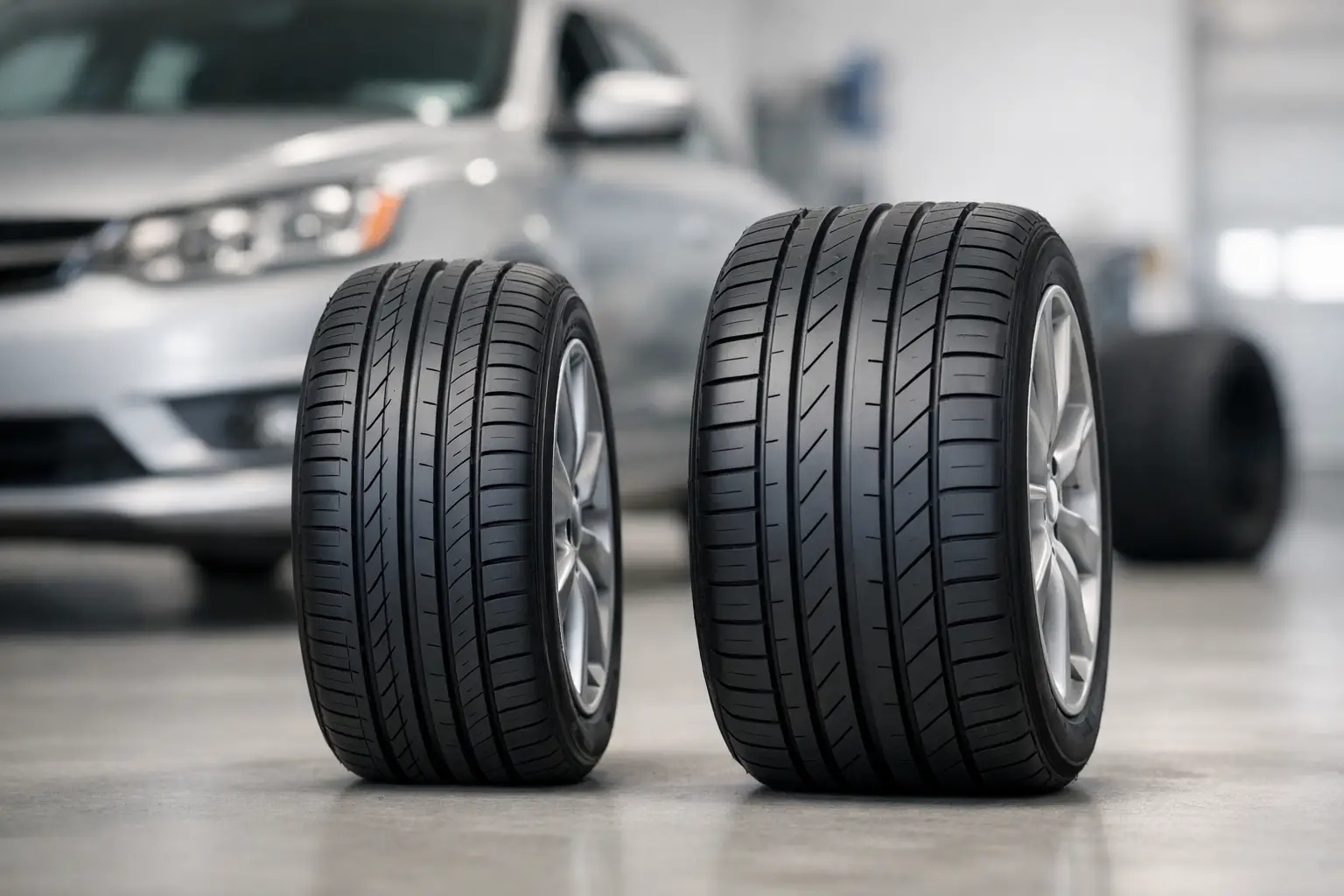
If you are asking can I change tyre size from 195 to 205, the short answer is yes – sometimes. A move from 195mm to 205mm tyre width is a common step, but whether it is the right one depends on your wheel width, tyre profile, load rating, steering clearance and the manufacturer’s approved fitments for your vehicle. Ten millimetres does not sound like much, but in tyre fitment terms it can change more than most drivers expect.
Can I change tyre size from 195 to 205 without problems?
The first thing to understand is that 195 and 205 only describe the nominal tread width in millimetres. They do not tell the whole story. A tyre size such as 195/65 R15 includes the width, the aspect ratio and the wheel diameter. If you move from 195/65 R15 to 205/65 R15, you are not just making the tyre wider. You are also increasing the overall rolling diameter, which can affect speedometer accuracy, gearing and clearance.
That is why the real question is not simply whether 205 is wider than 195. It is whether the full replacement size keeps the tyre within a safe and sensible tolerance for your specific vehicle.
In many cases, drivers switch from something like 195/65 R15 to 205/60 R15. That keeps the overall diameter much closer, because the sidewall is slightly lower to offset the extra width. Done properly, this kind of change can work well. Done badly, it can lead to rubbing, vague steering or unnecessary strain on the setup.
What changes when you go from 195 to 205?
A 205 tyre is 10mm wider than a 195, but the effect is not limited to width alone. You are changing the contact patch shape, the sidewall behaviour and sometimes the ride quality. On the right car, that can improve grip and give the vehicle a slightly more planted feel. On the wrong setup, it can make steering heavier, increase road noise or create clearance issues on full lock.
Wider tyres can offer better dry grip because there is more rubber meeting the road. That appeals to enthusiastic drivers and to anyone looking for a little more confidence in cornering. But there is a trade-off. Wider tyres can be more prone to tramlining on poor road surfaces, and in standing water they are not automatically better. Tyre design matters just as much as width.
Fuel economy can also shift slightly. A wider tyre may create more rolling resistance, though the real-world difference is often modest. Price is another factor. Some 205 sizes are more common and competitively priced than their 195 equivalents, while others cost more depending on brand and speed rating.
The key checks before changing tyre size
Before changing from 195 to 205, you need to confirm five things.
1. The wheel width is suitable
Not every tyre fits every wheel properly. Each tyre size has an approved rim width range. If your current wheel is too narrow for a 205 section tyre, fitting it is not a good idea. The sidewalls may sit incorrectly, which affects handling and wear.
As a general guide, many 205 tyres suit wheels around 5.5 to 7.5 inches wide, depending on the exact tyre specification. But that is only a guide. Always check the tyre manufacturer’s approved range.
2. The rolling diameter stays close to standard
This is one of the biggest mistakes drivers make. If the new tyre is too tall or too short overall, it can alter speedometer readings and affect ABS or traction control behaviour.
A small difference is usually acceptable, but you want to stay as close to the original size as possible. That often means reducing the aspect ratio when increasing the width. For example, changing from 195/55 R16 to 205/50 R16 is often closer than changing to 205/55 R16.
3. There is enough clearance
Even if the tyre technically fits the wheel, it also needs to clear the suspension, wheel arch liner and bodywork. Extra width can cause rubbing on full lock or when the suspension compresses over bumps.
This is especially important on cars with lowered suspension, aftermarket alloys or unusual offsets. What fits one version of a model may not fit another.
4. The load and speed ratings are correct
You should never drop below the manufacturer’s required load index or speed rating. If you are moving to a different size, make sure the replacement still meets or exceeds the original requirement.
This matters for safety, insurance and legal compliance. A tyre that is the right width but the wrong load rating is still the wrong tyre.
5. The size is approved for the vehicle
Many vehicles have more than one approved tyre size from the factory. Check the fuel flap sticker, door shut label, handbook or manufacturer data. If 205 is already listed as an option, that is a strong sign you are on the right track.
If it is not listed, that does not always mean it is impossible, but it does mean you need to be more careful and verify the fitment properly.
When changing from 195 to 205 makes sense
There are plenty of situations where going to a 205 tyre is perfectly reasonable. If you are replacing worn tyres and the alternative size keeps the rolling radius close, matches the wheel correctly and suits the car, it can be a smart change.
It can also make sense if you are upgrading alloys and the new wheel width is better suited to a 205. Some drivers move to a wider tyre to improve handling feel or because the 205 size offers better tyre choice in the brands they want. On certain vehicles, 205 is simply a more common size and can be easier to source.
For premium and performance cars, tyre availability can be just as important as the numbers on the sidewall. Sometimes a slight size adjustment opens up far better options from the leading manufacturers without compromising fitment.
When it is a bad idea
If you are only changing to 205 because the tyres are cheaper or because someone said they should fit, pause there. A tyre size change should never be guesswork.
It is usually a bad idea if the new size pushes the rolling diameter too far out, if the wheel is too narrow, or if there is any risk of fouling the body or suspension. It is also not worth doing if you expect miracles in grip while choosing a lower quality tyre. A good 195 from a reputable brand will often outperform a poor 205.
The same goes for winter use. Wider is not always better in colder conditions. Depending on the vehicle and the roads you use, sticking with the narrower size can be the better option.
Will it affect insurance or MOT?
A tyre size change can affect insurance if it counts as a modification from the manufacturer’s standard specification, so it is sensible to declare it. Many insurers will not make an issue of a sensible and safe tyre change, but it is better to be clear than to leave room for argument later.
As for the MOT, the main concerns are condition, legality, load rating, construction type and whether the tyres are fouling any part of the vehicle. If the new size causes rubbing or is clearly unsuitable, that is where problems start. A properly chosen 205 conversion is not automatically an MOT issue.
The practical answer for most drivers
So, can I change tyre size from 195 to 205? Yes, if the full tyre size is worked out properly and the vehicle, wheel and clearance all support it. No, if you are increasing width without checking profile, diameter and fitment details.
That is why this is one of those jobs where exact numbers matter more than assumptions. Two cars can both be running 195 tyres from the factory, yet only one of them may suit a move to 205 without compromise.
If you are unsure, get the current tyre size, wheel size and vehicle details checked before ordering anything. A proper fitment check is quicker and cheaper than dealing with rubbing tyres, odd handling or a set that needs sending back. If you want a second opinion and you are local to Dorset, The Tyre Barn can check what actually works on your car rather than what might work on paper.
The best tyre size is not the one that looks wider on the sidewall. It is the one that fits correctly, drives properly and keeps the car working as it should.