
Can I Change Tyre Size on My Car?

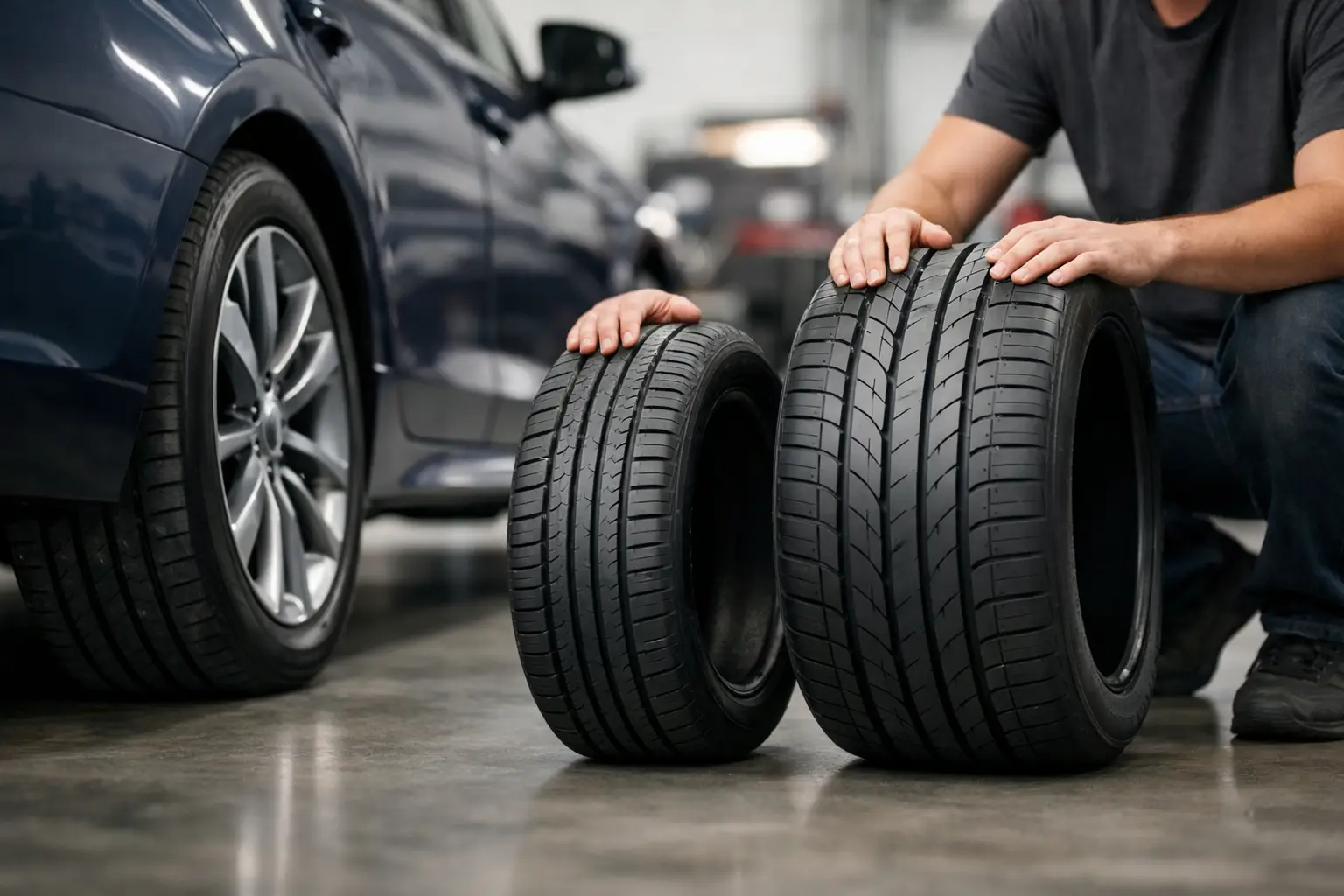
You usually ask can I change tyre size for one of three reasons – the current tyres are hard to source, you want a better look, or you are changing wheels at the same time. All are valid. But tyre size is not something to guess at, because even a small change can affect clearance, speedometer readings, handling, ride comfort and load capacity.
The short answer is yes, you can often change tyre size, but only within sensible limits and only when the full fitment still suits the vehicle. The right answer depends on the wheel width, rolling radius, suspension clearance, load index, speed rating and how the car is actually used.
Can I change tyre size without causing problems?
Sometimes, yes. Sometimes, absolutely not. The difference comes down to whether the new size stays compatible with the car and wheel rather than simply fitting on by eye.
A tyre size change affects more than the sidewall. If the overall diameter grows too much, the tyre can catch the arch liner or suspension components on lock or over bumps. If it shrinks too much, the gearing changes, the speedometer can read differently and the car may not feel as settled at speed. On newer vehicles, driver assistance systems and ABS can also become more sensitive to changes in rolling circumference.
That is why the original size is always the starting point. A tyre marked 225/45 R17 tells you the width, profile and wheel diameter, but it does not tell the whole story on its own. You also need the load index and speed rating, because a size that physically fits may still be wrong for the weight and performance of the vehicle.
What changing tyre size actually changes
The biggest misunderstanding is thinking tyre size only changes appearance. In practice, it alters several parts of how the vehicle behaves.
A wider tyre can improve grip in the right conditions, but it may also follow road imperfections more and increase steering weight. A lower profile can sharpen response, but often at the expense of ride quality and rim protection. A taller sidewall can improve comfort, but it may make the steering feel less direct.
Then there is rolling radius. This is the part many drivers overlook. If the new tyre has a significantly different overall diameter from the original, your speedometer and odometer readings will change. Even if the tyres clear the arches, the fitment may still be wrong in real-world use.
Staying close to the original rolling radius
As a rule, any size change should keep the overall diameter as close as possible to the manufacturer-approved setup. In many cases, a small change of around 2% either way is treated as the practical limit, though the safest option is always to match an approved alternative size for that exact model.
For example, if a car originally runs 205/55 R16, moving to 225/45 R17 might be perfectly acceptable if that is also a recognised fitment for the vehicle. Moving to a size with a much larger or smaller circumference just because it is available or cheaper is where problems start.
This matters even more on vehicles with staggered setups, four-wheel drive systems, or tighter arch clearances. A premium German saloon, a performance hatch and a commercial van all have very different tolerances for change.
Wheel size and tyre size need to match
A tyre cannot be judged in isolation. The wheel width matters just as much.
Each tyre size has an approved wheel width range. Fit too narrow a tyre on a wide rim and the sidewall shape is compromised. Fit too wide a tyre on a narrow rim and the tread can distort, affecting wear and handling. Both can create problems under load or in wet conditions.
If you are changing from 17-inch to 18-inch wheels, the tyre profile usually needs to reduce to keep the rolling radius close. This is why plus-sizing has to be calculated properly rather than estimated.
Load index and speed rating still matter
This is where people get caught out when chasing a look or buying second-hand wheels and tyres as a package. Even if the size seems close, the replacement tyre must still meet or exceed the required load index and suitable speed rating for the vehicle.
That matters on everything from family SUVs to vans and performance cars. A lower-spec tyre may mount up and hold air, but that does not make it the correct fitment.
When changing tyre size makes sense
There are good reasons to do it. If you are upgrading to a larger alloy wheel, changing tyre size is often necessary. If an unusual factory size is expensive or limited in choice, a manufacturer-approved alternative can make replacement easier. Some drivers also move to a slightly different setup for seasonal use, track use or a more comfortable road bias.
What matters is whether the new size is proven, not whether it looks close enough.
For example, many BMW, Audi and Mercedes models have multiple approved wheel and tyre combinations depending on trim level and factory options. In those cases, changing tyre size may be completely straightforward as long as the new setup matches one of the recognised combinations for that vehicle.
When you should be cautious
If the car already has aftermarket wheels, suspension changes or spacers, tyre size becomes more critical. The margin for error is smaller. What clears a standard setup may rub badly on a lowered car or with a more aggressive wheel offset.
You also need to be careful with mixed fitments. Front and rear sizes are often different on performance cars, and changing one end without understanding the full setup can upset balance and electronic systems.
There is also the legal and insurance side. In the UK, any modification that changes the vehicle from standard may need to be declared to your insurer. A tyre size change that seems minor to you may still count as a modification, especially if it is part of a wheel upgrade.
Can I change tyre size to a wider tyre?
A lot of customers really mean this when they ask can I change tyre size. They want a wider tyre for appearance, grip or to better suit a new wheel.
Sometimes that works well. Sometimes it creates more issues than benefits. A wider tyre needs the correct rim width, enough arch and suspension clearance, and the right overall diameter. It can also increase the risk of tramlining and may be less effective in standing water compared with a narrower equivalent.
On road cars, wider is not automatically better. The right tyre for the vehicle, wheel and use case is what matters.
How to check if a new tyre size is suitable
Start with the size currently fitted and the vehicle placard or manufacturer data. Then compare any proposed alternative by looking at overall diameter, load index, speed rating and the wheel width it will be mounted on.
After that, consider the practical side. Will it clear on full steering lock? Will it clear under compression with passengers or luggage onboard? Is the vehicle front-wheel drive, rear-wheel drive or four-wheel drive? Is it a standard road setup, or does it already have aftermarket wheels or suspension?
This is where expert fitment advice saves time and money. A tyre size can look acceptable on paper but still be wrong once offset, brake clearance and arch space are taken into account.
What about MOT and safety?
The tyre must not foul the bodywork or suspension, and it must be suitable for the wheel and vehicle. Tread must sit correctly across the contact patch, and the tyre must carry the right rating for the application. If the setup causes contact, instability or incorrect loading, it is not a proper solution even if it physically bolts on.
A safe fitment should feel settled, clear properly and wear evenly. If it does not, the size choice needs revisiting.
The best approach if you are unsure
If you are considering a change, do not buy solely on appearance or price. Confirm the full fitment first – tyre size, wheel width, offset, load rating and intended use. That is especially important on premium vehicles, vans, staggered setups and anything fitted with larger aftermarket alloys.
At The Tyre Barn, this is exactly the kind of question we help with every day, whether you are replacing like-for-like, moving to a different wheel size or trying to make sense of a used wheel and tyre package. Getting it right before fitting is always cheaper than correcting a poor setup afterwards.
The best tyre size is not the one that just about fits. It is the one that suits the car properly, works safely on the road and gives you confidence every time you drive it.