
Run Flat Tyres vs Standard Tyres – Which Is Best?

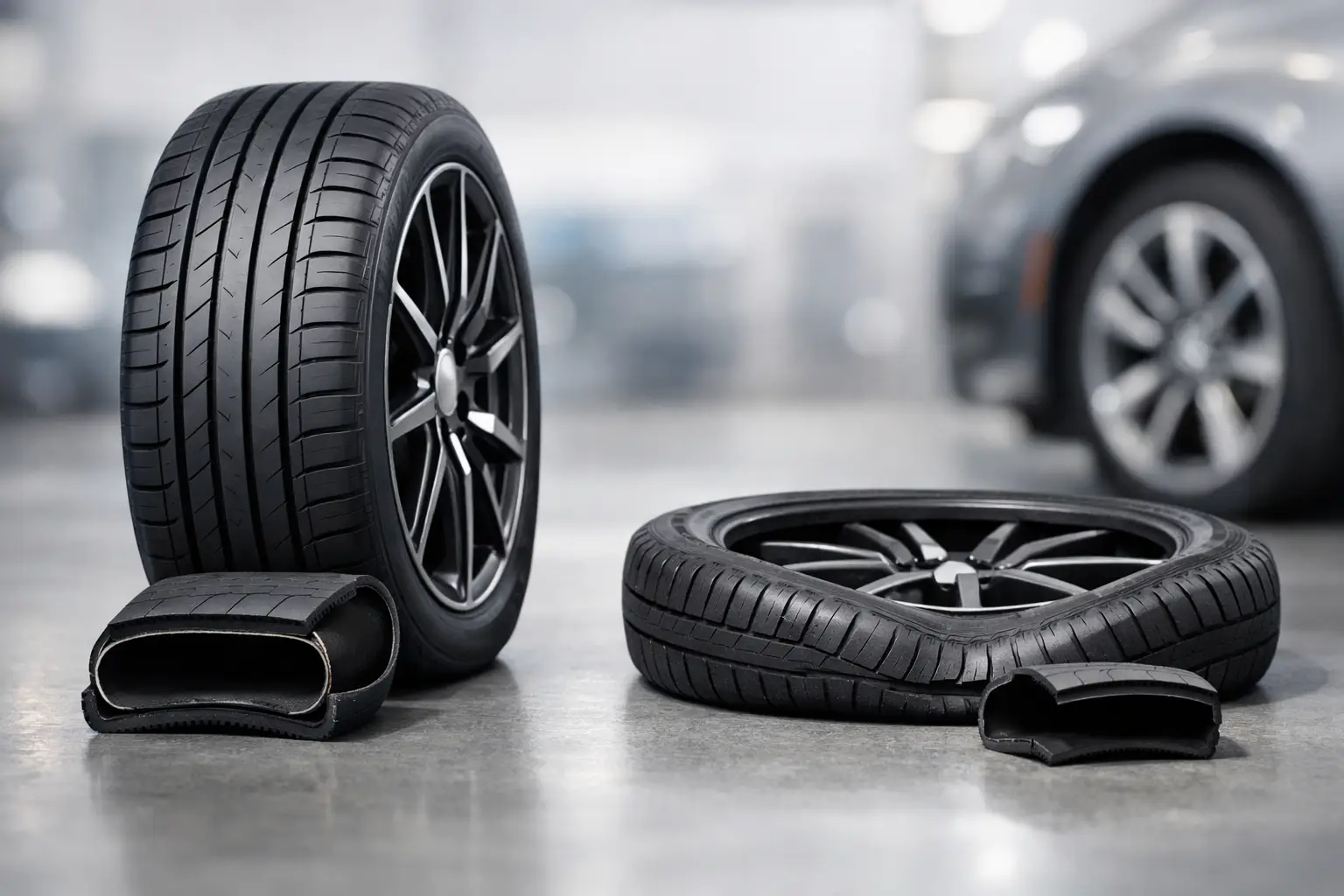
A puncture on a wet dual carriageway is where the difference between run flat tyres vs standard tyres becomes very real. One may let you continue carefully to a safe place or tyre fitter; the other usually means stopping as soon as it is safe to do so. That reassurance is valuable, but it does not automatically make run-flats the right choice for every vehicle, road or budget.
The best replacement is the one that matches your car’s approved fitment, how you use it and the level of ride comfort you expect. For many BMW, MINI, Mercedes and premium car owners, run-flats are original equipment. For others, a conventional tyre offers a better balance of cost and comfort. Here is what to consider before making the change.
What are run-flat tyres?
Run-flat tyres are designed to support the vehicle for a limited distance after a loss of air pressure. Most use reinforced sidewalls that can carry the car’s weight when the tyre is deflated. This is often called a self-supporting run-flat system.
Rather than being stranded at the roadside after a puncture, you can normally drive at a reduced speed to a place of safety, a garage or home. The exact distance and speed limit depend on the tyre manufacturer, vehicle, load and the nature of the damage. A common guideline is up to around 50 miles at a maximum of 50 mph, but the instructions for the specific tyre and vehicle always take priority.
Run-flat technology is not permission to carry on with a damaged tyre as normal. Braking, steering and stability can be affected, particularly if the tyre has suffered a severe impact or the vehicle is heavily loaded. It should be inspected and replaced promptly.
Run flat tyres vs standard tyres: the key differences
The main advantage of a standard tyre is its more flexible sidewall. That flexibility usually delivers a more compliant ride, especially on broken roads, potholes and expansion joints. It can also make a tyre more forgiving when it meets an unexpected sharp edge.
A run-flat’s stronger construction has a different purpose: it maintains support after pressure loss. The trade-off is that it can transmit more road texture into the cabin, depending on the vehicle, tyre brand, profile and suspension setup. On a large-wheel, low-profile fitment, the difference may be more noticeable than on a car with taller sidewalls.
There is also a practical difference after a puncture. With a conventional tyre, driving when flat can quickly destroy the sidewall, even if the original puncture was repairable. You will need a spare wheel, a tyre repair kit or roadside assistance. A run-flat gives you a controlled escape from that immediate problem, although it will commonly need replacement once it has been driven without air.
Safety and roadside convenience
Run-flats are particularly useful for drivers who regularly use motorways, travel alone, carry children or do not want to change a wheel at the roadside. They can reduce the risk of stopping in an exposed location and remove the need for a full-size spare wheel in many cars.
That benefit depends on the car having a working tyre pressure monitoring system, usually known as TPMS. A run-flat can still look relatively normal when deflated, so the driver needs a warning from the vehicle to know that pressure has been lost. If the TPMS warning appears, slow down, avoid harsh steering and braking, and check the tyre as soon as it is safe.
Standard tyres are not inherently unsafe. They remain the normal choice for a huge number of vehicles and perform well when correctly specified, inflated and maintained. The difference is what happens after a puncture, not whether the tyre is safe in everyday driving.
Comfort, handling and noise
A quality standard tyre often provides the softer, quieter option. This can be a welcome improvement for drivers who cover rough local roads or find their current setup overly firm. However, tyre comfort is not decided by run-flat construction alone. Tyre profile, wheel diameter, pressure, vehicle weight and suspension condition all matter.
Handling is similarly dependent on the full package. Run-flats may feel more immediate at turn-in because of their firmer sidewalls, while conventional tyres can offer a more progressive feel. Neither is universally better. The correct load index, speed rating and approved size are more important than chasing one construction type on its own.
Cost and availability
Run-flat tyres usually cost more than equivalent conventional tyres, and the fitting process can be more demanding because of their stiff sidewalls. Not every puncture can be repaired, either. Even when a tyre appears to have only a small tread puncture, internal damage from being driven with low or no pressure may rule out a safe repair.
Standard tyres tend to offer a wider choice at most price points. That can be useful if you need a specific balance of mileage, wet grip, performance or value. It also makes matching tyres across an axle easier when replacing a single damaged item, although fitting a matched pair on the same axle is often the sensible option where tread depths differ significantly.
Can you replace run-flats with standard tyres?
Sometimes, yes, but it should never be treated as a simple cost-saving swap. First, check the vehicle handbook, tyre placard and manufacturer guidance. Some vehicles were developed around run-flat tyres and may have no spare wheel, jack or emergency inflation equipment. Moving to standard tyres without a workable puncture plan can leave you stuck.
You must also keep the correct tyre size, load index and speed rating for the vehicle. These details are not optional. A tyre may physically fit the wheel but still be unsuitable for the car’s weight, performance or insurance requirements.
If changing from run-flats to conventional tyres, consider carrying a suitable mobility kit or a vehicle-specific spare wheel solution. The wheel must have the right diameter, centre bore, stud pattern, brake clearance and tyre rolling circumference. On premium vehicles with larger brakes or staggered wheel setups, this is where specialist fitment advice saves costly mistakes.
Avoid mixing run-flats and standard tyres on the same axle. Their sidewall behaviour is different, which can lead to inconsistent handling under braking and cornering. For the same reason, many drivers choose to change all four when moving between constructions, particularly on four-wheel-drive vehicles. The vehicle manufacturer’s guidance should be followed, and some AWD systems are especially sensitive to differences in tyre circumference and tread depth.
When run-flats make the most sense
Run-flats suit drivers who value mobility after a puncture more than maximum ride softness. They are a strong option when they are factory-fitted, the TPMS is functioning correctly and the car has no spare wheel provision. They also make sense for frequent motorway drivers and people who want to minimise roadside wheel changes.
Keeping the original run-flat specification is often the most straightforward route for leased vehicles, newer premium cars and owners who are happy with the ride quality. It preserves the setup the car was supplied with and maintains the intended puncture-mobility system.
When standard tyres may be the better choice
Conventional tyres are worth considering where ride comfort, lower replacement cost or a broader tyre choice matters most. Owners of older cars, vehicles with a full spare wheel, or cars used largely for local journeys may find the practical advantage of run-flats less compelling.
They can also suit enthusiasts refining a wheel and tyre package, provided every fitment detail is checked. A change in tyre construction should not be used to mask bent wheels, worn suspension components, incorrect pressures or poor alignment. Those issues will affect any tyre and can quickly spoil its performance and lifespan.
Get the fitment right before ordering
Before choosing either type, confirm the full marking on your existing tyre, such as 225/45 R18, along with its load and speed rating. Check whether your car uses staggered front and rear sizes, whether it has TPMS, and whether it is front-wheel drive, rear-wheel drive or four-wheel drive. For vehicles with non-standard alloys, confirm that the wheel width and approved tyre range also match.
A tyre is the final connection between the car and the road. Whether you choose the extra reassurance of a run-flat or the everyday comfort of a standard tyre, choose a specification that genuinely suits the vehicle. If you are unsure, a proper fitment check from an experienced tyre team is a far better starting point than selecting on price alone.