
Can Alloy Wheels Be Repaired? A Practical Answer

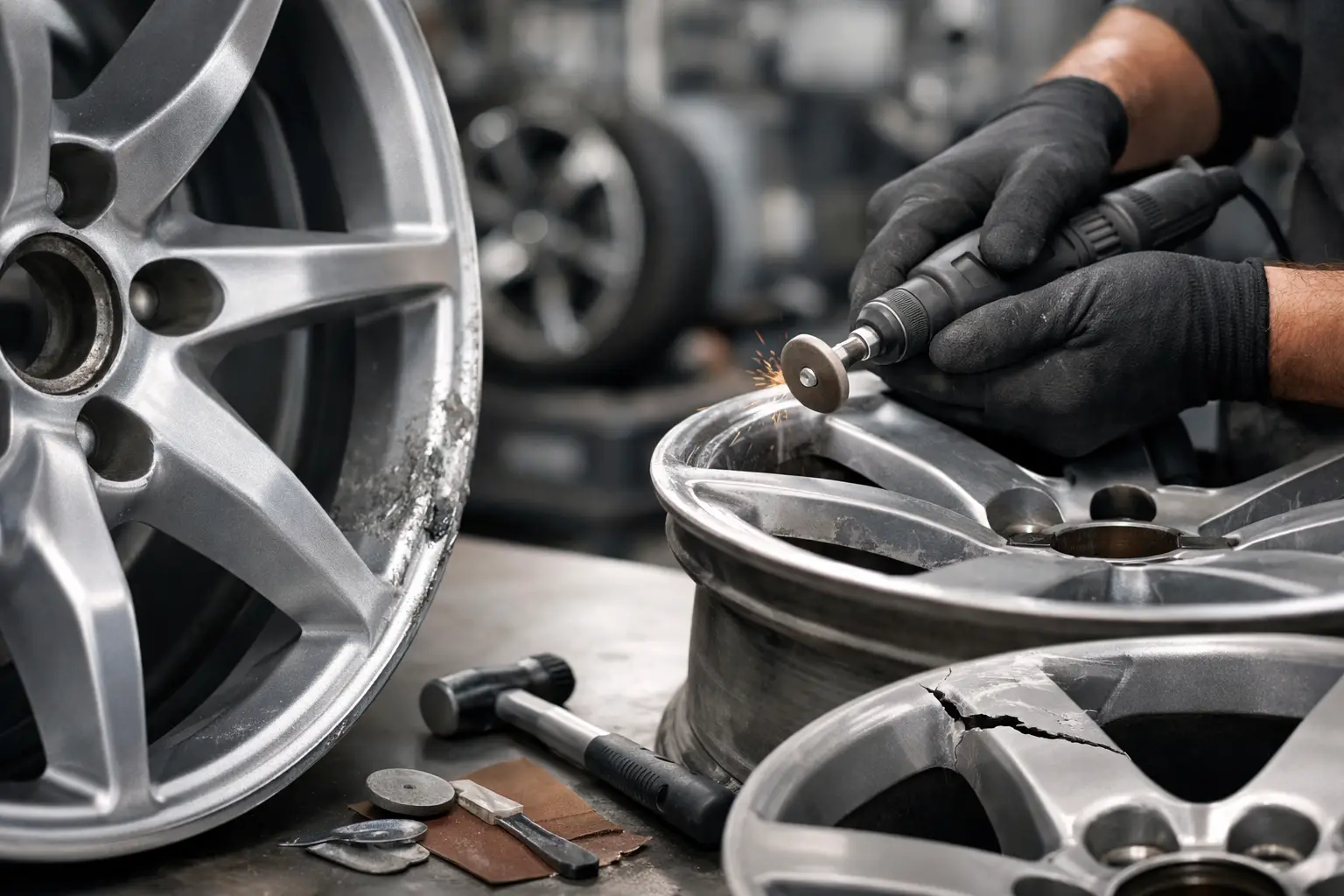
A kerbed alloy can spoil the look of an otherwise well-kept car, but appearance is only part of the question. Can alloy wheels be repaired? In many cases, yes. Light kerb damage, paint loss, corrosion and some minor distortion can often be put right professionally. Cracks, severe buckles and damage around critical mounting areas need a far more cautious assessment – and sometimes replacement is the only sensible option.
The right decision depends on where the damage is, how deep it is, the wheel’s construction and whether it can still support a tyre and hold air correctly. A proper inspection is worth more than a quick visual judgement, particularly on premium, performance or large-diameter wheels.
Which alloy wheel damage can be repaired?
Kerb damage and surface scuffs
Kerb damage is the most common repair job. A low-speed brush with a kerb typically leaves scratches, gouges and chipped lacquer on the outer rim edge. Provided the damage is cosmetic and has not removed a significant amount of material, the affected area can usually be prepared, filled where appropriate, refinished and lacquered.
A quality repair should restore a smooth, durable finish rather than simply cover the marks with paint. This matters because exposed aluminium allows moisture beneath the coating, which can lead to corrosion and lifting lacquer later on.
Corrosion and lacquer peel
Alloy wheels are exposed to water, road salt, brake dust and repeated heat cycles. Over time, the finish can bubble, peel or develop white corrosion beneath the lacquer. This is especially common around the wheel face, rim edge and centre cap area.
Refurbishment can remove corrosion, prepare the surface and apply a new finish. However, deep corrosion pitting may affect the final appearance, particularly where a wheel has been neglected for several seasons. It can still be a worthwhile repair, but the wheel needs assessing honestly before any work begins.
Minor bends and vibration issues
Potholes can cause a wheel to bend, often on the inner rim where the damage is not obvious from outside the vehicle. Symptoms may include steering vibration, a tyre that repeatedly loses pressure, or difficulty balancing the wheel.
A minor bend may be correctable using specialist straightening equipment. The aim is to return the wheel to an acceptable running true, so it balances correctly and supports the tyre bead properly. The wheel should then be checked for cracking, excessive run-out and air loss before it goes back into service.
Not every bent wheel is a candidate for straightening. A hard impact can stretch or weaken the metal, and a wheel that has been badly distorted should not be forced back into shape simply because it looks repairable.
When should an alloy wheel be replaced instead?
Structural damage changes the conversation. Wheels carry the vehicle’s load, transfer braking and acceleration forces, and must cope with impacts that tyres alone cannot absorb. Saving money on a wheel is never worth creating a safety issue.
Replacement is often the better option when there is a crack through a spoke, around the bolt holes, near the centre bore, or on a heavily loaded part of the rim. These areas are fundamental to how the wheel mounts and performs. Welding cracked alloys is a specialist subject, but it is not a universal answer. A repair may not restore the wheel’s original strength, and the suitability depends on the crack location, wheel design and intended use.
Severe buckles, missing chunks of alloy, repeated previous repairs and extensive corrosion also make replacement more likely. If the wheel cannot be balanced reliably, will not seal a tyre, or has damage that could worsen under load, it should be removed from service.
For a high-performance vehicle, a heavily loaded SUV, a commercial application or a car used enthusiastically on the road or track, it is sensible to take an even more conservative approach. The forces involved leave less room for compromise.
How professional alloy wheel refurbishment works
The best repair process depends on the original finish and the damage found during inspection. A painted wheel and a diamond-cut wheel require different methods, and a wheel with a bent inner rim needs mechanical correction before cosmetic work begins.
The tyre is normally removed first, allowing the technician to inspect the bead seat and inner barrel properly. The wheel can then be cleaned, assessed for cracks or distortion, and checked for issues that may have caused a slow puncture or vibration.
For cosmetic refurbishment, the old coating and corrosion are removed before the damaged areas are repaired and shaped. The wheel is then primed, painted and lacquered, or powder coated where that finish is suitable. Good preparation is the difference between a finish that lasts and one that starts to fail after a few months.
Diamond-cut wheels need particular care. Their bright machined face is created by cutting a very fine layer from the alloy on a lathe, followed by lacquer. This finish looks sharp on many Audi, BMW, Mercedes, Porsche and Range Rover wheels, but it has limits. Each cut removes material, so a wheel can only be diamond cut a limited number of times. If corrosion is deep or the wheel has already been refurbished several times, a painted finish may be the more practical long-term option.
Does repairing an alloy wheel affect safety or value?
A professionally repaired cosmetic wheel should be safe when the underlying structure is sound and the repair has been completed properly. It can also improve resale appeal considerably. Four tidy, matching wheels make a car look cared for; flaking lacquer and kerb rash can make an otherwise good vehicle appear neglected.
The limitation is that refurbishment is not a substitute for structural integrity. A repaired wheel should be balanced after tyre fitting, checked for air leaks and examined again if vibration, pulling or pressure loss develops. If damage followed a pothole strike, the tyre, suspension and alignment may also need checking. A sidewall can be damaged internally even where it appears acceptable from the outside.
There is also a difference between a quick mobile touch-up and a full refurbishment. A localised cosmetic repair can be useful for a small scuff, especially before sale. A full workshop process is usually the better choice for widespread corrosion, multiple damaged areas, colour mismatch or wheels that need straightening.
Repair, replacement or a used wheel?
Cost matters, but it should be considered alongside condition, availability and fitment. Refurbishing an original wheel can be a strong option when the wheel is structurally sound and matching replacements are expensive or hard to find. It keeps the vehicle on its correct factory specification and preserves a matched set.
A replacement may make more sense if one wheel has major damage, if the finish on all four is poor, or if the cost of repair is close to that of a quality replacement. Used original wheels can offer good value, but they still need inspecting for cracks, buckles, previous welds, corrosion and correct part numbers.
Fitment is not just about whether a wheel physically bolts on. Diameter, width, offset, centre bore, bolt pattern, load rating and brake clearance all matter. The wrong wheel can cause clearance problems, affect handling or leave the tyre sitting incorrectly. When replacing a damaged alloy, matching the correct specification is as important as matching the design.
Signs you should book an inspection
Do not wait for obvious failure if the car has struck a pothole or kerb hard. A wheel inspection is sensible if you notice vibration through the steering wheel, a new pull to one side, repeated tyre-pressure warnings, a visible flat spot on the rim, or a tyre that loses air without an obvious puncture.
At The Tyre Barn, wheels can be assessed alongside tyre condition, balancing and fitment, which helps identify whether the issue is cosmetic, wheel-related or caused by the tyre itself. For drivers in Dorset, that means one practical check rather than guessing which component is at fault.
A sound wheel with cosmetic damage is often well worth refurbishing. If there is any doubt over cracks, serious distortion or tyre sealing, let condition and safety decide the outcome – a replacement wheel is cheaper than taking chances with the only part of the car that meets the road.