
Budget Tyres Comparison: What Value Really Means

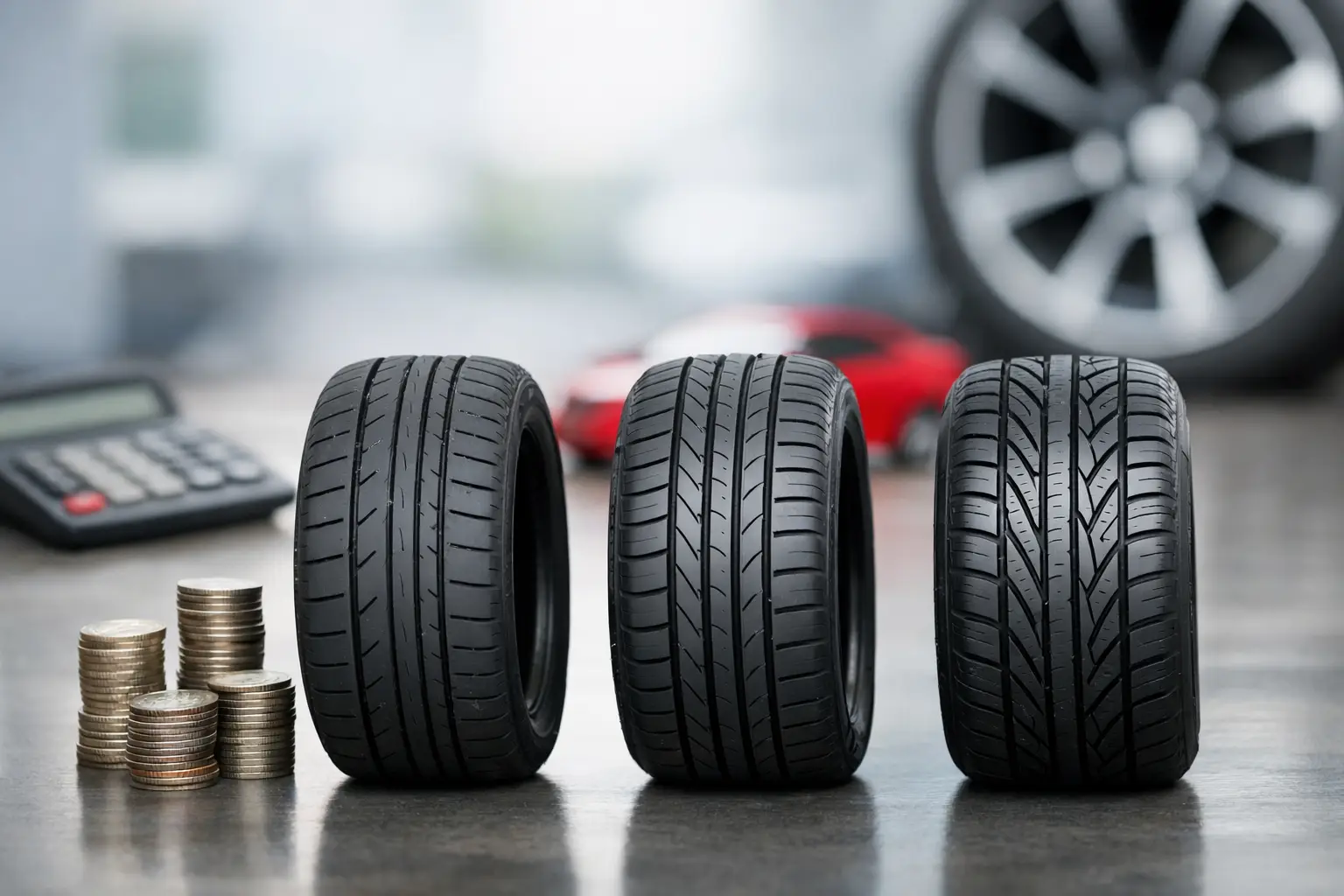
The cheapest tyre on the rack is not always the lowest-cost choice once wet braking, tread life and fitting are taken into account. A proper budget tyres comparison is about finding a tyre that suits the car, the mileage and the conditions you actually drive in – not simply choosing the lowest price displayed beside the size.
For many UK motorists, budget tyres are a sensible option. They can be particularly suitable for lower-mileage cars, town driving, a second vehicle or a vehicle nearing replacement. The key is to compare like for like and make sure the tyre is correctly rated and professionally fitted.
What separates budget, mid-range and premium tyres?
Tyres are often grouped into budget, mid-range and premium categories. The groups are useful, but they are not a guarantee of how every individual tyre will perform. A well-specified budget tyre can be a better fit for one driver than a premium performance tyre designed for a completely different use.
Premium tyres are usually developed by major manufacturers with large research budgets, extensive vehicle testing and purpose-built compounds. They commonly offer stronger wet-weather performance, more consistent handling at speed, reduced road noise and predictable wear. They are often the right choice for powerful cars, heavy SUVs, regular motorway mileage and drivers who expect sharp response in all conditions.
Mid-range tyres aim for a balance between outright performance and price. They can make good sense where a driver covers average annual mileage and wants reassurance in wet weather without paying for the most expensive option.
Budget tyres are made to meet legal and safety requirements at a more accessible price point. Their value tends to be strongest on cars used for shorter journeys, urban driving and modest annual mileages. The compromise may appear in areas such as wet grip, noise, steering feel or the number of miles achieved before replacement. That does not make every budget tyre unsuitable. It means the specification needs checking rather than assuming every tyre in the same size performs alike.
Budget tyres comparison: start with the non-negotiables
Before comparing brands, confirm the tyre size and technical requirements for the vehicle. The sidewall marking, for example 225/45 R17 94W, covers width, profile, construction, rim diameter, load index and speed rating. Each element matters.
A tyre may physically fit the wheel yet still be wrong for the car if its load or speed rating is below the manufacturer requirement. This is especially relevant on estates, vans, electric vehicles and performance models, where vehicle weight and torque place greater demands on the tyre. Some vehicles also require run-flat tyres, reinforced XL construction or manufacturer-approved fitments.
Do not select a cheaper option by reducing the load index or fitting a lower speed rating than specified. Savings disappear quickly if handling, insurance compliance or tyre durability is compromised. If you are changing wheel diameter or fitting aftermarket alloys, the rolling radius, offset, clearance and tyre profile should be checked as a complete package.
Read the EU tyre label, but do not stop there
The UK tyre label gives a useful starting point. It shows fuel efficiency, wet grip and external rolling noise. Wet grip deserves particular attention because British roads are regularly cold, damp and greasy, even when there has been little rain.
A tyre with a stronger wet-grip grade may stop shorter in controlled test conditions than one with a lower grade. That is worthwhile information, but it cannot tell the whole story. The label does not fully describe steering response, aquaplaning resistance, grip as the tyre wears, comfort, winter performance or how it behaves on a particular vehicle.
Use it to narrow the choice, then consider the tyre’s intended purpose. An economical touring tyre, an all-season tyre and a performance-focused summer tyre can all be available in the same size, yet give a very different driving experience.
Compare the costs that matter after purchase
The purchase price is only one part of tyre value. A tyre that costs less initially but wears out far sooner may prove more expensive per mile. Equally, fitting a high-priced tyre to a lightly used city car may not deliver enough practical benefit to justify the extra spend.
Think about your annual mileage. If the car covers 3,000 miles a year, age may become as relevant as tread wear. Tyres deteriorate over time, and a set that lasts for many years on paper may not represent the best value if the vehicle is rarely used. For a motorway commuter covering 15,000 miles or more, a tyre with dependable wet grip, stable high-speed manners and good wear characteristics is often worth paying more for.
Also check what the fitted price includes. Valve replacement, balancing, tyre disposal and fitting should be clear from the outset. Correct balancing is not an optional extra in practice – it helps prevent vibration, uneven wear and an unpleasant drive. Wheel alignment is another consideration. A worn edge can be caused by incorrect geometry rather than a poor tyre, so replacing tyres without addressing the cause can waste money.
Match the tyre to how the vehicle is used
A budget tyre can be a practical choice when expectations are realistic. A small hatchback used for school runs, local shopping and occasional trips may not need the same tyre as a BMW, Audi, Porsche or Range Rover that regularly travels at motorway speeds. Vehicle weight, driven axle, power output and driving style all change the decision.
For a van or commercial vehicle, choose a tyre designed for the correct loading and use. Car tyres are not a substitute for commercial-rated tyres simply because the dimensions look similar. The same principle applies to SUVs and electric vehicles, which can be heavier and produce instant torque that accelerates tyre wear.
Season also matters. A summer tyre can work well in mild conditions, while an all-season tyre may be the better all-round answer for drivers who need more confidence through cold, wet and occasionally icy weather. No tyre removes the need to adjust speed and following distance for the conditions, but the right pattern and compound can make a noticeable difference.
New budget tyres versus part-worn tyres
Part-worn tyres can reduce the immediate outlay, particularly where an unusual size is needed or a vehicle has limited remaining use. However, they need careful inspection and should be sourced from a supplier who checks them properly.
A part-worn tyre must have adequate remaining tread, no dangerous repairs, no exposed cords, no significant cracking or sidewall damage, and clear legal marking. The true saving depends on the tread left, the tyre’s age and the condition of its casing. A cheap part-worn with limited usable tread is rarely good value against a new budget tyre with full tread depth and a known history.
For a matched axle pair, consistency is important. Mixing tyre types, tread patterns or very different tread depths can affect balance and wet-weather behaviour. On many vehicles, replacing tyres in pairs on the same axle is the sensible approach. Where two tyres are replaced, fitting the newer pair to the rear is often recommended to help maintain rear-axle stability in the wet, subject to vehicle and tyre manufacturer guidance.
A practical way to choose
When comparing several budget tyres in the same size, focus on the details that will affect your ownership rather than the marketing name. Check these five points:
- the correct size, load index and speed rating for the vehicle;
- wet-grip and noise information on the tyre label;
- whether the tyre is suited to summer, all-season, van, SUV or performance use;
- the full fitted cost, including balancing and disposal; and
- whether the wheels show signs of alignment, damage or corrosion issues that should be dealt with at the same visit.
If two tyres are close in price, the one with a better wet-grip rating or a more suitable construction is usually the stronger choice. If the vehicle is used locally and lightly, a sensibly priced budget tyre may offer exactly the value required. If it carries family, equipment or heavy loads over long distances, spending more in the areas that affect wet braking and stability is a sensible decision.
A tyre should never be chosen in isolation from the wheel. Kerb damage, corrosion around the bead seat, buckles and poor balancing can all affect air retention and ride quality. At The Tyre Barn, the benefit of combining tyre supply with workshop fitting and wheel expertise is that these issues can be identified before they become repeat visits or premature tyre wear.
The best value tyre is the one that fits correctly, performs confidently for the journeys ahead and is fitted to a wheel in sound condition. Start with the specification, be honest about how the vehicle is used, and let the price be one part of the decision rather than the whole decision.