
BMW Wheel Fitment Guide for British Drivers

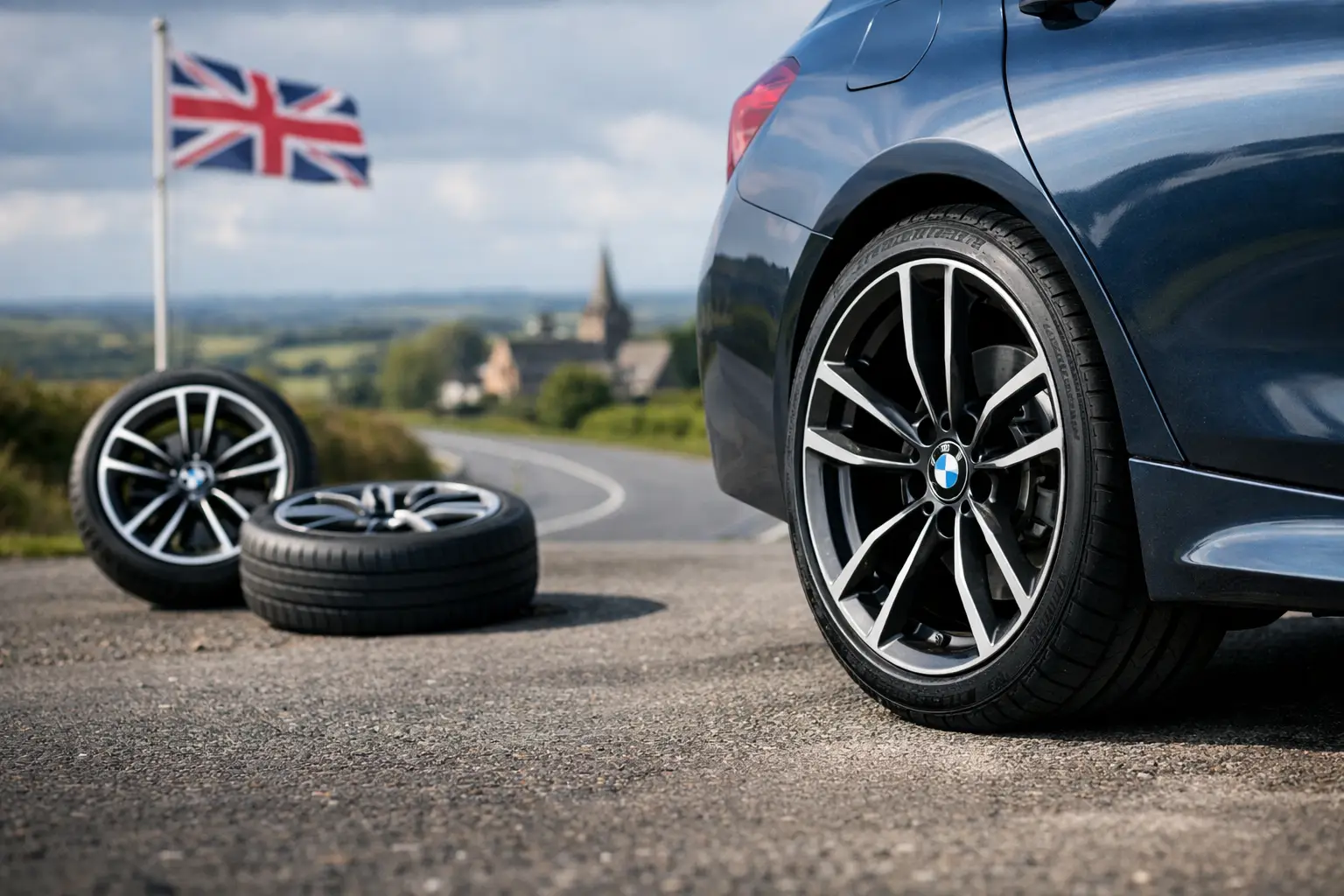
A BMW can look completely transformed on the right set of wheels. On the wrong set, it can suffer from rubbing tyres, poor steering feel, vibration or wheels that simply will not mount correctly. This BMW wheel fitment guide explains the measurements that matter before you buy, whether you are replacing damaged original alloys, choosing used wheels or building a more purposeful road setup.
BMW fitment is not one-size-fits-all. Two cars from the same model range can have different brake clearances, wheel widths, offsets and tyre specifications. The registration plate, VIN details and current wheel markings are all useful starting points, but they should be checked against the exact vehicle before fitting.
Start with your BMW’s original wheel specification
The factory wheel size is the safest reference point. Look on the back of an existing alloy for markings such as `8J x 18 ET30`. This tells you the wheel is 8 inches wide, 18 inches in diameter and has an offset of ET30. The tyre sidewall will show a corresponding size, for example 225/45 R18.
Original equipment specifications give BMW the ride quality, steering response, clearance and load capacity intended for that model. You do not have to stay with them exactly, but any change should be deliberate. A wider wheel may need a different offset. A larger diameter wheel normally needs a lower-profile tyre to keep the overall rolling radius close to standard.
On models supplied with staggered wheels, the rear wheels and tyres are wider than the front. This is common on many BMW coupes, performance saloons and M cars. Swapping to a square setup can be useful for tyre rotation or track use, but it needs careful consideration of clearance, handling balance and whether the wheel will clear the front brake assembly.
BMW wheel fitment guide: the measurements to check
PCD and bolt pattern
PCD stands for pitch circle diameter. It describes the number of wheel bolts and the diameter of the circle on which they sit. Older and many previous-generation BMWs commonly use 5×120 PCD, while a large number of newer BMW platforms use 5×112.
That change is a frequent source of costly mistakes. A wheel may be the correct diameter, width and style, but still be unsuitable if the PCD is wrong. Do not assume every 5-stud BMW shares the same pattern, particularly when shopping for used OEM wheels.
Centre bore
The centre bore is the hole in the middle of the wheel that locates it on the vehicle hub. BMW wheels are normally hub-centric, meaning the bore supports and centres the wheel rather than relying solely on the wheel bolts.
Many traditional BMW applications use a 72.6 mm centre bore, but newer platforms can differ. A wheel with a larger bore can sometimes be fitted safely with the correct hub-centric spigot rings. A wheel with a smaller bore will not fit over the hub. The ring must be the correct size and properly seated – a loose or incorrect ring can lead to vibration.
Offset, shown as ET
Offset is one of the most important and least understood figures in wheel fitment. It is measured in millimetres and stamped as ET. A higher ET number moves the wheel further inboard towards the suspension; a lower ET moves it further out towards the wheel arch.
For example, changing from ET45 to ET35 pushes the wheel 10 mm further outward, assuming the width stays the same. When width changes as well, the calculation becomes more involved because the wheel moves both inwards and outwards from its centreline.
Very low offsets can create a desirable flush appearance, but may cause tyre contact with the arch under compression. Excessively high offsets can put the inner rim or tyre too close to the strut, spring perch or suspension arms. On a lowered BMW, the available clearance is usually reduced further.
Wheel width and diameter
Wheel width is measured between the tyre bead seats, not from outer rim edge to outer rim edge. The common `J` designation refers to the bead profile used on passenger car wheels. A wider wheel can accept a wider tyre, but it must still suit the tyre manufacturer’s approved rim-width range.
Wheel diameter affects tyre choice and brake clearance. Moving from 17 to 19 inches can make room for a larger brake package, but a bigger wheel does not automatically clear every caliper. Spoke design, barrel shape and internal profile matter just as much. This is especially relevant on M Sport and M models with larger factory brakes.
Choose tyres that preserve rolling radius
When changing wheel diameter, the aim is generally to keep the tyre’s overall diameter close to the original. This helps maintain accurate speedometer readings, sensible gearing and correct operation of the ABS, traction control and stability systems.
A 19-inch wheel needs a lower tyre profile than an 18-inch wheel to achieve this. The sidewall number in a tyre size is a percentage of tyre width, not a fixed millimetre measurement. That is why a 255/35 R19 and a 225/40 R19 may have relatively similar overall diameters despite using different widths and profiles.
Avoid mixing significantly different rolling radii across axles. On xDrive BMWs, this matters even more. The front and rear tyres can be different sizes on a staggered car, but their rolling circumferences must remain closely matched. Large differences can place unnecessary strain on drivetrain components.
Tyre load index and speed rating also need to meet or exceed the vehicle requirement. A wheel and tyre combination that looks right is not enough if it cannot safely carry the car’s weight, particularly on heavier BMW SUVs and electric models.
Wheel bolts, seats and spacers
BMW wheel bolts are not interchangeable just because the thread fits. The bolt seat must match the wheel. Most BMW original wheels use a ball-seat bolt, whereas many aftermarket wheels use a tapered or conical seat. Using the wrong type prevents the wheel from clamping correctly and can damage the wheel or bolts.
Bolt length is equally important. If spacers are fitted, longer bolts are normally required to maintain sufficient thread engagement. Bolts that are too short are unsafe; bolts that are too long can foul components behind the hub. Spacers should be high-quality, hub-centric where applicable, and used only after confirming there is enough arch and suspension clearance.
Spacers alter effective offset. A 10 mm spacer fitted to an ET40 wheel produces an effective ET30 position, moving the wheel 10 mm outward. That may solve an inner-clearance issue, but it can create one at the wheel arch instead.
Check brake, arch and suspension clearance
A wheel should be test-fitted before tyres are mounted whenever the specification is non-standard. Check caliper-to-spoke clearance, caliper-to-barrel clearance and the gap to suspension components. Then check the outer edge at full steering lock and through suspension travel.
Static clearance on the ramp is only part of the picture. A tyre can clear the arch while parked but catch under a loaded corner, over a pothole or with passengers in the rear. Tyre brand also makes a difference: two tyres labelled the same size can have slightly different shoulder shapes and actual tread widths.
If your BMW has been lowered, fitted with coilovers or upgraded brakes, factory wheel data alone is no longer enough. Those modifications change the fitment calculation and should be assessed as a complete setup.
Used BMW wheels need more than a visual check
Used genuine BMW alloys can offer excellent value, but inspect them properly. Look for cracks around the spokes and inner barrel, previous weld repairs, severe kerb damage, corrosion around the bead seat and signs of distortion. A wheel can appear presentable from the front while being bent on the inner edge.
Refurbishment can restore the finish of a sound wheel, including diamond-cut and painted designs, but it cannot make an unsuitable or structurally compromised wheel a sensible choice. Confirm the part number, dimensions, PCD and offset before buying, rather than relying on the seller’s model description.
When to ask a fitment specialist
If you are moving away from factory sizing, fitting staggered wheels, using spacers, changing suspension or buying wheels second-hand, expert checking is worthwhile. The Tyre Barn can assess wheel and tyre combinations before fitting at its Wimborne workshop, helping avoid the common problems caused by incorrect offsets, unsuitable tyres and overlooked brake clearance.
The best BMW wheel setup is not always the widest wheel or the lowest offset. It is the one that clears properly, carries the correct tyres, suits how you drive and gives your car the finish you wanted without compromising safety or everyday usability.