
Alloy Wheel Offset Guide for Better Fitment

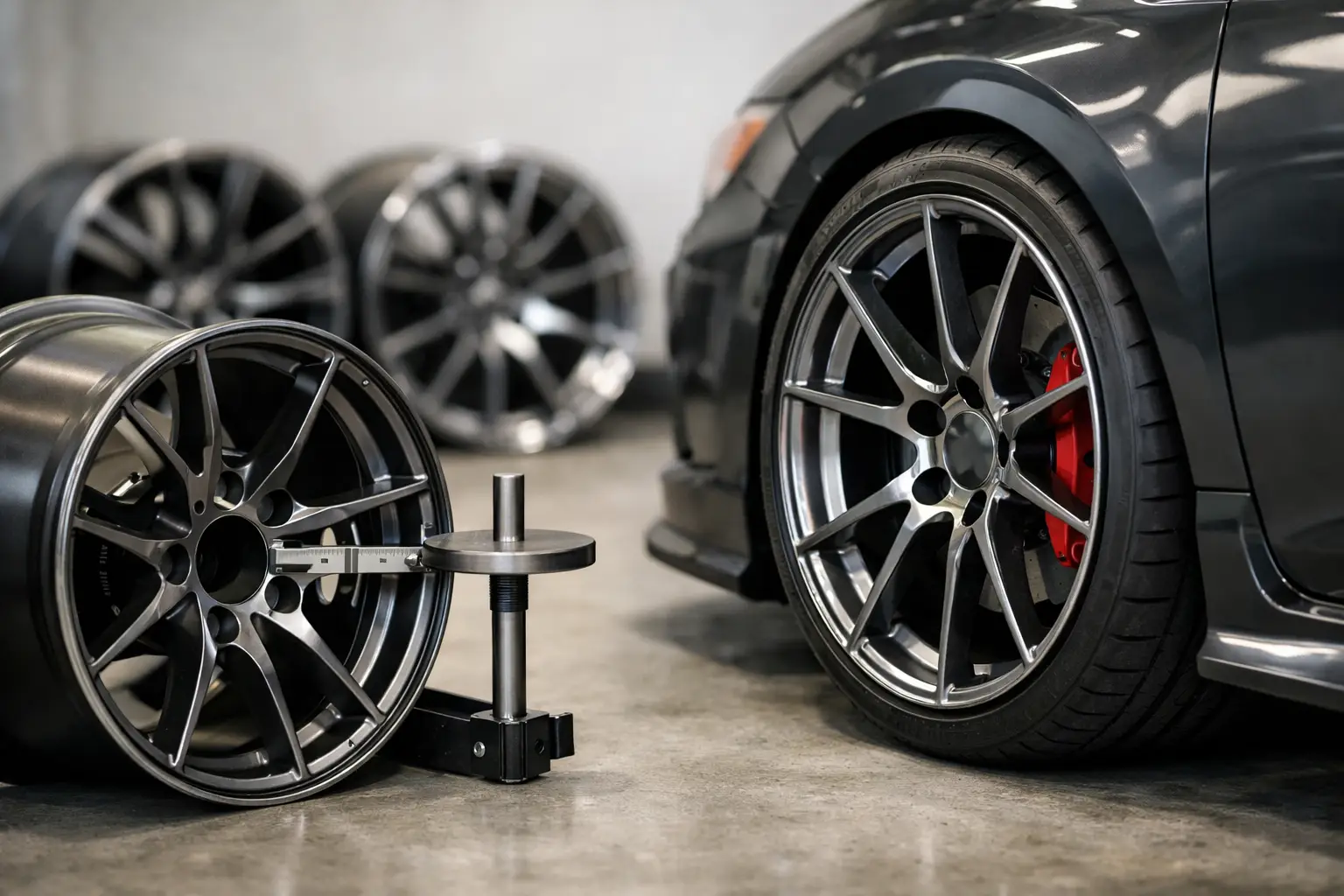
A wheel can be the right diameter, the right width and the right stud pattern, then still fit badly because the offset is wrong. That is why any proper alloy wheel offset guide starts with one simple point – offset affects both how the wheel sits in the arch and how the car drives once it is bolted on.
If you are replacing factory wheels, upgrading to a wider set, or trying to fill the arches without causing rubbing, offset is one of the numbers that matters most. Get it right and the car looks right, clears suspension parts and keeps predictable steering feel. Get it wrong and you can end up with fouling, odd handling, extra strain on components and a setup that never feels quite sorted.
What wheel offset actually means
Wheel offset is the distance between the wheel’s mounting face and the wheel’s centreline. It is usually shown as ET followed by a number, such as ET35 or ET45. That number is measured in millimetres.
A positive offset means the mounting face sits further towards the outside face of the wheel. This pulls the wheel further inboard towards the suspension. A lower positive offset pushes the wheel further out towards the arch. Negative offset is more common on certain off-road or older applications, but most modern road cars run positive offsets.
That sounds technical, but in practice it is straightforward. Compare an ET45 wheel with an ET35 wheel of the same width. The ET35 wheel will sit 10mm further out. Compare ET45 with ET50 and the ET50 wheel will sit 5mm further in.
Why offset matters more than many buyers expect
Offset is not just about looks. It changes inner clearance to struts, springs, control arms and brake components. It also changes outer clearance to the wheel arch and can affect whether the tyre catches the liner on lock or over bumps.
There is also a handling side to it. Move the wheel too far in or out and you alter scrub radius and load on wheel bearings and suspension joints. On some cars the difference is minor within a sensible range. On others, especially heavier premium models or performance cars with tighter tolerances, a poor offset choice can make the steering feel less natural and the car feel less composed.
That is why manufacturer fitment data matters. The wheel may physically bolt on, but that does not mean it is a proper fit.
Alloy wheel offset guide: the three fitment checks
When we advise on wheels, offset is only one part of the fitment picture. You have to look at it alongside width and tyre size.
First, check inner clearance. If the offset is too high for the wheel width, the inner barrel or tyre sidewall can end up too close to the suspension or brakes. This is often where people get caught out when moving to a wider aftermarket wheel.
Second, check outer position. If the offset is too low, the wheel sits further out. That can improve stance, but it can also push the tyre beyond the arch line or create rubbing under compression.
Third, check how the tyre size works with the wheel. A wider wheel with the same offset will already sit differently compared with a narrower wheel. In other words, you cannot judge offset in isolation.
A simple example helps. If your original wheel is 8J ET45 and you move to a 9J ET45, the extra width is split across both sides of the centreline. The new wheel will sit roughly 12.7mm further in and 12.7mm further out. Change that 9J wheel to ET35 and you pull it back outwards by another 10mm. That may be perfect on one car and unusable on another.
Factory offset versus aftermarket offset
Most vehicles have a factory offset range rather than one exact number that works and nothing else. Carmakers allow some variation across trim levels, tyre sizes and wheel designs. Aftermarket wheels also come in fitments designed to suit particular makes and models.
The key is staying within a sensible range for the vehicle and the wheel width you plan to run. A small change can be completely acceptable. A large change usually needs much more checking.
As a rule, modest offset changes are easier to accommodate on standard cars if the wheel width and tyre choice remain sensible. Once you start increasing wheel width, lowering the suspension or fitting larger brakes, offset choice becomes far more critical. That is where proper fitment advice saves time and money.
Common mistakes when choosing wheel offset
One of the most common mistakes is copying another setup without checking the full specification. Two cars may look the same online, but one could be on coilovers, have rolled arches or run a different tyre profile. Offset figures only tell part of the story.
Another mistake is focusing only on how flush the wheel sits. A wheel that fills the arch nicely in photos may be too aggressive for daily road use, especially with passengers, luggage or poor road surfaces. Dorset roads are not all smooth, and a setup that just clears on flat ground can still rub when the suspension is working hard.
Spacers are another area where people take shortcuts. Used properly, spacers can correct position on some applications. Used badly, they can create vibration, clearance issues or extra stress if the hardware and centre bore arrangement are not right. They are not a fix for guessing the wrong wheel fitment.
How to read ET markings and compare fitments
The ET marking is usually cast or stamped into the rear of the wheel. You may also see width, diameter, PCD and centre bore listed nearby. For example, an alloy might read 8.5Jx19 ET40.
That tells you the wheel is 8.5 inches wide, 19 inches in diameter, with a 40mm offset. On its own, that is not enough to confirm fitment. You still need to match the stud pattern, centre bore, brake clearance and load rating where relevant.
If you are comparing an old wheel to a new one, take both width and offset into account. Even a wheel with a very similar offset can sit quite differently if the width changes. This is why enthusiasts moving from standard BMW, Audi, Mercedes or Porsche wheels into aftermarket options should always compare the full fitment, not just the ET number.
When a lower offset is a good idea
A lower offset can work well if you want a fuller arch fit, need to clear suspension on a wider wheel, or are moving to a setup known to suit the platform. It is often part of getting the look right on performance and premium vehicles where factory wheels sit slightly tucked in.
But lower is not automatically better. Push the wheel too far out and you may create rubbing, tramlining or arch clearance problems. The sweet spot is where the wheel sits well without introducing compromises that spoil everyday use.
When a higher offset makes sense
A higher offset can help keep the wheel tucked in and maintain arch clearance, particularly on lowered cars or where the bodywork is tight. It can also be useful when a wheel design has generous inner brake clearance but you need to keep the outer face under the arch.
The trade-off is inner clearance. Too much positive offset on the wrong wheel width can leave very little room between tyre and suspension. This is why brake and strut clearance should always be checked before ordering.
The safest way to choose the right offset
The safest route is to start with the exact vehicle details, then work from known fitments rather than guesswork. Make, model, year, engine, brake size and suspension setup all matter. So does what you want from the car. A daily driver on standard suspension has different needs from a track-biased setup or a van carrying loads.
If you are buying used wheels, be even more careful. A wheel from another model may share the same stud pattern but still have the wrong offset, centre bore or load rating. Plenty of wheels bolt on. Far fewer fit properly.
This is also where dealing with a specialist helps. A team that handles tyres, alloys and fitting every day can usually spot a bad combination before you spend money on it. If needed, they can also advise whether your planned tyre size will help or worsen clearance.
A quick rule of thumb for buyers
If you want a straightforward replacement, stay close to the original width and offset. If you want a more aggressive stance, make small changes and check the numbers properly. If you are changing width, ride height and tyre size at the same time, do not rely on guesswork.
Offset is one of those details that seems minor until the car is on the ground and something is rubbing, sitting too far inboard or steering oddly. Get the fitment right first, and the finished result usually takes care of itself.
A good wheel setup should not just look right in the car park. It should clear properly, drive properly and still work on real roads after the novelty wears off.