
Guide to Tyre Speed Ratings Explained

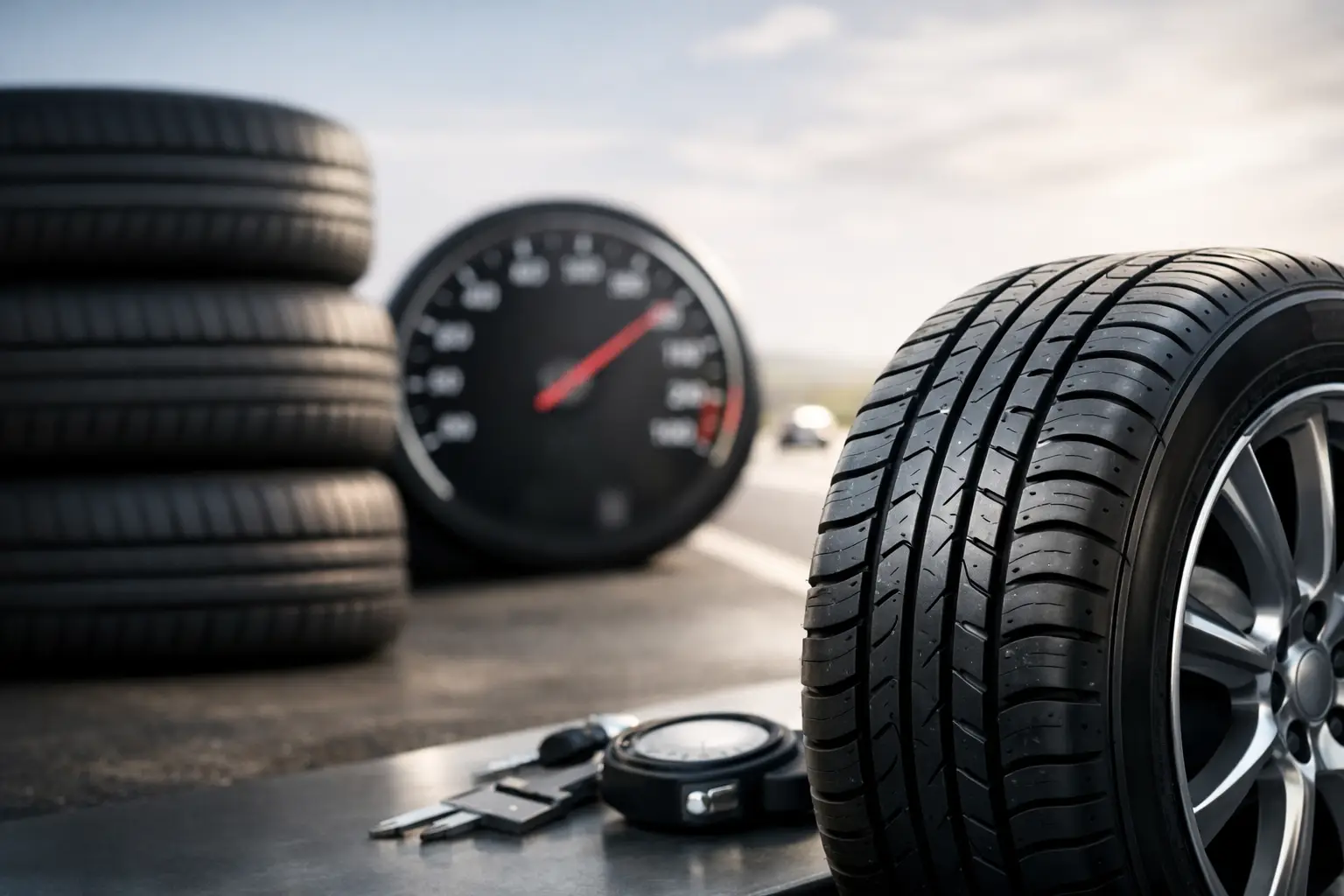
You usually notice tyre speed ratings when ordering replacements and spotting a final letter in the size code that does not quite match what is already on the car. That is where a proper guide to tyre speed ratings helps, because that single letter affects safety, legality, handling and which tyres are actually suitable for your vehicle.
For many drivers, the confusion starts with a simple question. If you never drive at 149 mph, why does it matter whether your tyre is rated V, W or Y? The answer is that speed ratings are not just about top speed. They are also tied to heat management, tyre construction and how the tyre is designed to perform under load and stress.
What tyre speed ratings actually mean
A tyre speed rating is a letter that shows the maximum speed a tyre is approved to handle under the correct conditions. You will usually see it at the end of the tyre size marking. For example, in 225/45 R17 94Y, the Y is the speed rating.
That letter is based on controlled testing. It tells you the tyre has been designed and tested to run safely up to a stated speed when inflated correctly, fitted properly, and used within its load rating. It is not a target and it is not a suggestion that the tyre should be used anywhere near that limit on the road.
In the UK, common passenger car speed ratings include T, H, V, W and Y. As a rough guide, T is rated to 118 mph, H to 130 mph, V to 149 mph, W to 168 mph and Y to 186 mph. You may also come across lower ratings on vans and older vehicles, or higher-performance fitments carrying Y markings with additional load and performance markings.
Guide to tyre speed ratings by real-world use
The easiest way to think about speed ratings is to match them to the type of vehicle and driving they are built for.
A smaller hatchback or family saloon often uses T or H rated tyres. These are common on everyday road cars where comfort, mileage and value are often stronger priorities than outright high-speed performance.
V rated tyres are common on more powerful saloons, estates and coupes. W and Y ratings usually appear on performance cars, premium German marques and vehicles with manufacturer fitments that demand a more capable tyre carcass and compound. If you drive an Audi, BMW, Mercedes, Porsche or Range Rover, it is very common to see higher speed ratings even if the car spends most of its life on normal roads.
That is because the rating supports the vehicle’s design, not just the driver’s habits. A heavier, faster or more performance-focused vehicle may require a tyre that stays stable under harder cornering, stronger braking and sustained motorway use.
Why the speed rating matters beyond top speed
This is where many buyers get caught out. They assume a speed rating only matters if they drive flat out. In practice, it can affect how the tyre behaves every day.
A higher speed-rated tyre often has a stiffer construction. That can improve steering response and stability, especially on heavier or more powerful vehicles. The trade-off is that it may ride a little firmer or wear differently depending on the compound.
A lower speed-rated tyre may be cheaper, but that does not make it a safe substitute. If the vehicle manufacturer specifies a certain minimum speed rating, dropping below it can affect insurance compliance, safety and the way the vehicle drives. On some cars, it can make the steering feel less precise or the car feel less settled at motorway speeds.
There is also a heat factor. As speed rises, tyres generate more heat. The speed rating reflects the tyre’s ability to manage that heat without failing. Even if you never approach the tyre’s maximum rated speed, the construction still matters during heavy loads, long-distance summer driving and fast A-road or motorway use.
How to find the correct rating for your car
The safest route is to check the manufacturer recommendation first. You will usually find it in the owner’s handbook, inside the fuel flap, or on the driver’s door shut. That information gives you the correct tyre size and the minimum load and speed rating.
If the car has had aftermarket wheels fitted, you need to be a bit more careful. A wheel change can alter the tyre size, but it does not remove the need to match the correct specification for the vehicle. This is particularly important on premium and performance cars where clearances, axle weights and handling balance matter.
It is also worth checking what is fitted now, but do not rely on that alone. Cars are often sold with the wrong tyres already fitted. We see this more often than many drivers expect, especially where people have chosen on price rather than spec.
Can you fit a higher speed rating?
In many cases, yes. Fitting a tyre with a higher speed rating than the manufacturer minimum is generally acceptable, provided the size, load index and overall suitability are correct.
For example, if your car requires a V rated tyre, moving to W or Y may be fine. This is common where certain sizes are more widely available in higher performance ratings. You may even find that the better choice in stock comes from a premium brand in a higher rating.
That said, higher is not always better for every driver. A more performance-focused tyre may cost more and may not deliver the longest life if your main priority is everyday commuting. It depends on the vehicle, the use case and what you want from the tyre.
Can you fit a lower speed rating?
Usually, this is where the answer becomes much stricter. Fitting below the manufacturer’s specified speed rating is generally not advised unless there is a specific seasonal or legal allowance, and even then it must be handled properly.
Winter tyres are the main exception people hear about. In some cases, a lower speed rating may be permitted for winter use, but the tyre still needs to be suitable for the vehicle and the driver must be made aware of the reduced maximum speed capability. That is not a loophole for fitting any cheaper tyre that happens to be available.
For normal year-round road use, dropping below spec can create problems. It may affect insurance, MOT expectations in some situations, and more importantly the way the vehicle performs under stress.
Speed rating, load index and XL tyres
One common mistake is looking only at the final letter and ignoring the number before it. The number is the load index, and it matters just as much.
Take 245/40 R18 97Y as an example. The 97 is the load index and the Y is the speed rating. Both need to be suitable. If you match the speed rating but fit too low a load index, the tyre may still be wrong for the car.
This matters even more on SUVs, estates, electric vehicles and premium saloons, where axle loads can be high. You may also see XL markings, which indicate an extra load tyre. Again, that is not optional if the vehicle needs it.
What performance drivers should watch for
If you run a hot hatch, performance saloon or upgraded alloy wheel setup, speed ratings need a closer look. The tyre is part of the overall package. Wheel width, sidewall profile and vehicle power all influence what works properly.
A cheaper tyre with the right size but the wrong quality or spec can spoil the car. You might get more road noise, weaker wet grip or vague steering. On performance vehicles, the correct rating often goes hand in hand with the sort of construction that keeps the car feeling planted.
If you use the car for enthusiastic road driving or occasional track work, there is another layer again. A road-legal tyre with a suitable speed rating is not automatically the right tyre for repeated high-temperature use. In that case, you need to consider compound, sidewall stiffness and intended use rather than looking at the speed letter alone.
The practical buying takeaway
If you are replacing tyres, treat the speed rating as a required spec, not a minor detail. Check the vehicle recommendation, match the load index, and do not assume the cheapest option in the correct size is the right one.
If you are unsure, ask before ordering. That matters even more with aftermarket wheels, staggered setups, commercial fitments and premium vehicles where tyre choice can make a noticeable difference. A good supplier should be able to confirm the proper fitment rather than just selling by size.
The right tyre does more than fit the rim. It supports the way the vehicle was built to drive, brake and carry weight. Get that right, and the car will feel safer, more predictable and better sorted every time you head out.