
Alloy Wheel Repair Versus Replacement Explained

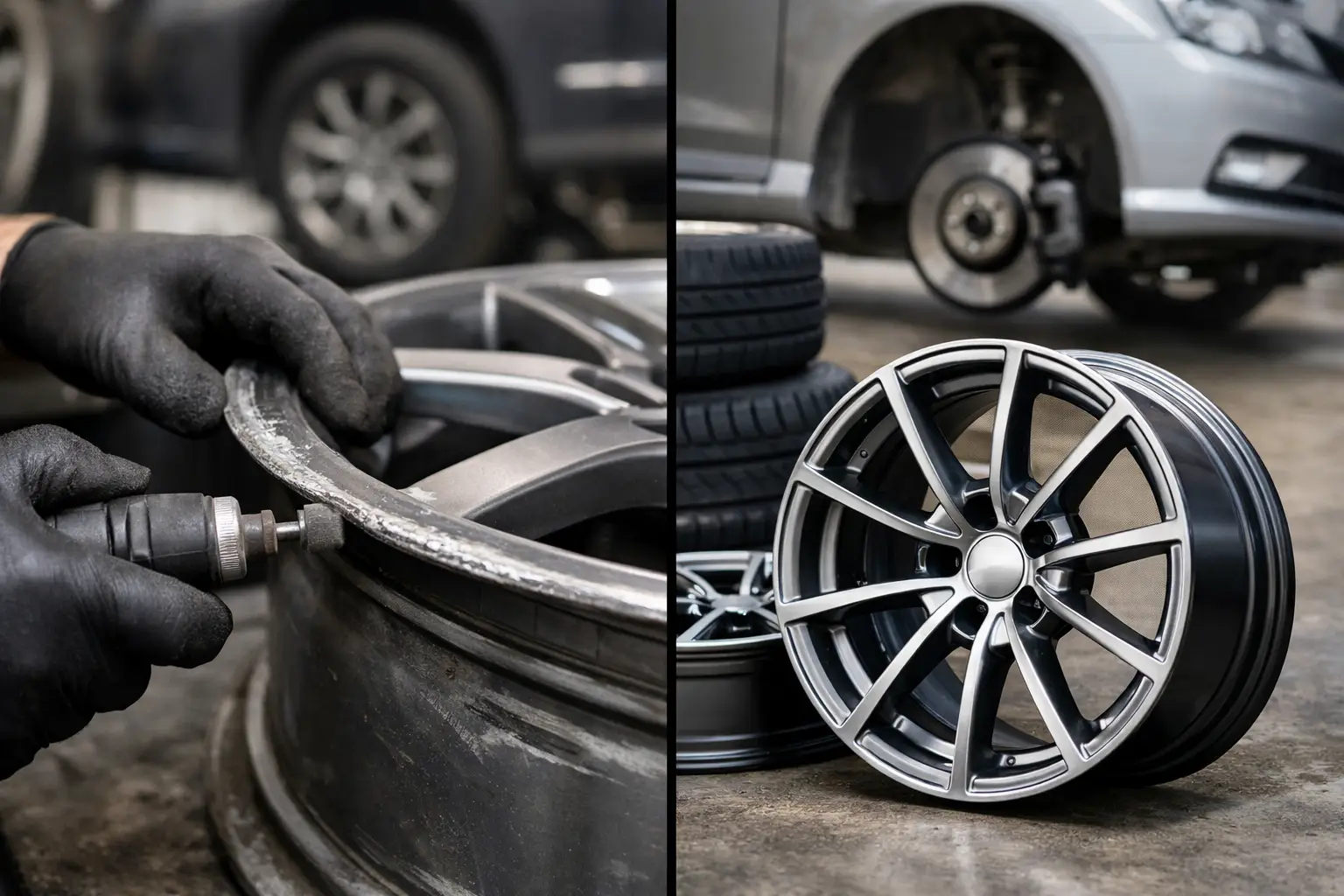
A kerbed alloy can make an otherwise well-kept car look tired, but the decision is not always cosmetic. Alloy wheel repair versus replacement comes down to the type of damage, whether the wheel still runs true, and whether it can hold a tyre safely. A sensible repair can restore the appearance and extend the life of a quality wheel. The wrong repair, however, can leave you with recurring vibration, pressure loss or a wheel that should never have gone back on the road.
For most drivers, the best starting point is an informed inspection rather than choosing purely on price. The visible mark on the front face is only part of the story.
Alloy Wheel Repair Versus Replacement: The Key Difference
Wheel refurbishment is intended to restore an alloy that remains structurally sound. This can include correcting minor kerb damage, treating corrosion, preparing the surface and applying a durable painted, powder-coated or diamond-cut finish. In some cases, a specialist can also assess and correct a slight distortion.
Replacement means fitting another wheel that matches the vehicle’s requirements for diameter, width, offset, centre bore, load rating and brake clearance. It may be a new wheel, a quality used original-equipment wheel or a correctly specified aftermarket option.
The important distinction is that refurbishment should not be used to disguise structural damage. A wheel is part of the vehicle’s safety system. It carries load, supports the tyre bead and has to cope with potholes, cornering forces and repeated heat cycles from the brakes.
When Alloy Wheel Repair Is Usually the Right Choice
Light kerbing is the most common candidate for refurbishment. If the damage is limited to the outer rim lip or painted face, with no crack, significant bend or loss of material, repair is normally the more cost-effective route. This is especially true for factory wheels on premium vehicles, where a replacement single wheel can be expensive or difficult to source in the correct finish.
Cosmetic refurbishment also makes good sense when lacquer has begun to peel, the finish has dulled, or corrosion is developing around the rim. Corrosion near the tyre bead can eventually cause a slow leak, so it is worth dealing with before it becomes an everyday annoyance. Proper preparation matters here. Simply painting over corrosion may improve the look for a short time, but it will not provide a lasting repair.
A repair can be particularly worthwhile if you have a complete matching set of desirable wheels. Keeping the original wheels maintains the vehicle’s intended fitment and avoids the challenge of finding one replacement with the same design, finish and condition. It can also help prepare a car for sale without paying for a full new set.
Diamond-cut wheels need a closer look
Diamond-cut alloys have a machined metal face beneath a clear lacquer. They look sharp when new, but they are more vulnerable to water getting under the lacquer after kerb damage. A proper refurbishment normally involves stripping the wheel, addressing the damage, applying the base coating and recutting the face before lacquering.
There is a limit to how many times a diamond-cut wheel can be machined. Each cut removes a small amount of material, so an experienced workshop should inspect the wheel before recommending the process. If repeated refurbishment has already taken place, a painted finish or replacement may be the more sensible long-term choice.
When Replacement Is the Safer Option
Cracks are the clearest warning sign. A crack around a spoke, the inner barrel, the hub mounting area or the bead seat deserves professional assessment immediately. Although some cracks can be welded by specialists, welding is not automatically the right answer for every wheel. The location, length and underlying condition of the alloy all matter. For a heavily loaded vehicle, a performance car or a wheel with multiple issues, replacement is often the safer decision.
A serious bend is another reason to look beyond a cosmetic repair. Pothole damage can distort the inner rim where it is not immediately visible. Symptoms include steering-wheel vibration, a shake through the seat at speed, uneven tyre wear or a tyre that repeatedly loses air. A workshop can check radial and lateral run-out to establish whether the wheel is still within an acceptable tolerance.
Replacement is also sensible when corrosion has severely affected the bead seat, when a previous poor repair is failing, or when chunks of alloy are missing from the rim. The same applies if the wheel has been involved in a collision. Damage from an impact may extend beyond the mark you can see, and no finish can make a compromised wheel safe.
Cost Matters, But It Is Not the Whole Calculation
Refurbishment is often cheaper than replacing a genuine alloy, particularly on Audi, BMW, Mercedes, Porsche and Range Rover models where original wheels can command a high price. It can also be a better-value way to refresh all four wheels and transform the appearance of the vehicle.
But the cheapest quote is not always the lowest-cost option over time. A wheel that has not been properly prepared can corrode again, lose lacquer or leak around the tyre bead. Equally, fitting a cheap replacement with incorrect specifications can create clearance, handling or insurance issues. A wheel must be suitable for the vehicle, not simply the same diameter.
When comparing prices, factor in tyre removal and refitting, balancing, valve or TPMS service work, and the condition of the other wheels. If one alloy is badly damaged and the remaining three are heavily corroded, refurbishing the full set may give a better result. If only one wheel is beyond repair, a matching replacement may be all that is needed.
Fitment Cannot Be Treated as an Afterthought
Choosing a replacement wheel means checking more than its appearance. Width and offset affect where the wheel sits in the arch and how much clearance it has to suspension and brakes. Centre bore and bolt pattern must be correct, while the wheel’s load rating needs to suit the vehicle. Tyre size must also remain appropriate for the wheel width and rolling circumference.
This is where vehicle-specific knowledge makes a real difference. A wheel that physically bolts on may still be unsuitable if it fouls a brake caliper, sits too far out, contacts suspension components or changes the tyre’s position enough to cause rubbing. On modern vehicles, TPMS sensors and correct tyre pressure settings also need consideration after the wheel is refitted.
For owners in Dorset, The Tyre Barn can inspect wheel damage, advise on suitable refurbishment or replacement options, and handle tyre fitting and balancing at its Wimborne workshop. This avoids the common problem of buying a wheel separately, then discovering it is not the right specification when it is time to fit it.
What a Proper Assessment Should Cover
Before approving either route, ask for the wheel to be checked without the tyre hiding the inner rim. The inspection should consider visible cracks, bends, corrosion around the bead seat and damage around bolt holes or spokes. It should also establish whether the tyre has suffered sidewall damage from the same pothole or kerb strike.
A good assessment also looks at the cause. If two wheels on the same side are bent, or a replacement tyre has worn unevenly, there may be an alignment or suspension issue to address. Refurbishing the wheel alone will not prevent the problem returning.
Do not ignore a vibration just because the wheel looks presentable. Balancing can correct an imbalance, but it cannot cure a bent rim. Likewise, topping up a slowly deflating tyre is not a fix if corrosion or damage at the bead seat is allowing air to escape.
Make the Decision on Condition, Not Appearance
Minor kerb damage, tired paint and early surface corrosion are usually good reasons to refurbish a sound alloy. Cracks, severe deformation, missing material and repeated air loss point towards replacement or, at minimum, a detailed specialist inspection. The condition of the tyre, the availability of a matching wheel and the vehicle’s fitment requirements all shape the final choice.
The right answer should leave you with a wheel that looks right, balances correctly, seals properly and is specified for the car. If there is any doubt about structural integrity, treat the alloy as a safety component first and a cosmetic item second.