
How to Choose New Tyres for Your Car or Van

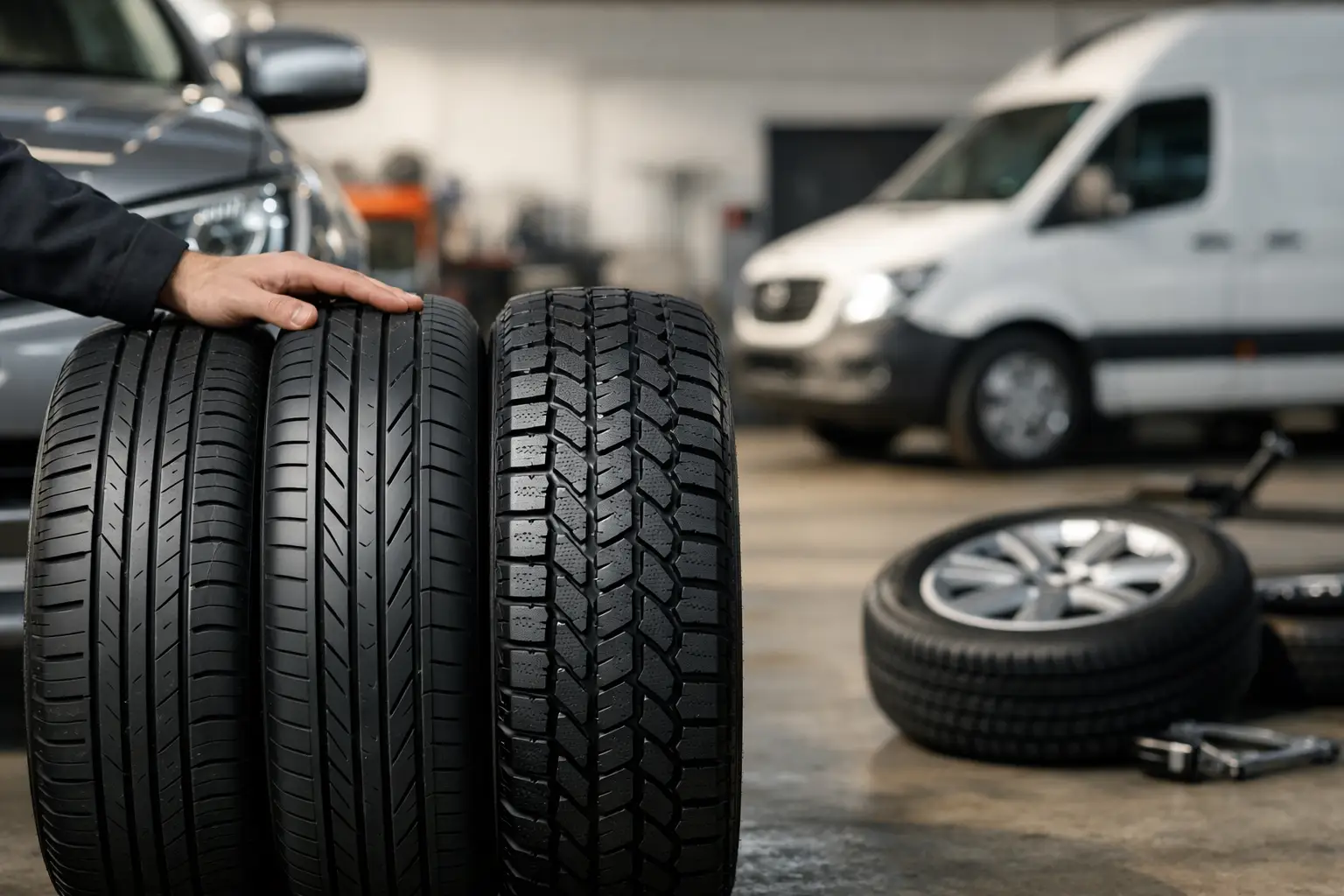
The difference between tyres that merely fit and tyres that suit your vehicle is felt on the first wet roundabout, under braking and on a long motorway run. New tyres are not just a routine replacement purchase. They affect grip, steering response, fuel use, ride comfort and the amount of confidence you have behind the wheel.
For most drivers, the right choice starts with the size and specification approved for the vehicle, then comes down to how and where it is driven. A family hatchback covering school runs and commuting has different priorities from a loaded work van, a motorway-mileage executive car or a performance-focused BMW, Audi, Porsche or Range Rover.
When do you need new tyres?
The legal tread limit in the UK is 1.6mm across the central three-quarters of the tyre, around its full circumference. Reaching that point means the tyre needs replacing, but it is not a sensible target for planning ahead. Wet-weather performance falls as the grooves wear, so many drivers choose to replace tyres at around 3mm, particularly before autumn and winter.
Tread depth is only one part of the picture. Cracks in the sidewall, cuts, bulges, exposed cords, repeated pressure loss or uneven wear can all mean a tyre is no longer safe to use. A vibration through the steering wheel may point to a balancing issue, but it can also reveal a damaged tyre or wheel. If one edge has worn much faster than the other, fitting replacements without investigating alignment can shorten the life of the new set.
Age matters too. Tyres can deteriorate even when the tread looks healthy, especially on vehicles that cover low mileage, spend long periods parked or are stored outside. The date code on the sidewall helps identify when a tyre was made, but condition should always be assessed properly rather than judged by age alone.
Choosing new tyres: start with the sidewall
Your existing tyre sidewall contains the information needed to identify the correct starting point. A marking such as 225/45 R17 94W describes the width, profile, construction, wheel diameter, load index and speed rating. Every part matters.
In that example, 225 is the tyre width in millimetres. The 45 indicates the sidewall height as a percentage of the width. R17 means it is designed for a 17-inch wheel. The 94 load index and W speed rating show the load and speed capability. It is not enough to order a tyre simply because it fits a 17-inch alloy wheel – a different width or profile can affect clearance, handling, gearing and speedometer accuracy.
The vehicle handbook, fuel-filler flap or door shut often lists approved tyre sizes and pressures. Manufacturer-approved markings may also apply to certain vehicles, particularly premium and performance models. BMW star-marked, Mercedes MO, Audi AO, Porsche N-rated and other vehicle-specific tyres are developed to meet particular manufacturer requirements. They are not always essential in every situation, but they can be the right choice where the vehicle specification, warranty requirements or intended driving feel calls for them.
Load rating is especially important for vans, SUVs and vehicles that regularly carry passengers, tools or towing loads. Never fit a tyre with a lower load or speed rating than the vehicle requires. Commercial tyres may need a reinforced or C-rated construction, while some passenger vehicles are specified with XL tyres for extra load capacity. Choosing a cheaper option with the wrong rating is false economy and can compromise safety.
Match the tyre to the way you drive
There is no single best tyre for every driver. A premium touring tyre often suits motorists who want dependable wet grip, low road noise and long wear over mixed daily mileage. A performance tyre can offer sharper steering and stronger dry grip, but may wear more quickly or produce a firmer ride. Budget tyres can be a practical option for a lightly used vehicle, provided the specification is correct, but their wet braking, noise and longevity can differ considerably from established premium ranges.
For drivers who cover high annual mileage, durability, rolling resistance and wet performance are usually more valuable than the outright dry grip of an ultra-high-performance tyre. For an enthusiast car, the balance may shift towards steering precision, heat management and grip under harder cornering. The right answer depends on the car, the roads, the mileage and the driver.
Electric vehicles deserve a little extra consideration. Their weight and instant torque can accelerate tyre wear, while their quiet cabins make road noise more noticeable. Some tyres are designed with EV use in mind, but the essential points remain correct fitment, adequate load capacity and strong wet-weather performance.
Understand wet grip, noise and fuel efficiency labels
Tyre labels are useful for comparing products, but they should not be the only deciding factor. Wet grip ratings indicate braking performance on a wet road, while fuel-efficiency ratings reflect rolling resistance. External rolling noise is shown in decibels and by a class rating.
A tyre that looks excellent on the label may still be less suitable for your vehicle than another option with the right load rating, construction or manufacturer approval. Labels also cannot tell the full story about steering feel, wear rate, aquaplaning resistance or performance in cold weather. Use them as one part of a considered comparison, not as a shortcut around fitment advice.
Should you replace two tyres or all four?
Replacing all four tyres together gives the most consistent grip and handling, particularly on all-wheel-drive and performance vehicles. It is not always necessary, however. If the remaining pair has plenty of even tread and is the same size and specification, replacing two can be a sensible approach.
Where only two tyres are being fitted, the new pair should generally go on the rear axle. This helps maintain rear-end stability in wet conditions and reduces the risk of oversteer if grip is lost. There can be vehicle-specific exceptions, so it is worth asking for advice rather than assuming the driven wheels should automatically receive the newest tyres.
On four-wheel-drive vehicles, differences in rolling circumference can place strain on the drivetrain. Manufacturers may set limits for acceptable tread-depth variation, so check the vehicle guidance before replacing only one or two tyres. In some cases, matching all four is the sensible long-term decision.
Do not overlook fitting, balancing and alignment
A correctly chosen tyre still needs to be fitted properly. Professional fitting includes checking the wheel condition, fitting the tyre in the correct orientation, balancing the wheel assembly and setting pressures to the vehicle specification. Directional tyres must rotate the right way, while asymmetric tyres have an inside and outside that must be mounted correctly.
If new tyres are wearing unevenly, pulling to one side or causing a crooked steering wheel, wheel alignment should be checked. Kerb strikes, potholes and worn suspension components can all alter alignment. Sorting this when tyres are fitted can prevent a new set from being worn out prematurely.
For drivers buying new wheels as well as tyres, fitment becomes more involved. Offset, centre bore, stud pattern, brake clearance and suitable tyre size all need to work together. A wheel may physically bolt on but still be unsuitable if it catches a brake caliper, protrudes beyond the arch or changes the vehicle’s behaviour. This is where specialist advice saves time and avoids expensive mistakes.
Make the replacement decision before it becomes urgent
Waiting for an MOT advisory, a puncture or a failed tyre on the way to work limits your options. Checking tread, pressures and sidewall condition regularly gives you time to choose the right tyre rather than taking whatever is immediately available.
If you are unsure about size, load rating, wheel compatibility or whether your existing tyres have worn evenly, bring the vehicle details and a clear view of the sidewall markings to a specialist. At The Tyre Barn in Wimborne, the workshop team can help match the correct tyres to the vehicle and fit them properly, so the next journey starts with the grip and reassurance it should have.