
Do Bigger Wheels Affect Comfort? The Real Trade-Off

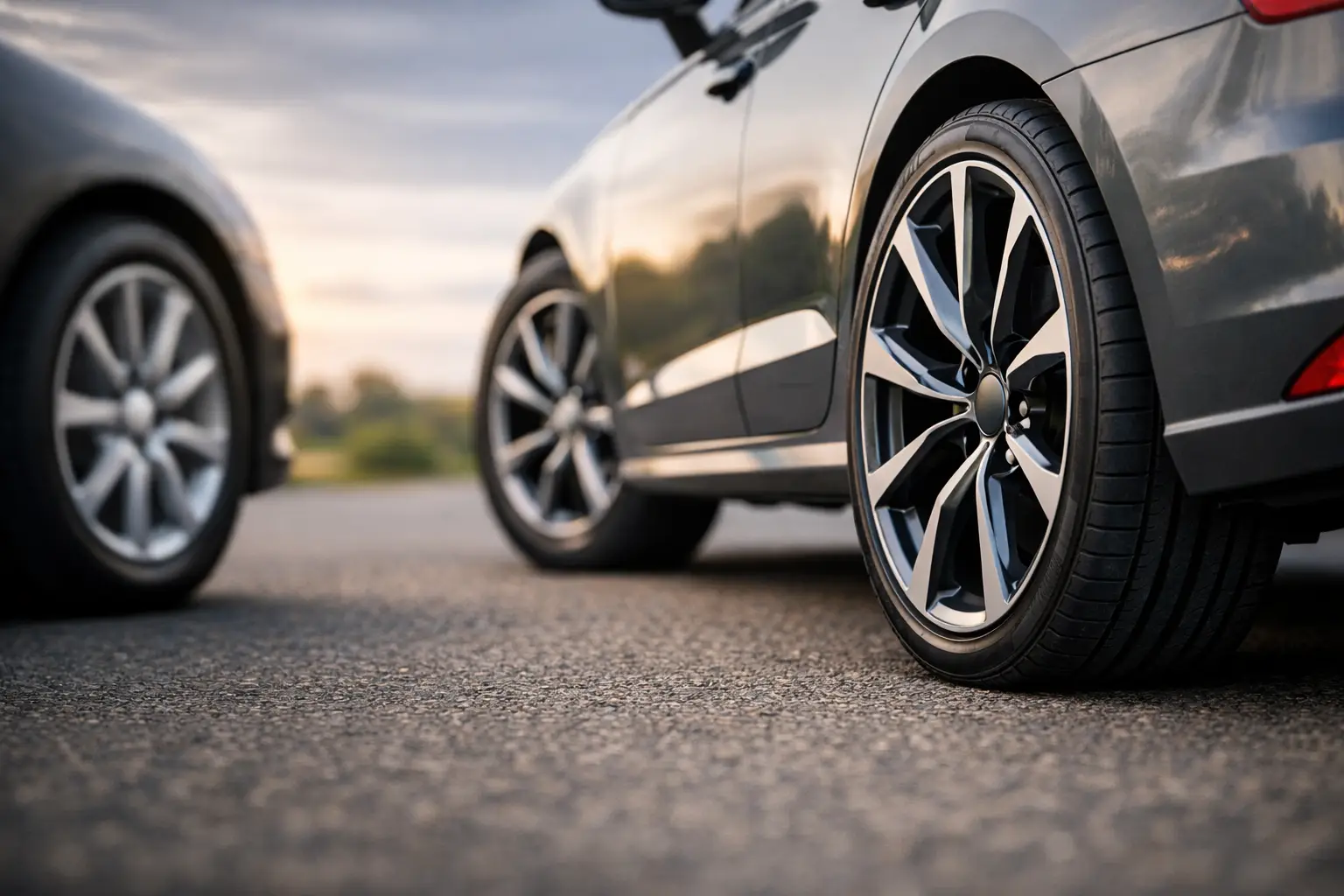
A set of larger alloys can transform the look of a car before it has even left the driveway. But do bigger wheels affect comfort? In most cases, yes – particularly when the larger wheel is paired with a lower-profile tyre. The change is not always dramatic, and it is not simply a case of bigger wheels being uncomfortable. The tyre specification, wheel weight, suspension setup and correct fitment all play a part.
For drivers choosing between factory-sized wheels and a larger aftermarket setup, the key is understanding what gives a tyre its cushioning effect. Get the balance right and a larger wheel can still feel composed and usable on British roads. Get it wrong and every broken surface, pothole and expansion joint can become far more noticeable.
Do Bigger Wheels Affect Comfort on the Road?
Wheels themselves do not provide much ride comfort. That job is mainly done by the tyre sidewall and the vehicle’s suspension. When wheel diameter increases while the overall rolling diameter is kept close to standard, the tyre sidewall has to become shorter.
For example, moving from an 18-inch wheel with a 50-profile tyre to a 20-inch wheel may require a 35 or 40-profile tyre to keep the outside diameter similar. There is less rubber and air between the wheel and the road. That reduced sidewall flex means the tyre absorbs less of the initial impact from rough tarmac.
The result can be a firmer ride, more vibration through the seat and steering wheel, and a sharper reaction over potholes. On a smooth A-road, the difference may feel precise and controlled. On uneven town roads, it can feel considerably less forgiving.
This is why two cars on the same wheel diameter can feel very different. A well-matched 19-inch setup with a sensible tyre profile may be perfectly comfortable, while an overly aggressive 20-inch or 21-inch fitment with stretched, low-profile tyres can make daily driving tiresome.
Why Lower-Profile Tyres Feel Firmer
A tyre is not a solid ring of rubber. The air inside it is part of the vehicle’s springing system. A taller sidewall can flex over smaller imperfections and helps shield the wheel from sudden impacts. A lower-profile tyre has less room to deform, so more of the force is passed into the suspension and cabin.
That firmer response has benefits. Steering can feel more immediate, and the car may roll less during cornering. For an enthusiast driving a well-surfaced route, that added precision may be exactly the point of an upgrade.
However, low profiles leave less margin for poor road surfaces. A deep pothole that a taller tyre might absorb can pinch a low-profile tyre against the rim. This increases the risk of sidewall damage, cracked alloys or a bent wheel. Premium wheels are not immune, and neither are strong-looking factory alloys.
Tyre construction matters as well. Run-flat tyres often have reinforced sidewalls, which can make the ride noticeably firmer than a conventional tyre in the same size. Load-rated tyres for heavier vehicles, performance tyres with stiff carcasses and budget tyres with less refined construction can all alter comfort independently of wheel diameter.
Wheel Weight Can Change the Way a Car Rides
Diameter is only part of the story. A large wheel and tyre package can weigh more than the factory setup, especially where a heavy cast alloy is fitted with a wide tyre. This extra unsprung weight is harder for the suspension to control.
When a wheel hits a bump, the suspension needs to keep the tyre in contact with the road while preventing the impact from travelling into the cabin. A heavier assembly can make the car feel busier over rough surfaces and may reduce the suspension’s ability to react cleanly to rapid bumps.
That does not mean every larger wheel is heavier. A quality lightweight forged or flow-formed wheel can be lighter than a smaller original alloy. The full package matters: wheel design, width, tyre size and tyre construction should be considered together rather than judging only by the number stamped on the rim.
Width, Tyre Pressure and Comfort
Larger wheels are often fitted with wider tyres, but wider is not automatically better for ride quality. A wider tyre can improve dry grip and give a more planted appearance, yet it may follow ruts and cambers in the road more readily. This tendency, often called tramlining, can make the steering feel unsettled on worn carriageways.
Tyre pressure is equally important. An over-inflated tyre feels harsh because it has less ability to flex. An under-inflated tyre can feel vague, wear unevenly and run hotter, as well as increasing the chance of damage from an impact. Always use the pressure recommended for the specific wheel and tyre fitment, rather than assuming a pressure used on the original wheels is automatically correct.
If your vehicle has different recommended pressures for light loads and full loads, follow them. This is particularly relevant for SUVs, estates, vans and performance cars carrying passengers or luggage. Correct pressures will not turn an ultra-low-profile setup into a soft ride, but they can prevent unnecessary harshness.
Keep the Overall Rolling Diameter Correct
When fitting larger wheels, the usual aim is to keep the tyre’s overall outside diameter close to the original specification. This helps preserve speedometer accuracy, gearing, wheel arch clearance and the operation of systems such as ABS, traction control and stability control.
A wheel size change without the right tyre size can cause more than a comfort issue. An oversized rolling diameter may rub on liners or suspension components under steering lock or suspension compression. An undersized diameter can leave a larger arch gap, alter the indicated speed and make the ride firmer than intended because the sidewall is too short.
Offset and wheel width are just as important. A wheel that sits too far inward can foul suspension components; one that protrudes too far outward can contact the arch or throw more road spray along the bodywork. Spacers, if used, need to be selected carefully and fitted correctly. The right wheel must be compatible with the vehicle’s PCD, centre bore, offset, brake clearance and load rating.
When Bigger Wheels Make Sense
There is no universal best wheel size. A larger setup can be a sensible choice where the car was designed to accept it and the tyre size retains enough sidewall for the roads you use. Many premium models are offered from the factory with several wheel diameters, giving owners a useful guide to sensible options.
A driver who mainly covers smooth motorway miles may be happy with a larger wheel for its appearance and steering response. Someone regularly travelling on rural Dorset roads, dealing with potholes or prioritising a quieter family ride may be better served by a smaller diameter and a taller tyre sidewall.
Consider what you value most. Larger wheels can offer a more purposeful stance, room for bigger brakes and a sharper turn-in. Smaller wheels with taller tyres generally offer better impact absorption, lower replacement costs and more protection against kerb and pothole damage. Neither choice is wrong when it suits the vehicle and its use.
Choosing a Comfortable Wheel Upgrade
The most comfortable upgrade is usually not the biggest wheel that physically fits. It is the largest sensible wheel size with the correct load-rated tyre, sufficient sidewall, suitable offset and a weight that works with the car’s suspension.
Before buying, check the tyre sizes approved for your exact model and confirm whether your vehicle has larger brakes, a factory sport suspension, adaptive damping or clearance limitations. Cars from Audi, BMW, Mercedes, Porsche and Range Rover can have several brake and suspension combinations within the same model range, so model-year and specification details matter.
It is also worth inspecting the condition of your existing wheels and tyres. Vibration blamed on a wheel upgrade may actually come from a buckled alloy, uneven tyre wear, poor balancing or worn suspension components. A professional inspection can separate a fitment problem from a maintenance issue before money is spent on replacement parts.
At The Tyre Barn, the practical approach is to match the wheel and tyre package to the car, not just the photograph. If comfort matters, choose a setup that leaves the tyre enough sidewall to do its job. You will still get the visual upgrade, while keeping every journey more enjoyable when the road surface is less than perfect.