
Buying Range Rover Wheels Online: Fitment First

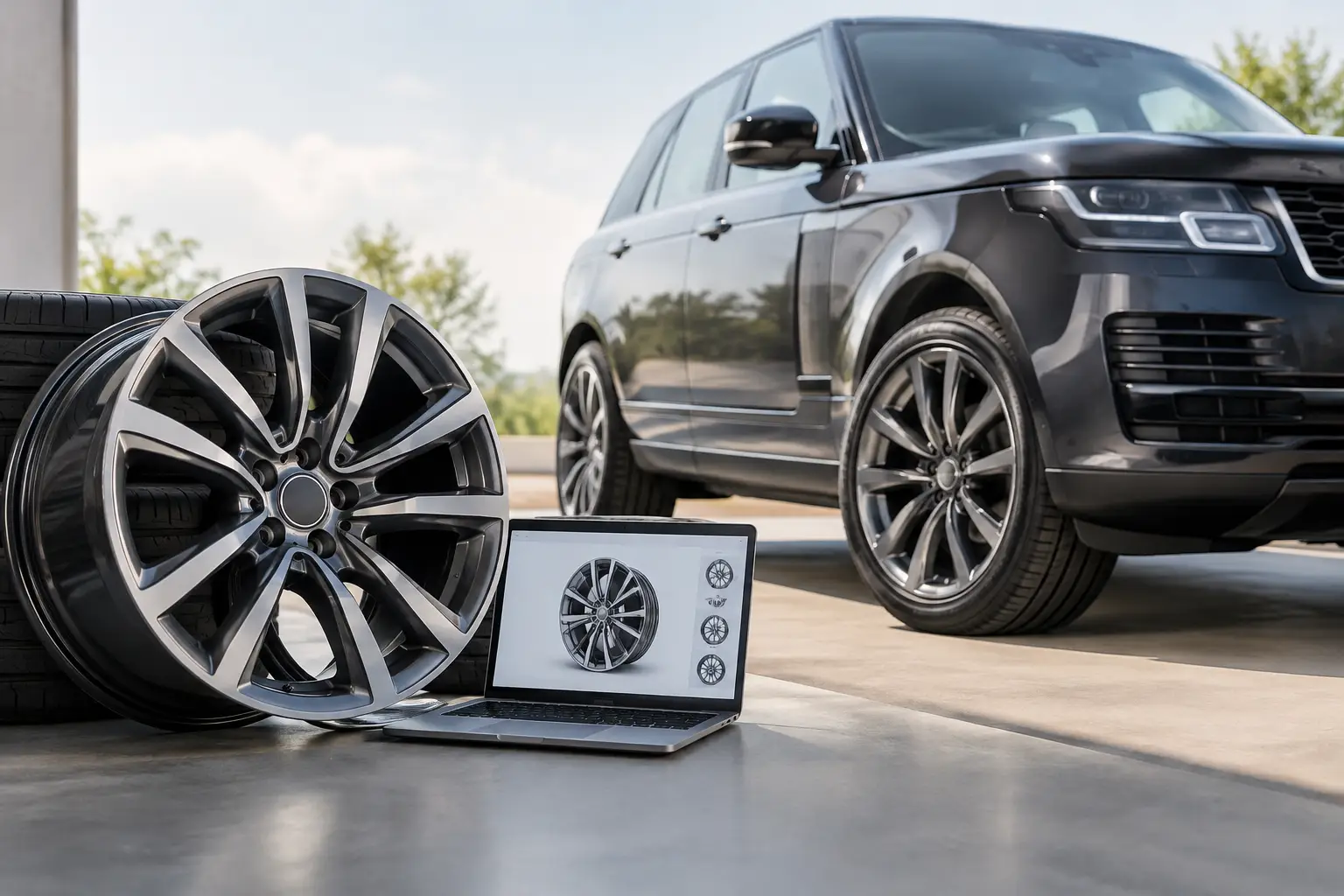
A Range Rover can look completely right on a new set of alloys, or completely wrong if the wheels sit too far inside the arches, rub under load or trigger warning lights. That is why buying Range Rover wheels online should start with fitment, not simply with the design that catches your eye.
Range Rover wheel choices are broader than many owners expect. The badge covers several models, generations and trim levels, from older P38 and L322 vehicles through to Range Rover Sport, Evoque, Velar, Discovery and the latest full-size Range Rover. They do not all share the same wheel specification. Even where the stud pattern appears similar, the centre bore, offset, brake clearance, tyre size and sensor requirements can be different.
A good online purchase gives you the choice of a large catalogue. A correct purchase gives you wheels that bolt on properly, clear the brakes and suspension, and work as intended on the road.
Start with your exact Range Rover model
Before comparing finishes or wheel brands, identify the vehicle precisely. The model name alone is rarely enough. Check the registration, model year, engine variant and current wheel and tyre specification. This matters particularly on Range Rover Sport and Evoque models, where different generations can have very different fitment requirements.
The basic wheel details to match are diameter, width, stud pattern, centre bore and offset. Diameter is the advertised wheel size, such as 20, 21 or 22 inches. Width affects tyre choice and how far the wheel sits across the axle. Offset, often marked as ET, controls the wheel’s position relative to the hub and wheel arch.
Getting one measurement wrong can create problems that are not obvious while the vehicle is parked. A wheel with an unsuitable offset may clear the arch on level ground but touch the liner over bumps or when steering on full lock. A wheel that is too wide can place extra strain on components or leave the tyre outside the bodywork. Bigger is not automatically better if it compromises clearance, ride quality or tyre availability.
Do not assume every genuine-style wheel fits
Original equipment-style Range Rover alloys are popular because they retain the vehicle’s intended appearance. However, a genuine wheel removed from another Land Rover product is not automatically suitable for yours. The right-looking 22-inch wheel may have a different offset, bore or load rating.
This is also relevant when looking at used wheels. Used OEM wheels can represent excellent value, especially when they have been checked for cracks, buckles and previous repairs. But condition and compatibility must both be confirmed. A wheel can be genuine and still be the wrong choice for the vehicle in question.
Range Rover wheels online: choose a sensible size
Large-diameter wheels suit the proportions of a Range Rover, and factory wheel sizes have increased over the years. A 21-inch or 22-inch set can sharpen the appearance of the vehicle and give more direct steering feel. The trade-off is a lower-profile tyre, which provides less protection from potholes and kerb damage.
For everyday UK driving, wheel size should reflect how the vehicle is used. If it regularly covers poor rural roads, carries passengers or travels on rough tracks, retaining a sensible sidewall height is often the better decision. Smaller wheels with deeper-profile tyres can improve ride comfort and reduce the chance of damage.
It also pays to consider tyre cost before committing. Premium tyres in popular Range Rover sizes can be expensive, while some unusual combinations may be harder to source quickly. If you are moving up a wheel size, confirm that suitable tyres are readily available and that the overall rolling radius remains appropriate for the vehicle.
A package of wheels and correctly matched tyres removes much of this uncertainty. It allows the wheel width, tyre size and load rating to be considered together rather than treating the wheel as a purely cosmetic purchase.
Check load rating, brakes and tyre specification
Range Rovers are heavy vehicles. Their wheels and tyres must be capable of supporting the vehicle safely, including passengers, luggage and towing loads where applicable. This is not a place to compromise on unknown or unsuitable products.
Wheel load rating should be suitable for the axle loads of the specific vehicle. Tyres also need the correct load index and speed rating, particularly on high-performance Range Rover Sport models. A tyre that physically fits the rim is not necessarily approved for the vehicle’s weight or intended performance.
Brake clearance matters too. Larger factory brakes can limit the wheel designs that will fit, even when the stated diameter is correct. Spoke shape, barrel profile and internal clearance are just as relevant as the number stamped on the wheel. This can catch out owners fitting wheels to models with upgraded brakes or higher-specification trims.
If the vehicle has tyre pressure monitoring sensors, ask whether the wheels can be supplied with compatible TPMS valves and sensors. Reusing existing sensors may be possible if they are in good condition and compatible, but it is worth checking before fitting. A warning light after installation is frustrating and avoidable.
Consider the finish as part of ownership
Gloss black, satin black, silver, diamond-cut and shadow chrome-style finishes all change the character of a Range Rover. Dark wheels can give a more purposeful look, while silver or machined finishes often retain an OEM feel and can show brake dust less aggressively than a high-gloss black finish.
The practical side is worth considering. Diamond-cut wheels look sharp but their lacquered machined face can be more vulnerable once kerbed or damaged by corrosion. A painted or powder-coated finish can be more straightforward to refurbish. For vehicles used through wet winters, regular cleaning matters regardless of finish, especially around the inner barrel where salt and brake dust collect.
New, used or refurbished wheels?
The best route depends on budget, the vehicle and the result you want. New aftermarket alloys offer fresh finishes and a broad choice of styles. Quality matters, so choose wheels with suitable load capacity and proven vehicle-specific fitment rather than selecting solely on price.
Used original wheels are a strong option for owners replacing a damaged set, returning a vehicle to standard specification or looking for factory quality at a lower cost. Inspecting condition is essential. Look for kerbing, corrosion, lacquer lifting, cracks, buckles and signs of poor prior repair.
Refurbishment is often the right answer when the existing wheels are structurally sound but tired. Kerb marks, peeling lacquer and cosmetic corrosion can make an otherwise good set look well past its best. Professional refurbishment can restore the appearance of the wheels while allowing you to retain the correct factory fitment. It is particularly useful when a preferred original design is difficult or expensive to replace.
At The Tyre Barn, the benefit of dealing with a wheel and tyre specialist is that the purchase does not have to end at the online basket. Wheels can be assessed, tyres matched and fitted, and existing alloys considered for refurbishment where replacement is not the best value option.
Delivery or fitting: plan the final step
Ordering online is convenient, but fitting remains part of the job. If wheels are delivered to you, arrange fitting with a workshop that understands the requirements of heavier premium SUVs. Correct balancing, tyre pressure, wheel bolt torque and TPMS checks all matter.
For Dorset drivers, choosing collection or fitting at a local workshop can make the process simpler. It gives you an opportunity to have the wheels checked against the vehicle before final installation and to deal with any tyre or sensor requirements at the same appointment.
After fitting, recheck wheel bolt torque after the initial bedding-in period if advised by the fitter. Keep an eye on tyre pressures and inspect the wheels after the first few journeys for any vibration, rubbing or warning messages. These checks are quick, and they protect the investment you have just made.
The right Range Rover wheel set should look purposeful without creating a list of compromises. Start with the exact vehicle specification, be realistic about the roads you drive, and ask for fitment advice before committing. A few minutes spent checking the details is far better than discovering an expensive mismatch when the wheels arrive.