
Porsche Wheel Offsets Explained for UK Fitment

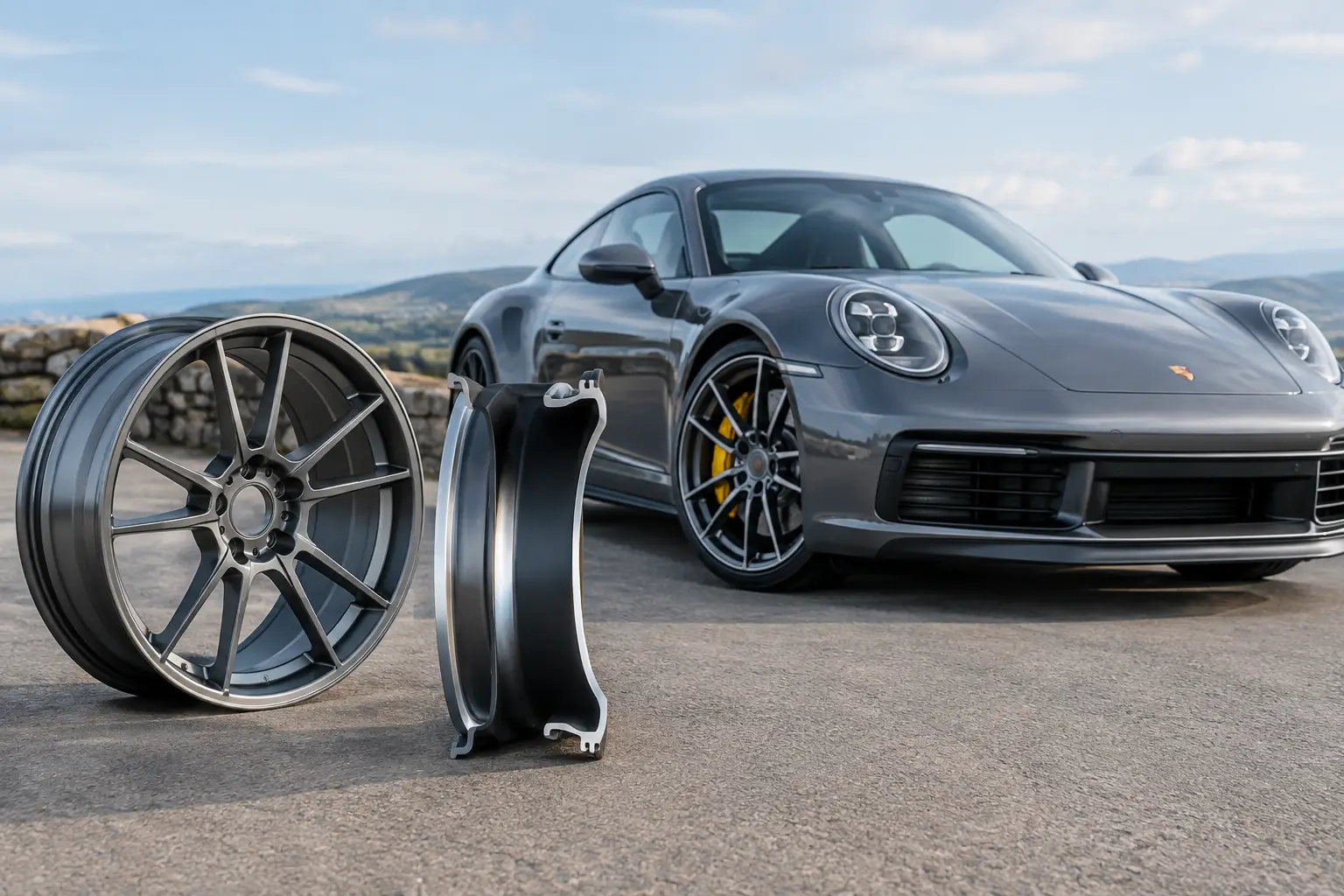
A Porsche can look wrong on wheels that are only a few millimetres out. More importantly, the wrong fitment can leave a tyre rubbing an arch liner, a wheel touching a brake caliper, or unnecessary load being placed on wheel bearings. Porsche wheel offsets are therefore not a detail to guess at when buying replacement or upgraded alloys.
The right offset helps position the wheel where Porsche intended it to sit – clear of the suspension and brakes, centred in the arch, and compatible with the tyre size and steering movement. Whether you are replacing a damaged original wheel, fitting a staggered set, or choosing a wider aftermarket design, understanding the ET figure is the starting point.
What Porsche wheel offsets actually mean
Wheel offset is the distance, measured in millimetres, between the wheel’s centreline and its mounting face – the surface that sits against the hub. It is normally marked as ET, from the German term Einpresstiefe. You may see a casting such as ET50, ET55 or ET65 on the rear of the wheel.
A higher positive ET number places the mounting face further towards the outside of the wheel. That pulls the wheel further inboard, towards the suspension. A lower ET number moves the wheel further out towards the arch.
For example, if two otherwise identical wheels are both 20 inches and 9J wide, changing from ET55 to ET45 moves the wheel 10mm further outward. That may give a fuller arch appearance, but it also reduces clearance at the outer wing. Move too far and the tyre can catch under compression or when the steering is on full lock.
The complication is that offset never works alone. Wheel width changes where both inner and outer wheel edges sit. A wider wheel with the same ET moves closer to the suspension and further towards the arch. This is why an ET number that works on an 8.5J wheel may not work on a 10J wheel.
Why Porsche wheel offsets vary so much
There is no single Porsche offset. The correct specification depends on the model, generation, axle and wheel diameter. A 911, Boxster, Cayman, Macan, Cayenne, Panamera and Taycan have very different requirements. Even within one model range, a Carrera, Turbo, GTS and GT car can use different wheel widths, brake packages and offsets.
Porsche commonly uses staggered wheel setups, with wider rear wheels and tyres to support traction and balance. It is normal for front and rear ET figures to differ significantly. Treating the two axles as interchangeable can lead to poor handling as well as clearance issues.
Brake clearance is another major factor. Porsche performance brakes can be physically large, and a wheel may have the correct diameter, width and offset yet still foul the caliper because of its spoke profile. A 20-inch wheel is not automatically suitable simply because it clears the disc. The inner barrel shape and the space behind the spokes matter just as much.
Factory wheel specifications also reflect suspension geometry. Porsche engineers select offsets to manage scrub radius, steering feel and the loads acting through the hub. A modest change may be acceptable on a road car when properly assessed. A large change simply to push wheels flush with the arches can affect how the car steers, follows road cambers and wears tyres.
Reading a wheel size correctly
A wheel marked 9J x 20 ET50 is 9 inches wide, 20 inches in diameter and has a 50mm offset. The J refers to the bead profile and is standard terminology for most passenger-car alloy wheels.
For Porsche fitment, that marking is only part of the picture. Check the bolt pattern, centre bore, load rating, wheel bolt seat and brake clearance before treating the wheel as suitable. Many modern Porsches use a 5×130 PCD, but that does not mean every 5×130 wheel fits every Porsche. Centre bore dimensions, wheel design and vehicle-specific load requirements still need to be right.
The bolts deserve particular attention. Original Porsche wheels often use specific bolt lengths and seating types. Fitting a wheel with the wrong seat profile – for example, using ball-seat bolts where a wheel requires tapered-seat bolts – is unsafe. Never assume the bolts supplied with another set of wheels will transfer correctly.
Offset changes and wheel width together
When comparing a prospective wheel with your existing setup, look at inner and outer position rather than ET alone. A wheel 1 inch wider is approximately 25.4mm wider overall. Half of that extra width sits on each side of the centreline before offset is considered.
As a simple example, moving from an 8.5J ET55 wheel to a 9.5J ET55 wheel adds about 12.7mm towards the suspension and 12.7mm towards the arch. If the wider wheel is ET45 instead, it moves a further 10mm outward. The result is roughly 2.7mm more inner clearance but around 22.7mm more outer poke.
That may be ideal on one Porsche with generous arches and entirely unsuitable on another. Tyre choice can alter the result too. Different tyre makes can run noticeably wider or have a squarer sidewall, even where the written size is identical.
Common Porsche offset mistakes
The most frequent mistake is buying on appearance alone. A wheel can share the correct diameter, stud pattern and finish with an approved Porsche option but have an offset intended for a different model. Photographs rarely show the clearance behind the spokes or the true position in the arch.
Another is relying on spacers as a universal solution. Quality hub-centric spacers can be used appropriately to correct a wheel that sits slightly too far inward, provided there remains arch clearance and suitable extended bolts are used. They cannot solve a wheel that already sits too far out, lacks caliper clearance, or is the wrong width for the car.
It is also unwise to fit a mismatched set with random front and rear offsets. Porsche chassis setups are sensitive, particularly on mid-engined and rear-engined models. A non-standard combination may physically bolt on but still alter stability, steering response or traction in ways that are not apparent on a short journey.
Finally, do not overlook wheel condition. A used original Porsche wheel can be an excellent choice, but inspect it for cracks, weld repairs, buckles and corrosion around the mounting face. Refurbishment can restore a wheel’s appearance, but it should never hide structural damage.
Choosing aftermarket alloys for a Porsche
Aftermarket wheels can reduce unsprung weight, allow a different style, or provide track-focused tyre options. The best choices are made to the vehicle’s actual specification rather than selected purely by diameter and finish.
Start with the exact Porsche model, year, engine variant and current brake setup. Then confirm the original front and rear wheel widths, offsets and tyre sizes. If you want a more purposeful stance, decide how much further out you want the wheel to sit and assess the entire package, including tyre sidewall, ride height and expected suspension travel.
Lowered cars require extra caution. Reduced ride height can make an otherwise sensible wheel and tyre combination rub during compression. Track use can create higher cornering loads and more suspension movement than normal road driving, so clearance needs to be checked with the car loaded, not merely while it is stationary on a ramp.
Load rating is especially relevant for larger Porsche models such as the Cayenne, Macan, Panamera and Taycan. A wheel intended for a lighter sports car may not be approved to carry the vehicle’s axle loads. The same applies to tyres: the correct size is only one part of selecting a safe replacement.
When to get a fitment check
A professional check is worthwhile whenever the wheel differs from the original width or offset, uses spacers, has an unfamiliar spoke design, or is being fitted to a car with upgraded brakes or lowered suspension. It is also sensible when buying used wheels, as listings can contain incomplete or incorrect application details.
At The Tyre Barn, the practical approach is to assess the complete fitment rather than just match a PCD. That means checking the wheel dimensions, tyre specification, brake clearance, bolt arrangement and the space available at both edges of the wheel. For customers in Dorset, fitting and inspection at the Wimborne workshop can remove much of the uncertainty before the wheels go on the road.
A well-chosen wheel should look as though it belongs on the car, but the real test is less visible: full steering lock, suspension movement, correct hardware and predictable behaviour on the road. Bring the vehicle details and the wheel markings with you, and a few measured millimetres can save a costly mistake.