
A Straight Guide to Alloy Wheel Sizes

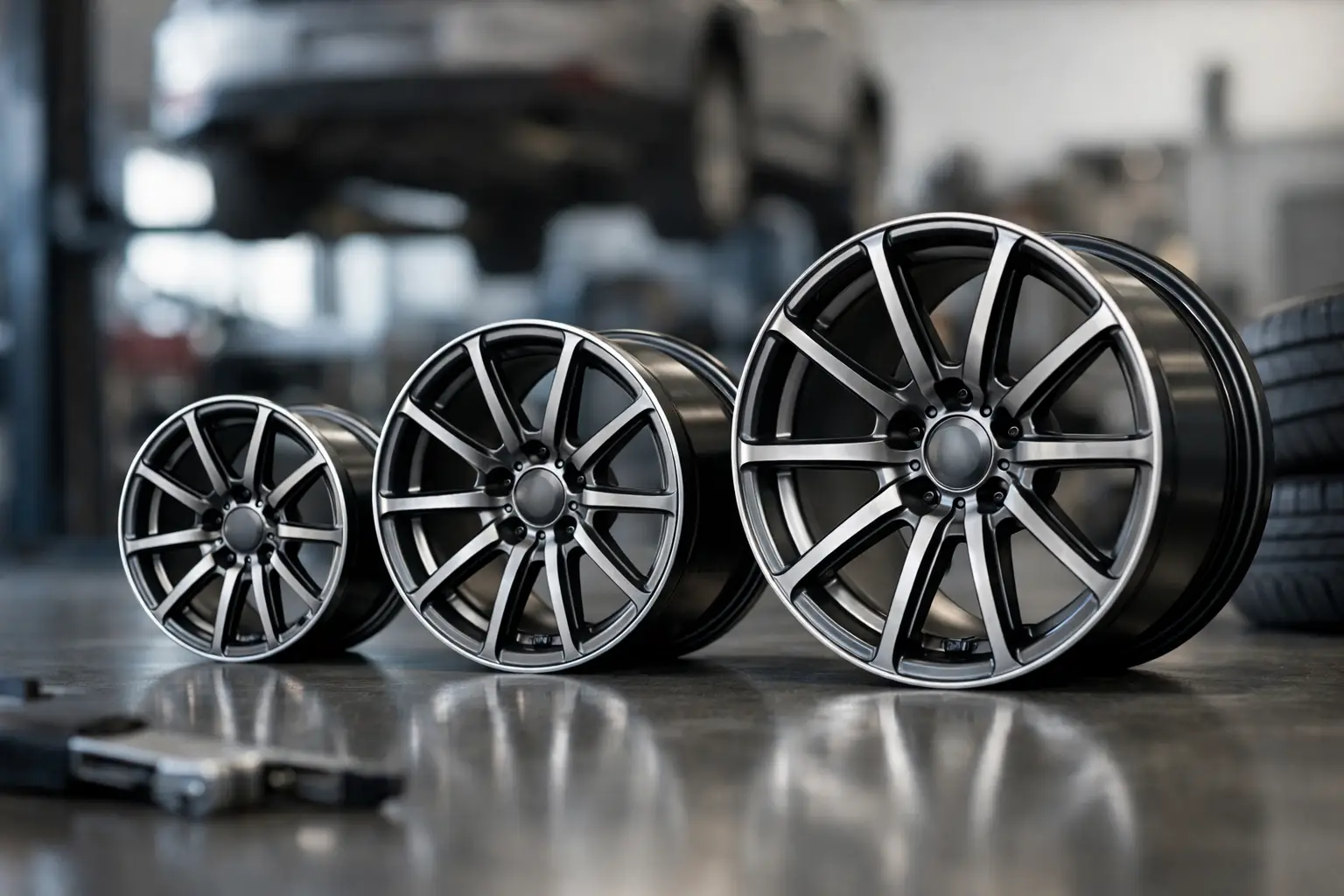
Choose the wrong wheel size and you rarely find out at checkout. You find out when the tyre profile looks wrong, the wheel sits too far in or out, or it simply will not clear the brakes. This guide to alloy wheel sizes is built to help you avoid that. If you are replacing damaged wheels, upgrading the look of your car, or setting up a second set for summer or track use, getting the size right matters just as much as choosing the design.
What alloy wheel size actually means
When people talk about wheel size, they often mean the diameter alone – 17 inch, 18 inch, 19 inch and so on. In practice, alloy wheel size is a combination of measurements that all have to work together. The main ones are diameter, width, PCD, centre bore and offset. Miss any one of them and a wheel that looks close on paper can still be completely wrong for the car.
A typical wheel size might be written as 8Jx18 ET45 5×112. That tells you the wheel is 8 inches wide, 18 inches in diameter, has an offset of 45, and uses a 5 stud PCD with 112 mm between the bolt pattern points. It looks technical, but once you know what each number does, it becomes much easier to shop with confidence.
A guide to alloy wheel sizes and the key measurements
Diameter
Diameter is the easiest part to recognise. It is the size of the wheel where the tyre bead sits, measured in inches. If your car currently runs 18 inch wheels, moving to 19 inch wheels usually means using a lower profile tyre to keep the overall rolling radius close to standard.
Bigger diameter wheels can sharpen the look of a car and sometimes improve steering response, but there is a trade-off. Lower profile tyres tend to give a firmer ride and leave less protection for the wheel on poor road surfaces. For many UK drivers, that matters more than it would on smoother roads elsewhere.
Width
Wheel width affects which tyre sizes can be fitted properly and how the wheel sits in the arch. A wider wheel can support a wider tyre and often gives a stronger stance, but it also changes clearance on the inside and outside of the car.
Two 18 inch wheels can behave very differently if one is 7.5 inches wide and the other is 9 inches wide. Width is one of the reasons a wheel that matches your diameter and bolt pattern can still rub the suspension or arch liner.
PCD
PCD stands for pitch circle diameter. This is the stud pattern, such as 5×112 or 5×120. The first number is the number of bolt holes, and the second is the diameter of the circle they form in millimetres.
This is non-negotiable. If the PCD does not match your hub, the wheel is not the correct fitment. Some aftermarket solutions exist for certain conversions, but for most road cars the sensible approach is simple – match the exact PCD your vehicle requires.
Offset
Offset, usually marked as ET, is one of the most misunderstood measurements. It is the distance between the wheel’s mounting face and its centreline. A higher offset generally pulls the wheel further in towards the suspension. A lower offset pushes it further out towards the arch.
Small offset changes can have a big effect on fitment. Too far in and you may foul struts or brake components. Too far out and you risk arch contact, poor scrub radius and a setup that looks right until the steering is on full lock. Offset is where expert fitment advice earns its keep.
Centre bore
The centre bore is the hole in the middle of the wheel that locates onto the hub. It needs to match the vehicle hub size or be adapted correctly with spigot rings if the wheel is made with a larger universal bore.
A wheel can bolt on with the correct PCD and still not be hub-centric if the centre bore is wrong. That can lead to vibration and poor mounting, especially at motorway speeds.
How tyre size works with wheel size
A proper guide to alloy wheel sizes also has to include tyre sizing, because the two cannot be separated. If you move up or down in wheel diameter, the tyre profile usually needs to change to keep the overall diameter close to the original specification.
For example, a car on 225/45 R17 tyres might move to 225/40 R18 or 235/35 R19 depending on the wheel width and the vehicle. The aim is to maintain a similar rolling radius so the speedometer, gearing and safety systems behave as intended.
This is where many DIY wheel upgrades go off track. A wheel may physically fit the hub, but if the tyre size is wrong you can end up with clearance issues, poor ride quality or inaccurate readings. On modern cars, especially premium German vehicles and performance models, that can create faults you could have avoided by checking the full package first.
Should you go bigger than standard?
Sometimes yes, sometimes no. Going up an inch in diameter is common and often works well if the correct tyre size and offset are used. It can improve appearance, fill the arches better and, on some cars, tighten steering feel.
But bigger is not automatically better. If the roads you use are rough, pothole damage is a concern, or comfort matters more than styling, sticking closer to the original wheel size is often the better option. There is also the question of unsprung weight. A large wheel that is significantly heavier than standard can blunt performance rather than improve it.
For daily-driven cars, the best result is usually the setup that suits how the vehicle is actually used. A fast-road hatchback, a motorway-driven saloon and a track-focused second car all have different priorities.
Common mistakes when choosing alloy wheel sizes
The most common mistake is buying by appearance alone. A wheel may be listed as suitable for a make or model range, but that does not guarantee it clears your specific brakes, matches your trim level or suits your tyre setup.
The second is focusing only on diameter. Diameter is only one part of the fitment. Width and offset are just as important, and often more important when it comes to rubbing and stance.
The third is ignoring load rating. This is especially relevant for heavier vehicles such as SUVs, vans and some premium saloons. A wheel that fits physically still needs to be rated for the vehicle properly.
Another frequent issue is assuming all aftermarket wheels use the same bolts or nuts as the original equipment. Seat type and bolt length matter. Getting that wrong can cause fitting problems or worse.
How to check the right size for your car
Start with the existing wheel and tyre information if the car is currently on a known correct setup. The back of the wheel usually shows width, diameter and offset. The tyre sidewall gives you the tyre size. From there, the vehicle registration, manufacturer data and brake specification help confirm what alternatives are suitable.
If you are changing style but keeping things straightforward, choose a wheel size close to an established fitment for your exact model. If you want a more aggressive look or a motorsport-style setup, be realistic about the compromises. Lower offsets, wider widths and stretched or square tyre setups can all work, but they need to be planned properly.
This is also where stock depth and workshop knowledge make a difference. A business that handles both wheel supply and fitting can usually spot problems before you spend money on the wrong set. If you are local to Dorset and want the reassurance of fitment support as well as supply, that hands-on approach can save a lot of guesswork.
Factory fitment versus aftermarket fitment
Factory wheel sizes are designed around ride quality, handling balance, emissions targets and broad driver expectations. Aftermarket fitment gives you more freedom, but also more room for error.
A well-chosen aftermarket wheel can reduce weight, improve brake clearance or sharpen the car’s appearance without causing issues. A badly chosen one can create vibration, tramlining, arch contact or an awkward tyre choice that limits future replacements.
There is no single best alloy wheel size for every car. The right answer depends on the vehicle, the tyre options available, the intended use and how much compromise you are happy to accept.
When refurbishment makes more sense than resizing
If your current wheels are the correct size and fit well, changing size is not always the smart move. Kerb damage, corrosion and tired finishes often make owners think they need a replacement set, when refurbishment may be the better option.
That is especially true with genuine manufacturer wheels on Audi, BMW, Mercedes, Porsche and Range Rover models, where original fitment is often well judged. Refreshing a damaged set can keep the right geometry and tyre compatibility while restoring the look of the car.
Choosing alloy wheels should feel straightforward once the key numbers are clear. If you match diameter, width, PCD, offset, centre bore and tyre size to the car properly, the rest becomes a question of style and budget rather than guesswork. Get the fitment right first, and you give yourself far better options later – whether that means a cleaner look, a sharper drive, or simply a set of wheels that works exactly as it should.