
How to Check Wheel Fitment Properly

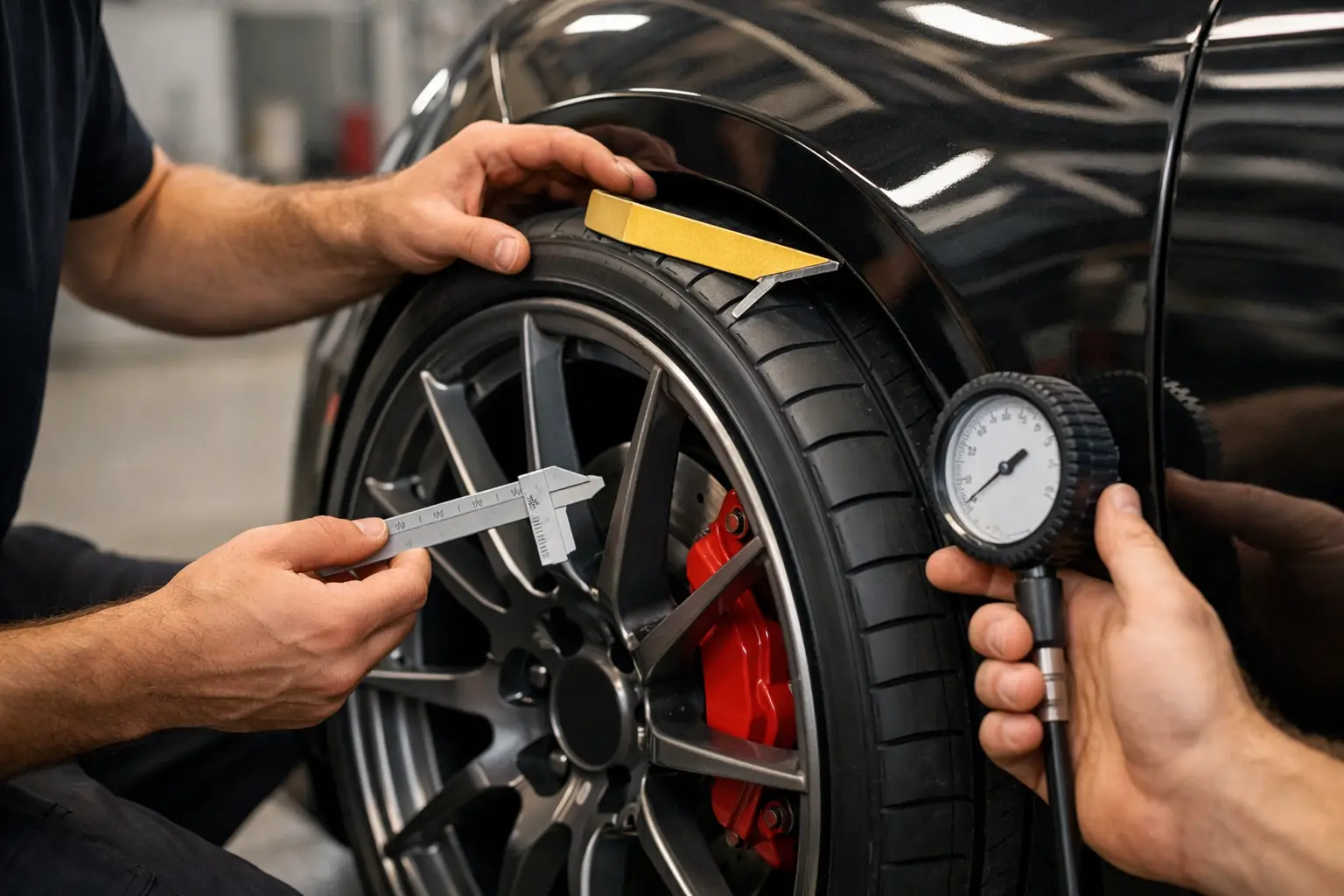
A wheel can look perfect in the photo and still be completely wrong for your car. That usually comes down to fitment. If you want to know how to check wheel fitment before you buy, you need more than the diameter and a quick glance at the bolt pattern. The right fit comes from several measurements working together, and getting one of them wrong can leave you with rubbing, vibration, brake clearance problems or wheels that simply will not bolt on.
What wheel fitment actually means
Wheel fitment is the combination of measurements that decides whether a wheel will mount safely and sit correctly on a specific vehicle. The main ones are diameter, width, PCD, offset and centre bore. Tyre size matters too, because a wheel that fits the hub may still cause problems once the tyre is mounted.
This is why wheel fitment is never just a case of asking whether a set is 18 inch or whether it came off the same brand of car. Two BMW models can use different offsets. Two Audi models can share a bolt pattern but need different widths or brake clearance. Even within the same model range, factory wheel options vary.
How to check wheel fitment step by step
The safest way to check fitment is to compare your vehicle’s original specification with the wheel you want to buy. You are looking for a match where it matters, and a sensible, tested change where it does not have to be identical.
Start with the vehicle details. You need the exact make, model, year and ideally engine or trim level. If the car has larger brakes, lowered suspension or aftermarket modifications, note that too. Those details can change what fits.
Then look at your current wheel specification. This is often stamped on the inside of the wheel and shown in a format such as 8Jx18 ET45. That tells you the width is 8 inches, the diameter is 18 inches and the offset is ET45. You may also see the PCD and centre bore listed elsewhere in the casting.
Once you have that, compare it with the replacement wheel. The key areas are below.
PCD must match
PCD stands for pitch circle diameter. In simple terms, it is the number of bolt holes and the spacing between them. A wheel listed as 5×112 has five bolt holes on a 112 mm bolt circle.
This must match the vehicle. A 5×112 wheel will not correctly fit a 5×120 hub, even if it looks close. Wobble bolts exist for some applications, but they are not the answer to every mismatch and should never be used as a shortcut when proper fitment is available.
Centre bore matters more than many buyers think
The centre bore is the hole in the middle of the wheel that locates on the hub. If it is too small, the wheel will not go on. If it is larger, the wheel may still fit, but it should usually be used with the correct spigot rings so the wheel sits hub-centrically.
A wheel that hangs on the bolts rather than locating properly on the hub can lead to vibration, especially at speed. This is one of the most common issues with aftermarket wheel installs that were nearly right rather than actually right.
Offset changes the wheel’s position
Offset is the distance between the wheel’s mounting face and its centreline. It is shown as ET followed by a number. This measurement affects how far in or out the wheel sits.
A small offset change can make a big difference. Too high, and the wheel may sit too far inward and contact the suspension or inner arch. Too low, and it may poke outward, catch the arch liner or put extra stress on components. Offset also affects the look of the car, but appearance should come after clearance and safety.
There is some acceptable movement away from the original offset, but there is no single rule that covers every car. Brake size, suspension design and tyre width all influence how much room you actually have.
Width and diameter need to suit the car
Wheel width affects what tyre sizes you can run and how close the inner and outer edges sit to surrounding components. A wider wheel can improve stance and grip when matched properly, but it also reduces your margin for error.
Diameter affects tyre profile and brake clearance. Moving from a 17 inch wheel to an 18 or 19 inch option is common, but the overall rolling radius should stay close to original so you do not upset gearing, speedometer readings or electronic systems.
Don’t forget brake and suspension clearance
This is the part many online buyers miss. A wheel can have the right PCD, centre bore and offset on paper but still foul the brake caliper. Some vehicles, especially performance models from BMW, Mercedes, Porsche and Range Rover, have limited caliper clearance and need a wheel design that physically clears the brakes.
Spoke shape matters here, not just barrel size. Two 19 inch wheels with the same width and offset can behave differently because the inner spoke profile is different. If you are buying for a car with larger factory brakes or an aftermarket brake kit, this needs checking properly.
Suspension clearance is just as important. Inner edge clearance to the strut or shock body can disappear quickly when width increases or offset moves inward. That is why copied forum advice can be risky. What worked on one car may have involved stretched tyres, arch work or a different suspension setup.
How to check wheel fitment when changing tyre size
If you are fitting a different wheel diameter, the tyre size should usually change as well to keep the overall diameter close to standard. For example, moving up an inch in wheel size often means using a lower profile tyre.
The tyre also affects fitment in real life. A tyre with a squared shoulder can run closer to the arch than a more rounded design in the same labelled size. Brand differences are real. So are load ratings. On heavier vehicles and SUVs, choosing the right tyre specification is part of getting the fitment right.
If you are tempted to go much wider than standard, be realistic about how the car is used. A show fitment and a daily-use fitment are not the same thing. The first may be built around appearance and minimal clearance. The second needs room for passengers, luggage, full steering lock and rough British roads.
Used wheels need extra checks
Used wheels can offer excellent value, but only if the fitment and condition are both right. Do not assume a wheel fits because the seller says it came off the same manufacturer. Ask for the full spec stamped inside the wheel. Check width, diameter, offset, PCD and centre bore.
Also inspect for previous repairs, cracks, buckles and poor refurbishment work. A wheel that is technically the right size but not running true is not a bargain. If you are buying second-hand alloys for a premium vehicle, condition and fitment should carry equal weight.
Common mistakes that cause fitment problems
The biggest mistake is focusing on one measurement and ignoring the rest. Bolt pattern alone is not enough. Neither is diameter. Another common problem is buying wheels because they looked right on social media without checking whether the car had spacers, coilovers or rolled arches.
Buyers also get caught out by centre bore, incorrect seat type for wheel bolts, and tyres that are too wide for the available space. Even small details matter. A set of wheels can mount and still not be correct.
When wheel spacers are acceptable
Spacers can be useful when they are chosen for a proper reason, such as creating brake clearance or fine-tuning position within safe limits. They are not a cure for bad wheel selection. If a wheel needs an extreme spacer just to fit, it is probably the wrong wheel for the car.
If spacers are used, they need to be high quality, the correct size and matched with the right bolts or studs. Hub-centric spacers are the safer route where applicable. Again, this is where expert advice saves hassle.
The easiest way to avoid getting it wrong
If you are buying aftermarket, refurbished or used wheels, the easiest route is to work from full vehicle details and full wheel specifications before money changes hands. That means exact car details, original wheel size, intended tyre size and any modifications. Then compare everything properly, including brake clearance.
For many drivers, especially those moving away from factory sizes, it is worth speaking to a specialist rather than guessing from a marketplace listing. A proper fitment check is cheaper than paying for returns, damaged tyres or bodywork contact later. That is exactly why buyers come to specialists with broad stock and workshop experience, whether they need a simple replacement set or something more specific for a premium or performance car.
If you are unsure, stop before ordering and verify the numbers. Wheels are one of the few upgrades where close is not good enough, and the right fit always feels better than the gamble.