
Best Van Tyres for Load, Grip and Mileage

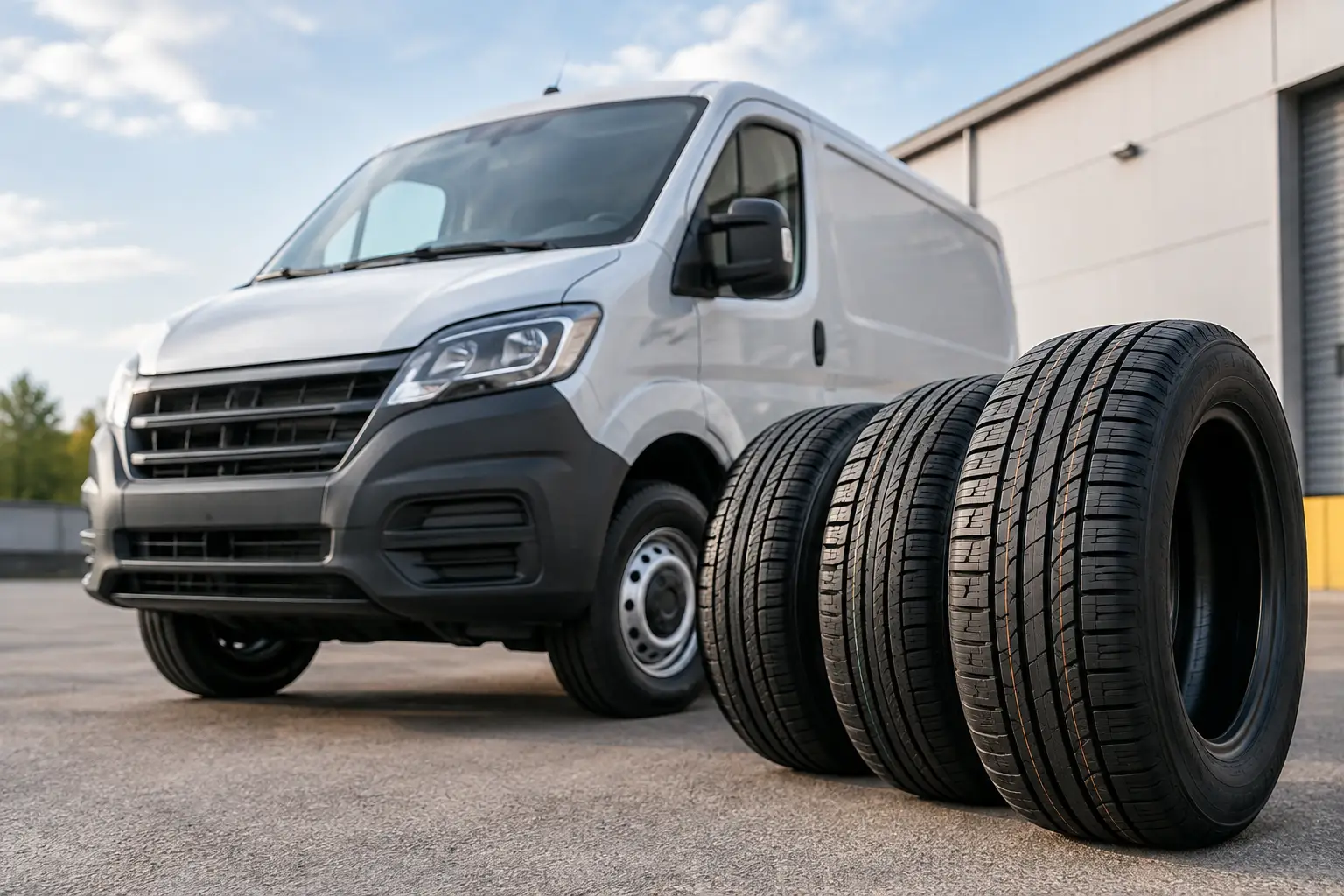
A van tyre that looks similar to a car tyre can be the wrong choice before it has travelled a mile. The best van tyres are built to carry heavier loads, cope with repeated stop-start work and remain stable when the vehicle is full of tools, stock or passengers. Choosing on price alone can cost more in early wear, poorer wet grip and avoidable downtime.
For a working van, tyres are part of the operating cost. They affect fuel use, braking, ride comfort and how confidently the vehicle handles on wet Dorset roads, motorways and building sites. The right answer is not always the most expensive tyre, but it must be the correct size, load rating and specification for the job your van does.
What makes the best van tyres?
Van tyres have reinforced construction compared with typical passenger-car tyres. Their sidewalls and carcasses are designed to carry higher weights without excessive flexing, particularly when the van is loaded. That matters because a tyre working beyond its intended load can overheat, wear unevenly and become more vulnerable to damage.
The best choice balances four things: the vehicle’s required load index, the speed rating, the type of journeys it makes and the mileage you expect from it. A courier covering long motorway distances needs something different from a tradesperson making short urban runs with a heavy payload. A campervan may prioritise stable handling and all-season capability, while a site vehicle may need a tougher pattern with better loose-surface traction.
It is also worth separating a premium tyre from a suitable tyre. Premium brands often justify their price through wet braking, consistent handling and long-term durability. However, a quality mid-range commercial tyre can make excellent sense where the specification is right and the van’s use is less demanding. The non-negotiable part is matching the tyre to the vehicle’s plated requirements.
Start with size, load index and speed rating
Read the markings on your existing tyre sidewall, such as 215/65 R16C 109/107T. The width, profile and rim diameter must match an approved size for your van. The C indicates a commercial construction, while the two load figures on many van tyres refer to single and dual-wheel use.
Do not assume that a tyre in the same physical size has the same carrying capacity. A 16-inch tyre may be available in several load indices, and fitting a lower-rated version can make the vehicle unsuitable for its legal maximum weight. The tyre’s load index must meet or exceed the manufacturer’s requirement. The same principle applies to the speed rating, even if your van rarely reaches that speed.
If you are changing wheel size or fitting aftermarket alloys, the calculation becomes more involved. Overall rolling diameter, wheel width, offset, clearance and load capacity all need checking. A wheel may fit the hub yet still be unsuitable once the van is loaded or on full steering lock. This is where specialist fitment advice is worth having before ordering.
Check the van, not just the tyre label
Use the vehicle handbook, door-shut label and VIN information to confirm approved tyre specifications. The tyre placard also provides the correct pressures for normal and fully laden use. Pressure is not a minor maintenance detail: an underinflated van tyre runs hotter, wears its shoulders and can feel vague under load. Overinflation can reduce the contact patch and accelerate centre wear.
If the van is regularly near its gross vehicle weight, choose tyres with sufficient capacity for that real use rather than the empty-van journey to the shops. This applies especially to racking-equipped vans, mobile workshops, delivery vehicles and camper conversions, where permanent equipment adds weight every day.
Match the tread pattern to how you work
Most road-focused commercial tyres are designed to offer dependable wet grip, predictable steering and high mileage. They suit the majority of vans that work on tarmac, including trade, service and delivery vehicles. A well-designed tread clears standing water effectively and helps reduce the risk of aquaplaning, but it still needs adequate depth to do its job.
For frequent motorway work, look for a tyre with strong wear resistance, low rolling resistance and good wet performance. Low rolling resistance can support fuel economy, although the savings depend on route, driving style, load and tyre pressure. A tyre that lasts longer may be better value than a cheaper alternative that needs replacing far sooner.
For vans that visit farms, yards, campsites or unfinished building plots, an all-terrain or more open tread may offer useful extra traction. The trade-off is usually more road noise, potentially lower fuel efficiency and sometimes less refined wet-road behaviour than a dedicated commercial road tyre. There is no universal best pattern – there is only the best pattern for the surfaces you actually use.
All-season van tyres are a sensible option for vehicles that must operate through winter without seasonal tyre changes. They can offer stronger cold-weather and slush performance than a summer tyre, while remaining usable year-round. For high-mileage fleets on mainly mild roads, a summer commercial tyre may still be the more economical option. Check for recognised winter markings where winter capability is a priority.
Why wet grip deserves priority
A heavily laden van takes longer to stop than an empty one. Add rain, worn tread or poor-quality rubber and the margin for error reduces quickly. Wet grip is therefore not just a label-rating exercise. It is about the tyre’s compound, tread depth, inflation pressure, wheel alignment and the condition of the road.
When comparing options, avoid focusing solely on the purchase price. Consider what a longer braking distance, damaged tyre or missed day’s work would cost. A reliable commercial tyre with strong wet performance can be a practical investment for vans that carry staff, equipment or customer goods.
Legal tread depth is a minimum of 1.6mm across the central three-quarters of the tread, around the full circumference. In practice, wet-weather performance declines before that point. Planning replacement while there is still around 3mm of tread gives more protection in heavy rain and avoids scrambling for tyres when a van fails an inspection or MOT.
Get the most mileage from your van tyres
Even the right tyre will not deliver its expected life if the van’s setup is wrong. Regular checks take minutes and can identify a problem before it ruins a pair of tyres.
- Check pressures when the tyres are cold, using the vehicle’s laden setting when appropriate.
- Inspect for cuts, bulges, embedded objects and damage to the sidewall after site work or kerb contact.
- Watch the wear pattern. Inner-edge wear can point to alignment issues, while shoulder wear often suggests low pressure.
- Rotate tyres only where the vehicle manufacturer and tyre design allow it. Directional tyres must remain on the correct side of the vehicle.
Wheel alignment is particularly relevant for vans that have hit potholes, kerbs or rough access roads. A steering wheel that sits off-centre, a vehicle that pulls, or a tyre wearing more on one edge are good reasons to have the geometry checked. Replacing one badly worn tyre without addressing the cause can mean the replacement suffers the same fate.
Should you replace two or four tyres?
Replacing all four tyres together delivers the most consistent handling, but it is not always necessary. If only two need replacing, fit the newer pair to the rear axle unless the vehicle manufacturer specifically advises otherwise. Better rear-axle grip helps reduce the chance of rear-end instability on wet roads, particularly when braking or changing direction.
Mixing tyre brands is not automatically unsafe, but matching tyres across an axle is the sensible approach. They should have the same size, construction, load index and speed rating, with similar tread pattern and wear. For a hard-working van, consistency makes the vehicle easier to predict when loaded.
Choosing with confidence
The best van tyres are the ones that meet your van’s specification, suit its working weight and give dependable grip through the miles you actually drive. Start with the approved size and load index, then choose between premium, mid-range, all-season or specialist tread designs based on your routes and budget.
If you are unsure about commercial markings, payload requirements or whether a different wheel and tyre setup will fit correctly, ask before fitting. The Tyre Barn can help match suitable tyres to your van and provide workshop fitting in Wimborne, so the vehicle leaves on tyres chosen for the job rather than simply tyres that happened to be available.