
Are Wider Tyres Better for Your Car?

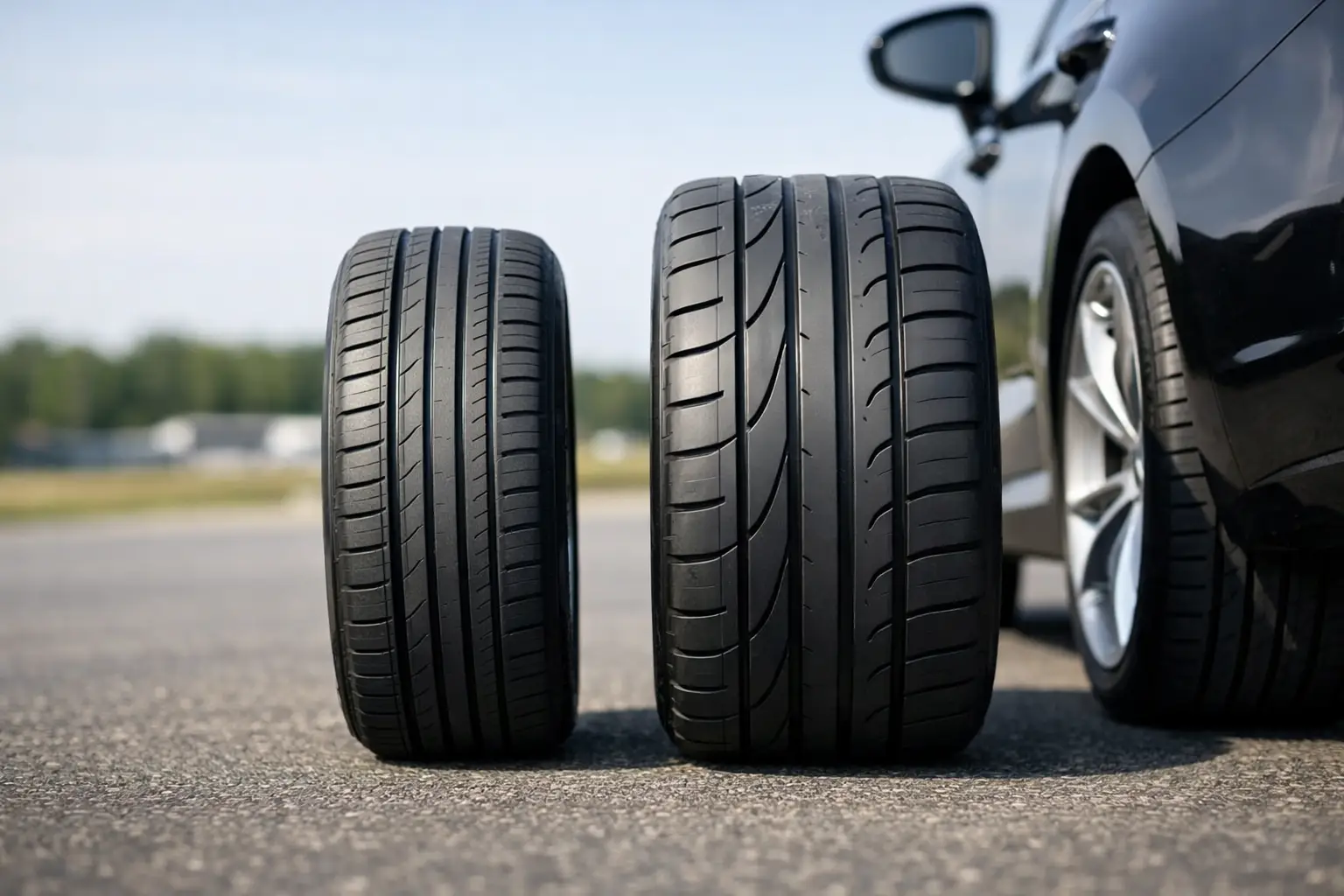
A lot of drivers ask the same question after spotting a sportier fitment or browsing larger wheel options online: are wider tyres better? Sometimes they are. Sometimes they are simply different. The right answer depends on how your car is used, what wheel size you run, and whether the wider tyre is actually approved for the vehicle.
The simple version is this: a wider tyre can offer more grip and a stronger stance, but it can also bring heavier steering, more road noise, higher cost and fitment problems if you get the size wrong. That is why tyre width should never be chosen on looks alone.
Are wider tyres better in everyday driving?
For many road cars, wider tyres can improve dry grip and make the car feel more planted, especially through faster bends or under firm braking. You may notice sharper turn-in on some setups, and performance cars often use wider tyres for exactly that reason. There is more rubber working against the road surface, and that usually helps when conditions are ideal.
But everyday driving in the UK is rarely ideal. Roads are uneven, damp for much of the year, and full of potholes, standing water and rough surfaces. A tyre that feels excellent on a warm dry road can be less impressive on a wet A-road in January. Wider is not automatically safer or better suited to normal commuting.
On many family hatchbacks, saloons and SUVs, the factory tyre width is already a compromise chosen by the vehicle manufacturer. It balances grip, fuel economy, comfort, steering feel, emissions and cost. Move much wider than standard and you may gain in one area while losing in several others.
Where wider tyres do make a difference
The clearest benefit is dry-road grip. A wider tyre can improve traction when accelerating and braking, particularly on more powerful rear-wheel-drive or four-wheel-drive vehicles. If you drive a performance Audi, BMW, Mercedes or Porsche, that extra width can support the power and weight of the car far better than a narrower setup.
Wider tyres can also improve lateral stability. In plain terms, the car may feel more secure in corners and less prone to rolling onto the sidewall during hard direction changes. That is part of why wider tyres are common on hot hatches, performance saloons and track-focused builds.
There is also the visual side, which matters to plenty of drivers and there is nothing wrong with that. A wider tyre often sits better on a wider alloy, fills the arch more convincingly and gives the car a more purposeful look. When wheel and tyre fitment are properly matched, the result can look right and perform right.
The trade-offs most drivers notice later
The problem with tyre upgrades is that the downside often appears after the initial excitement. Wider tyres usually cost more to buy, and premium tyres in larger widths can be a significant jump in price. If you are replacing a full set, the difference is not minor.
Fuel economy can also suffer. Wider tyres generally create more rolling resistance, which means the engine works a little harder. On some cars the change is small, but on others it is noticeable, particularly if you move up in both wheel diameter and tyre width at the same time.
Comfort is another common compromise. Many wider tyre setups go hand in hand with lower profile sidewalls. That can sharpen the handling, but it also means less cushioning over poor road surfaces. The ride may feel firmer, and potholes feel harsher through the cabin and steering.
Road noise can increase as well. Some tyres are quieter than others by design, but wider sizes often pick up and transmit more surface noise. If most of your driving is motorway mileage or urban commuting, that matters more than an extra bit of cornering grip.
Wet weather changes the answer
If you only drove in the dry, tyre choice would be simpler. In Britain, you do not have that luxury. Wet grip matters as much as dry grip, and sometimes more.
A wider tyre can be more prone to aquaplaning if the tread design and water clearance are not up to the job. That is because the tyre has to shift water away effectively to keep good contact with the road. A poor-quality wide tyre can perform worse in standing water than a well-made tyre in the correct standard width.
This is where brand, tread pattern and compound matter just as much as size. It is no good fitting a wider tyre if the tyre itself is not suitable for the conditions. For many drivers, a high-quality tyre in the correct OE-style size will outperform a cheaper wider option where it counts most.
Are wider tyres better for handling?
They can be, but handling is about the full setup, not just width. Wheel width, offset, suspension geometry, tyre construction and pressure all affect the result. Fit a tyre that is too wide for the wheel, or too aggressive for the suspension, and the car can feel vague, tramline more, or react poorly over uneven roads.
Steering feel is a good example. Some wider tyres make a car feel more direct and confidence-inspiring. Others make the steering heavier and less communicative at lower speeds. On certain front-wheel-drive cars, excessive width can even make the steering feel less natural on British B-roads.
There is also the matter of unsprung weight if wider tyres are fitted to heavier wheels. If the wheel and tyre package becomes much heavier than standard, the suspension has more work to do. That can affect ride quality and agility, even if grip increases.
Fitment matters more than width alone
This is the part many buyers miss. You cannot judge tyre width in isolation. A wider tyre has to suit the wheel width, wheel offset, vehicle clearance and rolling radius. If the overall diameter changes too much, you can affect speedometer accuracy, gearing and electronic systems such as ABS and traction control.
Clearance is another issue. Go too wide and the tyre may rub on the arch liner, suspension strut or inner bodywork, especially on full lock or under compression. That risk increases if the car has been lowered, fitted with aftermarket alloys or is carrying passengers and luggage regularly.
Load rating and speed rating must still be correct. This is especially important on heavier SUVs, executive saloons and commercial vehicles. A wider tyre is not an upgrade if it does not meet the required specification.
For some drivers, the best route is an approved plus-size setup where the wheel diameter increases and the tyre profile reduces while the rolling radius stays close to standard. Done properly, that can improve response and appearance without causing fitment headaches. Done badly, it creates them.
When wider tyres make the most sense
If you drive a higher-powered car, enjoy enthusiastic road driving, or are upgrading to a wider wheel that genuinely suits the vehicle, wider tyres can make excellent sense. They are also worth considering if your car already has manufacturer-approved wider options on higher trim levels or performance variants.
They can be a smart choice for drivers who want more grip from a summer setup, provided they choose a quality tyre and keep the fitment within the right limits. On the right car, the difference in confidence and composure is real.
If your priorities are low running costs, ride comfort, winter usability and simple replacement, sticking close to the original width is often the better decision. There is no shame in that. In fact, for plenty of cars, it is the most sensible setup.
So, are wider tyres better or just different?
They are better for some jobs and worse for others. If your priority is dry grip, sharper handling and a stronger visual stance, wider tyres can be a worthwhile upgrade. If your priority is comfort, value, wet-weather simplicity and factory-balanced behaviour, wider is not always the answer.
The best tyre is the one that suits the car, the wheel and the way you actually drive. That means looking beyond the sidewall number and considering the full fitment. If you are unsure, proper advice is worth more than guesswork, because the right setup always beats the widest one on paper.
A good tyre choice should make your car feel right every day, not just look right when it is parked.