
Track Day Wheel Setup: Get Fitment Right

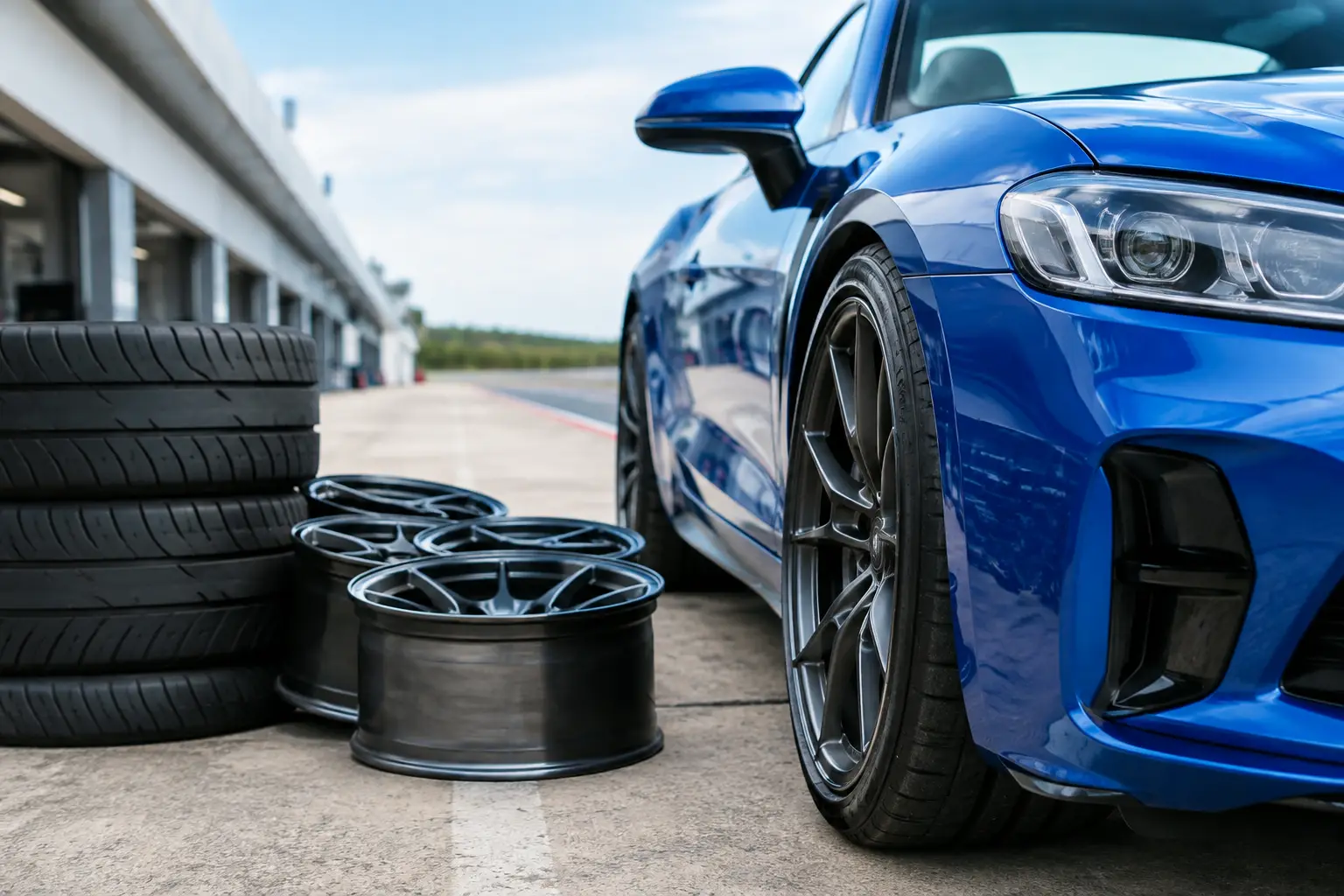
A track day wheel setup is not simply a set of good-looking alloys with stickier tyres. It is a working system that affects braking stability, steering feel, tyre temperatures and whether you finish the day with evenly worn rubber rather than damaged arches or a warning light on the dash.
For a road car doing occasional circuit days, the best answer is usually not the widest wheel or the most aggressive tyre available. It is the setup that fits correctly, gives the tyre the support it needs and remains predictable for your car, driving style and chosen circuit.
Start with the car, not the wheel
Before choosing a diameter, width or tyre compound, establish the vehicle’s original wheel specification. That means PCD, centre bore, offset (ET), stud or bolt seat type, load rating and brake-clearance requirements. These details are not interchangeable between cars, even where the wheels appear physically similar.
Offset deserves particular attention. A lower ET number moves the wheel outward; a higher number moves it inward. Moving too far outward can cause tyre-to-arch contact under compression, while moving too far inward can bring the wheel or tyre too close to the suspension strut, spring perch or inner arch. Spacers may solve one clearance issue while creating another, so they should be selected as part of the whole fitment rather than as an afterthought.
Brake clearance is equally important on performance models. Some wheels clear standard brakes but foul a larger caliper or brake upgrade, often at the spokes rather than the barrel. Never assume that a wheel with the correct diameter will clear the brakes. A 17-inch wheel, for example, can have considerably less caliper room than another 17-inch design.
Choosing wheel diameter and width for track use
A smaller wheel diameter with a taller tyre sidewall can work exceptionally well on track. It is often lighter, less expensive to tyre and can provide useful compliance over kerbs and uneven surfaces. The compromise is brake clearance and, depending on the car, a little less immediate steering response.
Larger diameters can accommodate bigger brakes and may suit cars designed around low-profile tyres, but there is no automatic performance gain. A heavy 19-inch wheel and tyre package can add unsprung mass, making it harder for the suspension to keep the tyre in contact with the surface. Weight at the wheel matters more than many drivers expect.
Wheel width should match the intended tyre, not just the desire for a broad stance. A tyre mounted on too narrow a wheel can roll onto its sidewall during hard cornering. Put the same tyre on an excessively wide wheel and the sidewall may be stretched, reducing protection and changing how the tyre works. Tyre manufacturers publish approved rim-width ranges, and the middle of that range is often a sensible starting point for a circuit-focused car.
A common approach is to run a dedicated square setup – the same wheel and tyre size at all four corners. This allows front-to-rear rotation between events, simplifies carrying spares and can help a front-heavy car gain front-end grip. It does not suit every vehicle, however. Rear-wheel-drive cars with a factory staggered arrangement may need a wider rear tyre to retain traction and balance.
Do not chase width without clearance
More tyre width can improve grip, but only when the tyre reaches working temperature, fits the wheel properly and has enough room through full steering lock and suspension travel. On track, the tyre moves more than it does on the road. Kerb strikes, compression zones and high lateral load reveal clearance problems that a static driveway check will miss.
Check clearance at the front with the steering on full lock, and inspect both the inner and outer shoulders. At the rear, allow for a fully loaded suspension. If your car is lowered, fitted with coilovers or running additional negative camber, its clearance requirements may be very different from standard.
Select tyres for the session, not the advert
A road-legal performance tyre is often the most sensible first track-day choice. It warms up relatively quickly, copes with damp conditions and remains usable for the journey home. For a driver learning lines and braking points, consistency is usually more valuable than chasing the last fraction of lap time.
Track-focused road tyres and semi-slicks offer sharper response and greater dry grip once hot. They can also be less forgiving in standing water, noisier on the road and more sensitive to pressure. A semi-slick used below its ideal temperature range may not deliver the confidence expected from its reputation.
Tyre choice should account for the car’s weight, power, driven axle and the likely weather. A lightweight naturally aspirated car can be kind to tyres but may struggle to generate heat in a hard compound. A powerful turbocharged saloon can overload its rear tyres in only a few laps. There is no single “best” tyre across every vehicle and circuit.
For a road car, matching tyre sizes front and rear can also help keep rolling radius close to the manufacturer’s intended figure. Significant changes can affect speedometer accuracy, gearing and the operation of ABS, traction control and stability systems. On four-wheel-drive vehicles, keeping rolling circumference closely matched across all four tyres is especially important to avoid unnecessary drivetrain strain.
Tyre pressures: measure hot, not just cold
Cold pressures get you safely onto circuit; hot pressures tell you what the tyre is doing. Start with a sensible cold pressure based on the vehicle and tyre manufacturer’s guidance, then measure immediately after a proper session. The target is not a universal number. It depends on tyre construction, vehicle weight, ambient temperature and driving pace.
If the pressure rises sharply and the centre of the tread is working harder than the shoulders, the tyre may be overinflated for the conditions. If the outer shoulder is being scrubbed away while the centre remains relatively cool, pressure, camber or driving technique may be contributing. Do not make large adjustments all at once. Alter a small amount, complete another session and check again.
A quality pressure gauge is one of the most useful items in a track-day kit. Record cold pressure, hot pressure, track temperature and handling notes. After several events, those simple records become far more useful than relying on memory in the paddock.
Read the tyre after every session
Look across the full tread, not just the part visible with the wheel fitted. Check for melted or torn rubber, excessive shoulder wear, cuts, bulges and cords beginning to show. A little feathering may be normal, particularly on a heavily loaded front tyre, but rapid shoulder wear is a signal to review alignment or tyre support.
Heat cycling also changes a tyre. It may still have visible tread yet offer less outright grip after repeated hard sessions. This is one reason a part-worn tyre needs particularly careful assessment before track use. Tread depth alone does not reveal its age, heat history, repairs or internal condition.
Alignment makes the setup work
The right wheels and tyres cannot compensate for poor geometry. Track driving places sustained load on the outside tyres, so a road alignment that feels fine around town may wear the outer shoulders quickly on circuit. Additional negative camber can keep more tread on the surface through a corner, but too much will compromise braking and straight-line tyre wear.
Toe settings affect how eagerly the car turns and how stable it feels. Small changes can make a noticeable difference, particularly on a responsive front-wheel-drive car. Alignment should be approached carefully, with the vehicle’s normal ride height, wheel-and-tyre package and intended use in mind. An aggressive setting for frequent dry track days may be tiring or impractical for a daily driver.
If you have adjustable suspension, avoid changing camber, ride height and tyre pressures at the same time. Make one meaningful change, test it and assess the result. That is how you learn what has improved the car rather than simply making it different.
Fitting checks that should not be skipped
Before loading up for a circuit day, confirm that the wheels use the correct fixings. Bolt-seat shape matters: tapered, radius and flat-seat bolts are not substitutes for one another. Ensure wheel bolts or nuts have sufficient thread engagement, are tightened to the vehicle’s specified torque and are rechecked after the first heat cycle or short road run.
If aftermarket wheels use spigot rings, they must be the correct size and seated properly. The wheel should locate centrally on the hub, not rely on bolts being pulled tight to force it into position. Inspect valve condition, balance weights and tyre condition, then make sure there is no contact at lock or through suspension movement.
Take a torque wrench, pressure gauge, tyre inflator, wheel-locking key and a means of marking wheel bolts. It is also wise to carry enough tread depth for the forecast rather than arriving with tyres that are already near the limit. A wet afternoon can turn a marginal tyre into the reason your day ends early.
For drivers in Dorset preparing for their first event or refining a regular circuit car, The Tyre Barn can help check the practical details – from wheel fitment and tyre sizing to fitting and wheel refurbishment where an existing set needs attention.
A well-chosen setup should leave you thinking about your braking points and corner exits, not rubbing tyres, overheating pressures or whether the wheels are right for the car. Get the fitment checked, gather a few sessions of pressure and wear data, and let the car tell you what it needs next.