
Tyre Pressure Sensors Explained for UK Drivers

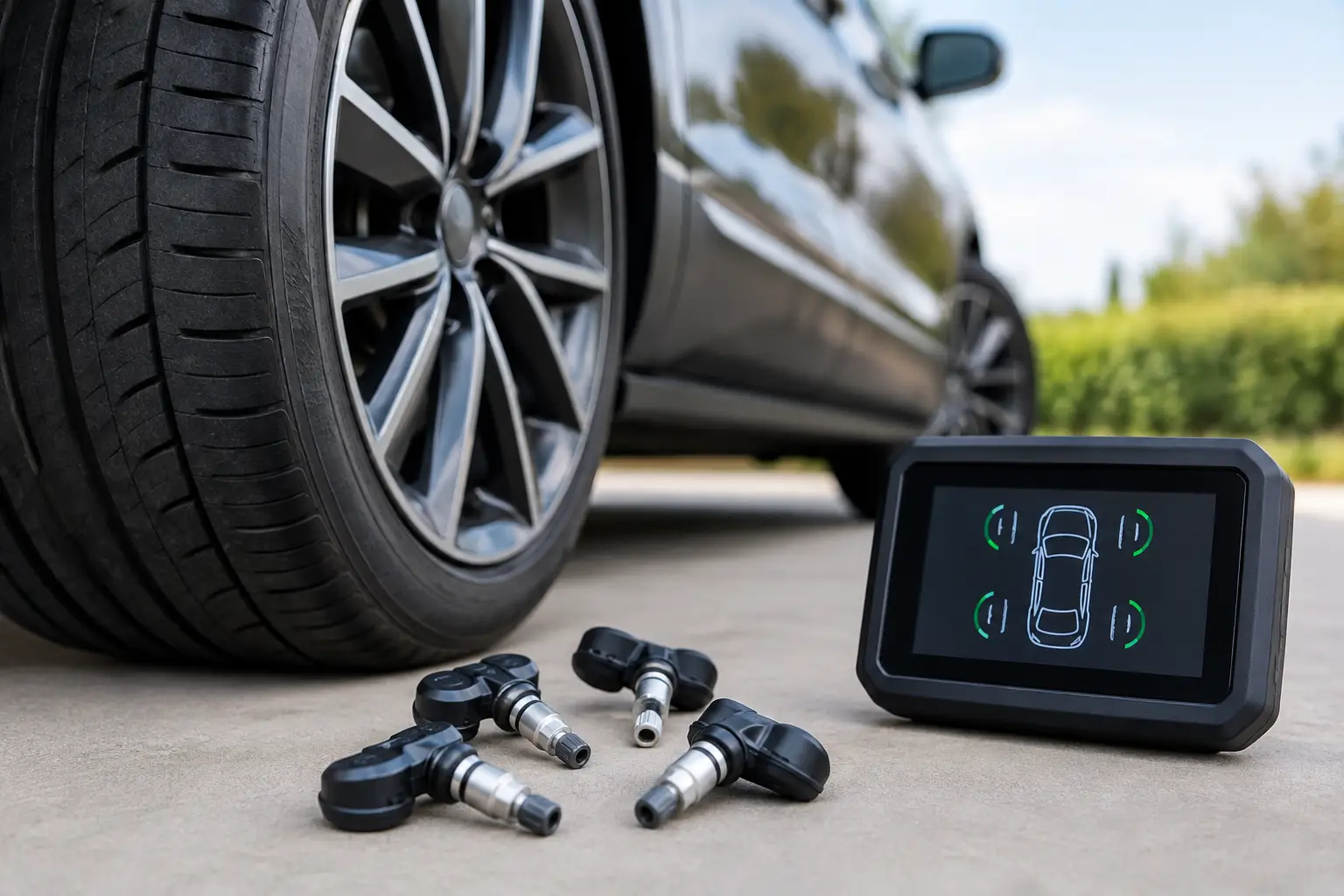
A tyre can lose pressure long before it looks flat from the pavement. That is exactly what tyre pressure sensors are designed to catch. By warning the driver early, they can help prevent uneven wear, poorer fuel economy, reduced grip and, in the worst cases, tyre damage caused by being driven while underinflated.
For most motorists, the TPMS warning light is easy to ignore until an MOT is due or the tyre has visibly gone down. It should be treated as an early warning, not an inconvenience. The right response depends on the type of system fitted, the condition of the tyres and whether recent wheel work could have affected a sensor.
What tyre pressure sensors actually do
Tyre Pressure Monitoring Systems, usually shortened to TPMS, monitor whether a tyre is running below its intended pressure. Most modern cars use a direct system, with a small battery-powered sensor fitted inside each wheel. It measures pressure and, on many vehicles, temperature too, then sends information wirelessly to the car.
When the system detects a significant pressure loss, a warning light appears on the dashboard. Some cars identify the individual wheel; others simply display the general TPMS symbol. The warning does not necessarily mean a puncture, but it does mean the pressures need checking properly.
A smaller number of vehicles use indirect TPMS. This does not use physical pressure sensors inside the wheels. Instead, it compares wheel-speed data from the ABS system. A soft tyre rotates at a slightly different speed, allowing the car to detect a possible pressure change. Indirect systems are less complex at tyre-changing time, but they need resetting after pressures are adjusted or tyres are replaced.
Why correct tyre pressure matters
The pressure printed on the tyre sidewall is not the pressure your vehicle should be running. It is the tyre’s maximum rating. Your vehicle’s recommended pressures are set by the manufacturer and are normally shown in the handbook, fuel-filler flap or driver’s door shut. They may differ between front and rear tyres, and there can be a separate setting for a fully loaded car or sustained high-speed driving.
An underinflated tyre flexes more as it rolls. That creates extra heat, wears the outer shoulders faster and can make the steering feel vague. It can also increase fuel use. Overinflation has its own drawbacks: the centre of the tread can wear sooner, the ride can become harsher and the tyre may have less ability to absorb rough road surfaces.
Tyre pressure sensors do not replace regular checks with a reliable pressure gauge. TPMS is designed to alert you to a meaningful loss of pressure, rather than confirm that every tyre is set precisely to the vehicle manufacturer’s preferred figure. Check tyres when they are cold, ideally before a journey or after the vehicle has been standing for several hours.
When a TPMS warning light comes on
Start by checking all four road tyres, not just the one you think may be affected. If your vehicle has a full-size spare with a sensor, that may also be included in the system. Look for a nail or screw in the tread, a cut in the sidewall, obvious wheel-rim damage and any tyre that is sitting lower than the others.
If a tyre is significantly deflated, avoid continuing to drive on it. Low pressure can damage the tyre internally even if it appears to hold air again once reinflated. A professional inspection is worthwhile, especially after a fast pressure loss, a pothole impact or a period of driving with the warning light on.
If all pressures are correct but the light remains illuminated, the system may need recalibrating or resetting. The reset procedure varies between manufacturers. Some vehicles have a dashboard menu, while others learn the new baseline after a short drive. A direct TPMS system may instead have a sensor fault, a flat sensor battery or a sensor that has not been correctly programmed to the vehicle.
A flashing TPMS warning light, followed by a steady light on many cars, commonly points to a system fault rather than low tyre pressure. This is different from a standard low-pressure alert and should be diagnosed rather than cleared and forgotten.
Tyre pressure sensors during tyre fitting
A direct TPMS sensor is mounted through the wheel, usually at the valve position. This makes tyre fitting more technical than a standard rubber valve. The tyre must be removed and refitted using the correct procedure so the sensor is not struck or strained by the equipment.
This matters particularly when fitting low-profile tyres, run-flat tyres and larger alloy wheels, where the tyre bead can be less forgiving. Sensor bodies can be damaged by incorrect handling, and valve components can corrode over time. The cost of replacing a sensor is usually far greater than replacing the small service parts during a tyre change.
A proper TPMS service normally involves checking the valve stem, seal, retaining nut and valve core, then replacing the service kit where appropriate. Not every sensor uses identical components, so the parts must suit the make and type of sensor. Reusing worn seals can lead to a slow air leak around the valve, which can be mistaken for a puncture.
If you are buying wheels separately from tyres, sensor compatibility should be checked before fitting. The wheel needs the correct valve hole and sensor mounting arrangement, while the sensor itself needs to communicate with the vehicle. Aftermarket sensors can be a sensible option, but they must be correctly selected and programmed. A sensor that physically fits the wheel is not automatically compatible with the car.
At The Tyre Barn’s Wimborne fitting centre, this is part of the practical fitment process: matching tyres, wheels, valves and sensors correctly rather than treating them as unrelated parts.
When do TPMS sensors need replacing?
Most direct sensors are powered by sealed internal batteries. They cannot usually be replaced separately, so once the battery reaches the end of its life, the whole sensor is replaced. A typical lifespan can be five to 10 years, though usage, climate and the original sensor quality all affect this.
Replacement may also be needed after physical damage, corrosion, a leaking valve assembly or a failed internal pressure transmitter. If one original sensor has failed due to age, the others may not be far behind. Replacing only the failed item is often the sensible lower-cost choice, but replacing a full set can reduce the chance of repeated tyre-off labour charges over the next year or two. It depends on the age of the vehicle, the condition of the remaining sensors and whether tyres are already being changed.
Genuine manufacturer sensors are designed for a specific vehicle application. Programmable aftermarket sensors can cover a wide range of vehicles and may offer good value, provided they are programmed with the correct protocol and fitted by someone with suitable TPMS equipment. The cheapest option is not always the best if it creates warning lights, communication faults or another workshop visit.
TPMS, the MOT and everyday safety
For many vehicles first used from January 2012, a TPMS warning light showing a fault can result in an MOT failure. The test is concerned with the system fitted to the vehicle and whether it is clearly malfunctioning. Removing warning bulbs, ignoring alerts or fitting unsuitable components is not a solution.
More importantly, TPMS is there to support safer driving. It cannot tell you whether tread depth is legal, whether a tyre has a sidewall bulge or whether wheel alignment is wearing an edge of the tread away. Those checks still rely on regular inspections and good workshop advice.
If the warning appears, check the pressures cold, inspect the tyres and arrange an assessment if air is being lost or the light will not reset. A correctly working system, matched to properly fitted tyres and wheels, gives you one more useful warning before a small pressure problem turns into an expensive one.