
TPMS Sensors Explained and When to Replace Them

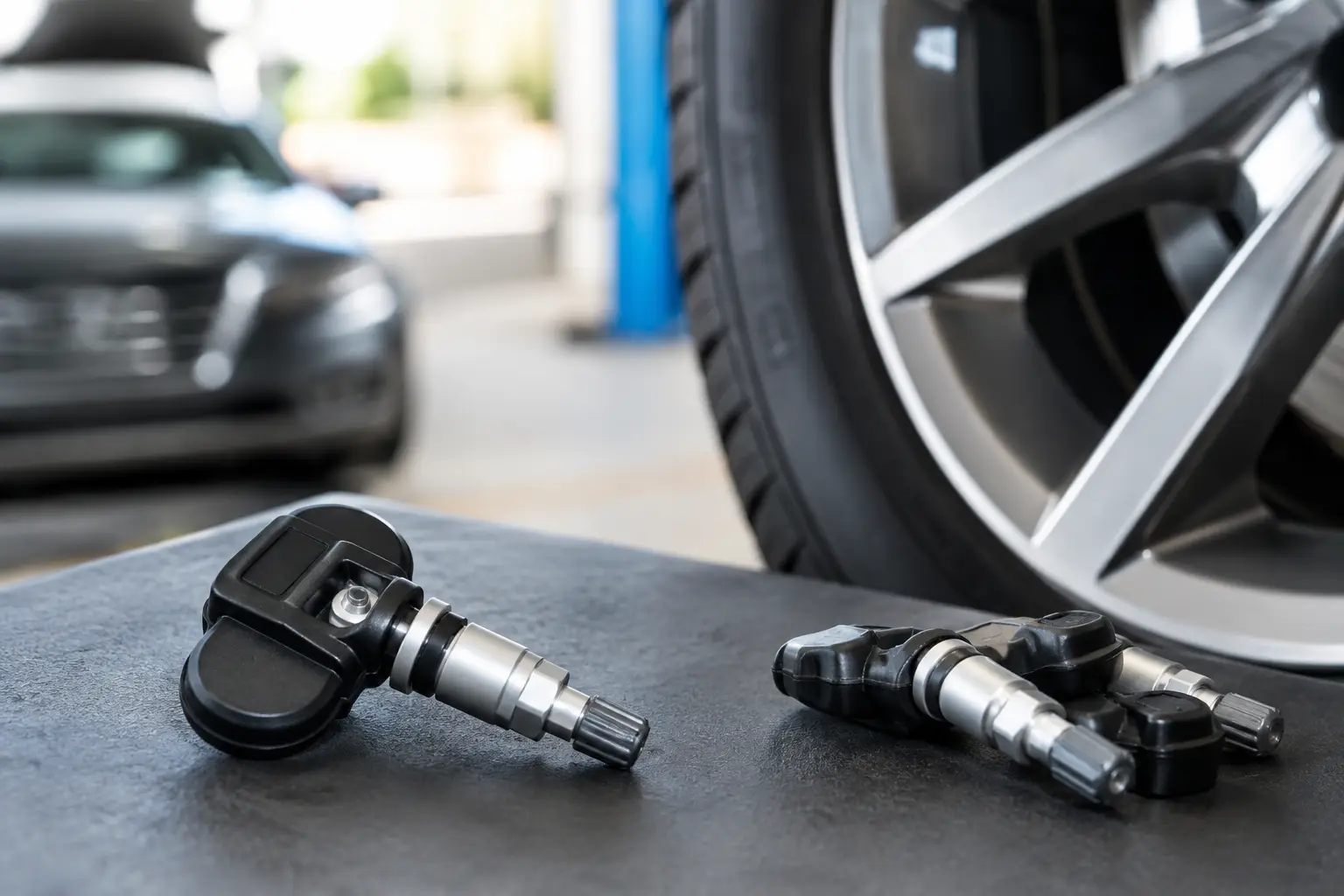
A tyre pressure warning appearing on the dash just after new tyres have been fitted is frustrating, particularly when the tyres themselves are correctly inflated. In many cases, the issue is not the tyre at all – it is one of the TPMS sensors inside the wheel, or the way the vehicle has recognised it after fitting.
Tyre pressure monitoring is now a familiar part of modern motoring, but it is often misunderstood when drivers replace tyres, buy a second set of alloys or refurbish existing wheels. Knowing what the system does, and what it needs from a replacement wheel or sensor, avoids warning lights, repeat workshop visits and incorrect purchases.
What TPMS sensors actually do
Direct TPMS sensors are compact electronic units fitted inside each wheel, normally attached to the valve. They measure tyre pressure and, on many systems, temperature, then send that information wirelessly to the vehicle. If a tyre loses pressure beyond the vehicle manufacturer’s set threshold, the dashboard warning lamp is triggered.
The key benefit is early warning. A slow puncture may not be obvious during a short journey, yet under-inflation affects braking, handling, tyre wear and fuel use. It can also cause serious internal tyre damage if the vehicle is driven for too long on a soft tyre.
Not every vehicle uses physical sensors. Some cars use an indirect system, which compares wheel-speed data from the ABS system to identify a tyre rotating at a different rate. Indirect systems do not have sensors in the wheels, although they still need resetting after pressures are adjusted or tyres are changed. Before ordering parts or wheels, establish which system your car has.
Why the TPMS warning light comes on
A warning light is not always evidence of a faulty sensor. Start with the simple checks: inspect the tyres for visible damage, check pressures when the tyres are cold, and use the pressure recommendation on the vehicle’s door shut, fuel flap or handbook. Do not rely on the maximum pressure printed on the tyre sidewall.
If pressures are correct but the warning remains, the car may need a reset or relearn procedure. On some vehicles this is carried out through the dashboard menu after the pressures are set. Others automatically relearn the sensor positions after a drive. Many require a diagnostic tool to register new sensor identification numbers.
A flashing warning lamp, followed by a steady lamp on many vehicles, can indicate a system fault rather than low pressure. The exact behaviour varies by manufacturer, so the handbook remains useful. A workshop can then test whether each sensor is transmitting and identify the wheel causing the issue.
Common causes include a depleted sensor battery, a damaged sensor during tyre removal, a cracked or corroded valve, an incorrect replacement sensor, or a sensor that has not been programmed to the vehicle. A sensor can also be fitted correctly but placed in a wheel with a valve arrangement or profile that does not suit it.
How long do TPMS sensors last?
Most original TPMS sensors last around five to ten years. Their internal battery is sealed into the unit and cannot normally be replaced separately. Age, mileage, heat cycles and time spent transmitting all play a part, so there is no fixed replacement interval.
This matters when fitting tyres to an older vehicle. If one original sensor has failed, the remaining sensors may not be far behind. Replacing one is often sensible where the others test well and the vehicle is relatively young. Replacing all four can be better value on an older set, especially when the tyres are already off the rims and labour would otherwise be repeated later.
Valve condition deserves attention too. Rubber snap-in valves can perish, while aluminium clamp-in valves can corrode around the valve stem or retaining nut. A proper TPMS service kit typically includes the sealing components and valve core needed when a sensor is reused. Reusing corroded parts simply to save a small amount can lead to a slow leak later.
TPMS sensors when changing tyres or wheels
Tyre fitting is a routine job, but sensor-equipped wheels need careful handling. The sensor sits close to the valve inside the rim, which means the tyre bead must be broken and lifted away in the correct position. An experienced fitter will work around the sensor rather than putting unnecessary force through it.
When changing tyres only, the existing sensors can usually stay in place if they are tested, undamaged and have sufficient battery life. It is a good opportunity to inspect the valves and replace service parts where required.
Changing to a different set of alloy wheels needs more planning. The wheel must be compatible with the sensor type and valve hole, and the sensor must communicate on the correct frequency and protocol for the car. Although 433 MHz is common across UK and European-market vehicles, it should never be assumed. Vehicle make, model, year and specification all matter.
Drivers buying a second set of wheels for winter use, track use or a change of style have two broad choices. They can transfer sensors from the existing wheels, or fit a dedicated set to the new wheels. Transferring them saves the cost of another set but adds labour every time wheels are swapped and puts older sensors through further handling. A dedicated, correctly programmed set is usually the more convenient option for wheels that will be used regularly.
Original, aftermarket and universal sensors
Genuine manufacturer sensors are built for a specific vehicle application and are often supplied ready to fit. They can be the right choice where exact original specification is preferred, particularly on newer premium vehicles.
Aftermarket vehicle-specific sensors are designed to match the original unit’s function and communication protocol. Quality varies, so the important point is choosing a reputable sensor that is confirmed for the precise vehicle rather than selecting one on appearance alone.
Universal sensors are flexible units that can be programmed or cloned for many applications. They are useful for workshops because one sensor can cover a wide range of vehicles once configured correctly. However, universal does not mean fit-anything straight from the box. It must be programmed with the correct vehicle data, and the car may still require a relearn after installation.
Cloning copies the identification number of the original sensor onto the replacement. This can reduce the need for a vehicle relearn on some cars, but it is not always the preferred route. If the old sensor is missing, unreadable or has already failed completely, a new ID and a proper relearn may be necessary.
Avoid the common TPMS mistakes
The most expensive problems usually begin with an assumption: that every sensor will fit, every warning can be cleared with a reset, or a new wheel set does not need consideration until fitting day. A few checks before ordering make a major difference:
Confirm whether the vehicle has direct or indirect tyre pressure monitoring.Match the vehicle by registration and verify make, model, year and trim where needed.Check sensor frequency, valve type and wheel compatibility rather than buying on price alone.Ask whether programming, cloning and relearning are included in the fitting work.Check tyre pressures after fitting and reset the system only once the correct cold pressures are set.
There is also an MOT consideration. On vehicles where a tyre pressure monitoring system is required, an illuminated warning lamp indicating a fault can result in an MOT failure. That is another reason not to ignore a persistent TPMS message, even when the tyres appear fine.
When replacement is the sensible option
Replace a sensor if testing shows no signal, the battery has expired, the housing is damaged, the valve is corroded beyond safe service, or the unit is not compatible with the wheel or vehicle. It is also worth considering replacement during a wheel refurbishment. Removing tyres, repairing the wheel and refitting everything is the ideal time to assess older sensors rather than rebuilding the wheel around parts near the end of their life.
For drivers fitting new alloys or dealing with a warning light in Dorset, The Tyre Barn can check wheel and tyre fitment, assess existing sensors and fit a suitable programmed replacement where needed. The right approach depends on the car, the wheel set and the condition of the parts already fitted.
A TPMS warning is there to protect the tyres, the wheels and everyone in the vehicle. Treat it as useful information, not an annoyance: check the pressures first, then have the system tested properly before a small sensor issue turns into wasted tyres or an avoidable roadside stop.