
Part Worn Tyres vs New: Which Makes Sense?

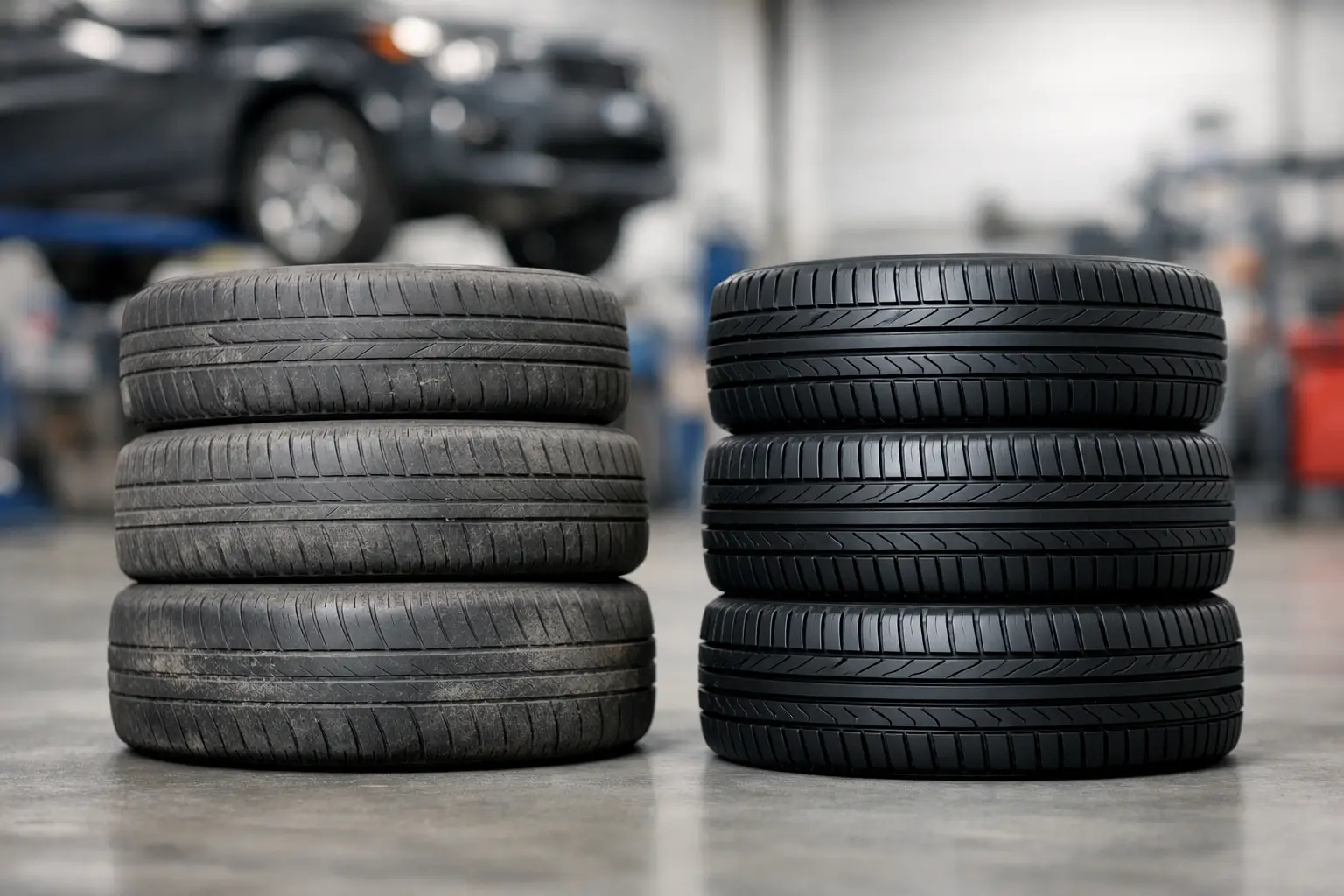
A cheap tyre can stop feeling cheap the first time you need it to brake hard in the wet. That is really what sits behind the part worn tyres vs new debate. Most drivers are not choosing between good and bad – they are choosing between what fits the budget now and what will make the most sense over the next 6 to 12 months.
There is no single answer for every car or every driver. A part worn tyre can be a sensible short-term option in the right circumstances, but a new tyre gives you full tread depth, a known history and fewer compromises. The right choice depends on how you use the vehicle, how many miles you cover, and how much risk you are comfortable taking on.
Part worn tyres vs new: the real difference
On paper, both options are simple. A new tyre is unused, carries full tread depth and has not been exposed to unknown wear, impact damage or poor storage. A part worn tyre has already been used on another vehicle and is being sold with some tread remaining.
That sounds straightforward, but the real difference is not just age or appearance. It is certainty. With a new tyre, you know where you are starting from. With a part worn, even one that looks tidy, there are questions you cannot always answer at a glance. How was it driven? Was it run underinflated? Has it clipped kerbs repeatedly? Was it removed because the car had a geometry issue that wore one shoulder harder than the other?
Some part worn tyres are removed from vehicles for perfectly reasonable reasons, such as wheel upgrades or full set changes. Others have had a far harder life. That is why inspection matters so much more when buying used.
When part worn tyres can make sense
There are situations where part worn tyres are a practical buy. If you need a temporary replacement to keep a vehicle mobile, want to match a tyre on a car you plan to sell soon, or need a lower-cost option for an older vehicle that does very little mileage, a good part worn can be worth considering.
They can also help when a driver has damaged one tyre and does not want to replace a full pair or set immediately. In some cases, especially on budget-conscious repairs, part worn stock can provide a faster and more affordable solution than ordering a new tyre in a less common size.
That said, value only exists if the tyre is genuinely good. A cheap part worn with marginal tread, sidewall damage or uneven wear is not value at all. It is simply a tyre with less life left in it and more question marks attached.
Where new tyres usually come out ahead
If you cover regular motorway miles, drive a heavier vehicle, carry family passengers, or own a performance car that is sensitive to tyre quality, new tyres usually make better sense. You get maximum tread depth from day one, stronger wet-weather performance, and a clear baseline for wear and maintenance.
New tyres also tend to work out better on cost per mile than many drivers expect. A part worn may cost noticeably less upfront, but if it has half the tread life left, the saving can disappear quickly. In some cases, especially if the used tyre is a premium brand and the new option is a quality mid-range tyre, the maths becomes even more interesting. The better buy is not always the lower ticket price.
There is also the handling factor. Fresh rubber, full tread blocks and consistent construction make a difference to braking, steering feel and stability. You notice it even more on prestige and performance vehicles where the wrong tyre can dull the car or upset the balance.
Safety matters more than the price tag
The strongest argument in the part worn tyres vs new discussion is safety. A legal part worn tyre in the UK must meet specific requirements, including minimum tread depth, no cuts or lumps that make it unsafe, and correct marking to show it is part worn. But legal and ideal are not the same thing.
A tyre can pass basic checks and still be well past its best. Rubber hardens with age. Previous repairs may affect confidence. Uneven wear can create more road noise, poorer grip and less predictable behaviour in standing water. If the tyre has lived a hard life, you are inheriting that history.
With a new tyre, especially one matched properly to the vehicle, you remove much of that uncertainty. That does not mean every new tyre is excellent – there is still a big difference between cheap new and premium new – but it does mean you are starting with a clean slate.
Tread depth, age and condition
Tread depth is where many buyers focus first, and understandably so. The legal minimum is 1.6mm across the central three-quarters of the tyre, but performance starts dropping before you get anywhere near that point, particularly in the wet. A part worn with 3mm remaining may be legal, but it is much closer to replacement than a new tyre starting with around 8mm.
Age matters too. A tyre can have decent tread and still be old enough for the rubber to lose some of its original performance. This is particularly relevant with part worn stock because the clock started years before you bought it. For low-mileage drivers this matters more, not less, because the tyre may age out before it wears out.
Condition is the third piece. Sidewalls should be free from cracking, cuts and bulges. Wear should be even across the width. Any repair should be professional and limited to an area that remains safe to repair. A tyre that fails one of those checks is not a bargain.
Cost per mile is a better way to compare
If you only compare purchase price, part worns often win. If you compare cost per mile, the answer changes.
For example, a part worn tyre at half the price of a new one sounds attractive. But if it has only 40 per cent of the usable tread life left, plus an unknown wear pattern and older rubber, the saving is less convincing. Add the chance of replacing it sooner, or the possibility that it does not pair well with the tyre on the other side of the axle, and the initial bargain can become expensive.
This is why tyre choice should be tied to the vehicle and how it is used. A local runabout doing a few short trips a week is very different from an Audi estate covering long motorway journeys or a BMW on staggered fitment where tyre behaviour matters more.
Matching, fitment and axle balance
Tyres do not work in isolation. They work as pairs across each axle and as a full set across the car. That is one reason new tyres are often the easier recommendation. Matching brand, tread pattern, load rating and speed rating is simpler, and the vehicle is more likely to behave consistently.
Part worn tyres can create complications here. If you fit a used tyre with noticeably different tread depth or construction to the one on the opposite side, braking and grip can become uneven. On some vehicles, particularly premium models and four-wheel-drive systems, mismatched tyres can affect more than comfort. They can influence wear rates and driveline behaviour too.
This is where specialist fitment advice matters. The tyre that is cheapest or easiest to source is not always the one that best suits the vehicle.
So, should you buy part worn or new?
If your priority is the lowest immediate spend, and the tyre has been properly inspected, is clearly marked, in sound condition and suitable for a low-demand use case, a part worn tyre can be a reasonable stopgap. It has its place.
If your priority is safety margin, longer service life, wet-weather performance and predictable handling, new tyres are usually the better investment. That is especially true for family cars, motorway drivers, heavier SUVs, commercial vehicles and performance models where tyre quality is not something to compromise lightly.
The best decision is usually the one that looks beyond today’s invoice. Think about the miles ahead, the type of driving you do, and whether you want a short-term fix or a proper reset. If you are unsure, get the tyres inspected properly and choose the option that gives you confidence every time you turn into a wet roundabout or stand on the brakes.