
How to Choose Tyre Size Without Guesswork

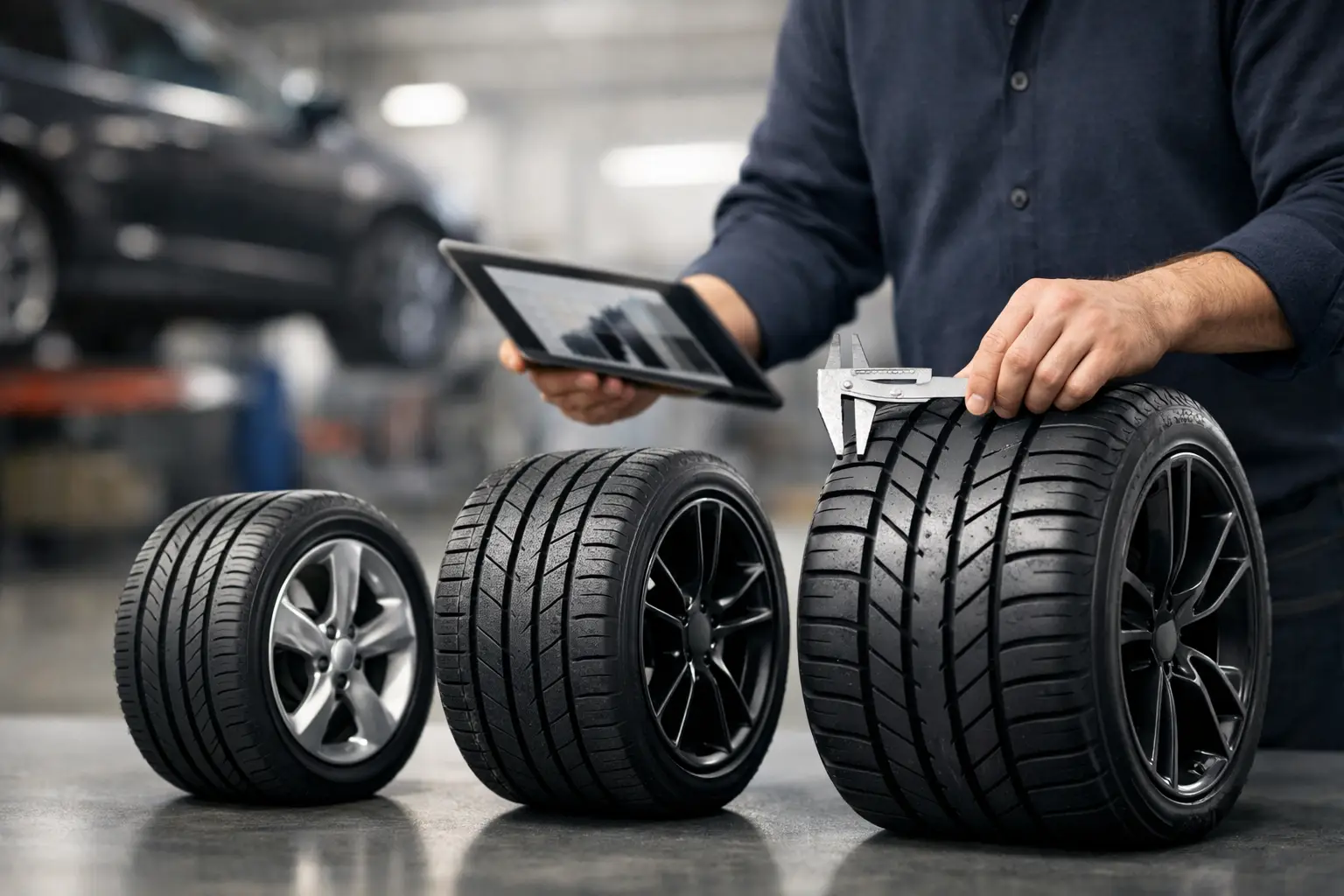
The quickest way to turn a simple tyre order into a fitment problem is to assume that “close enough” will do. If you are wondering how to choose tyre size, the right starting point is not what looks right in the arch or what another driver happens to be running. It is the size, load rating and speed rating your vehicle is designed to use, plus any wheel changes you have already made.
Get that right and the car will drive as intended, clear the arches properly, and keep the speedometer and safety systems working as they should. Get it wrong and you can end up with poor handling, rubbing, uneven wear or a tyre that is simply not suitable for the weight and use of the vehicle.
How to choose tyre size from the markings
Most drivers already have the answer fitted to the car. You will usually find the tyre size printed on the sidewall in a format such as 225/45 R17 94Y. It looks technical, but each part tells you something useful.
The first number, 225, is the tyre width in millimetres. The second, 45, is the aspect ratio, which means the sidewall height as a percentage of the width. The R means radial construction, which is standard for modern road cars. The 17 is the wheel diameter in inches. After that, 94 is the load index and Y is the speed rating.
If you are replacing like for like, this marking is the safest reference point. It is especially useful if the car is already on the correct wheels and tyres, and you are happy with how it drives. That said, it is still worth checking the vehicle handbook or the placard on the car, usually found in the driver’s door shut, fuel flap or glovebox area. Some vehicles have more than one approved size depending on trim level, wheel option or axle setup.
Start with the manufacturer-approved size
For standard replacement tyres, the best answer to how to choose tyre size is simple: use a manufacturer-approved fitment. Carmakers test tyre sizes for steering response, braking, ride quality, gearing and electronic systems such as ABS and traction control. That is why two versions of the same model may not use the same size, even if they look similar.
This matters even more on premium and performance vehicles. BMW, Audi, Mercedes, Porsche and Range Rover models often have specific fitment requirements, and some use staggered setups with different tyre sizes front and rear. In those cases, guessing based on wheel diameter alone is where problems start.
If your car is fitted with non-standard wheels, take a step back before ordering. The tyre on the car might fit the wheel, but that does not automatically mean it is the correct overall fitment for the vehicle. You need to consider rolling radius, arch clearance, wheel width and whether the tyre is properly matched to the wheel.
What the numbers actually mean in practice
It helps to understand what changes when one number changes.
A wider tyre can offer more grip, but it may also increase steering weight, road noise and the chance of rubbing if the wheel width or offset is not right. A lower profile tyre often sharpens steering response and gives a firmer feel, but ride comfort usually suffers. A larger wheel diameter changes the tyre options available and can reduce the amount of sidewall available to absorb potholes and rough roads.
That is why tyre sizing is not just about getting a tyre onto a wheel. It is about preserving the balance the car was built around, or making a deliberate change with full awareness of the trade-offs.
Load rating and speed rating are not optional extras
One of the most common mistakes is focusing only on width, profile and wheel diameter. The load index and speed rating matter just as much.
The load index shows how much weight the tyre can safely carry. If your vehicle needs a 94 load index, fitting a lower-rated tyre is not the right move, even if the physical dimensions match. The same applies to speed rating. You can often go higher than the original rating if suitable, but dropping below the manufacturer requirement is asking for trouble.
This is particularly important for estates, SUVs, vans and vehicles that carry passengers, tools or luggage regularly. A tyre that looks right can still be wrong for the job if it cannot support the load properly. For commercial fitments, the margin for error is smaller again.
How to choose tyre size when changing wheels
If you are upgrading or replacing alloy wheels, tyre size selection becomes more technical. The goal is usually to keep the overall rolling radius close to the original setup so the car maintains proper gearing, speedometer accuracy and clearance.
For example, if you move from a 17-inch wheel to an 18-inch wheel, the tyre sidewall usually needs to become smaller to keep the overall diameter similar. That is why a car might run 225/45 R17 in one factory setup and 225/40 R18 in another.
This is where enthusiasts sometimes get caught out. A wheel may bolt on, but the wrong tyre size can leave the car sitting awkwardly, catching on the arch liner or altering the way it drives. On staggered setups, you also need to consider whether the front and rear rolling circumference stays within an acceptable range, especially on four-wheel-drive systems.
If you are changing wheels for appearance, performance or seasonal use, proper fitment advice saves a lot of trial and error.
Watch for staggered and vehicle-specific setups
Not every car uses four matching tyres. Many rear-wheel-drive and performance models use a narrower tyre at the front and a wider one at the rear. This is known as a staggered setup. In that case, rotating tyres front to rear is not possible, and ordering four of the same size would be incorrect.
Some vehicles also require extra load, run-flat or manufacturer-marked tyres depending on how they were designed. That does not mean every replacement must be identical in brand, but the specification needs to be suitable for the vehicle. A premium saloon on large wheels has different demands from a small hatchback doing school runs and supermarket trips.
The details matter more as vehicle value, weight and performance increase.
Tyre size choice also depends on how you use the car
There is the correct size on paper, and then there is the best option within that size for your actual use. A motorway commuter, a local runabout, a track-focused weekend car and a working van do not all need the same kind of tyre, even when the size is identical.
If comfort and low noise matter most, a touring-focused tyre may be the better fit. If you want sharper dry grip, the answer may be a performance road tyre. If budget is the priority, there are sensible options, but it is still worth keeping the right size and rating rather than compromising the fitment to save a small amount.
For drivers buying part-worn tyres, size accuracy becomes even more important. A good used tyre in the correct specification is far preferable to a cheap mismatch that alters handling or causes wear issues.
Common mistakes when choosing tyre size
The biggest mistake is ordering by wheel diameter alone. Saying you need a 19-inch tyre is only part of the story. You still need the width, profile, load index and speed rating.
The next mistake is assuming all tyres currently fitted to the car are correct. Cars are often bought second-hand with non-standard wheels, mixed brands or previous owner shortcuts. If something looks odd, or if the sizes differ from side to side, verify the fitment before replacing anything.
Another issue is ignoring clearance. A tyre that is too wide or too tall may foul the suspension, arch or inner liner under load or full steering lock. This can happen even when the difference looks minor on paper.
Finally, do not overlook wheel width. Tyres have approved rim width ranges, and stretching or squeezing beyond sensible limits affects safety and performance.
When expert advice is worth using
If your car is standard and you are replacing the same size, choosing tyres is usually straightforward. If the car has aftermarket wheels, staggered fitment, performance upgrades or unclear tyre markings, it makes sense to get a second opinion before spending money.
That is especially true if you are balancing looks, budget and drivability. A proper fitment check can save you from buying tyres twice, dealing with rubbing problems or ending up with a setup that spoils the way the car drives. For local drivers in Dorset, having a specialist check wheel and tyre fitment before fitting can make the whole process much simpler.
Choosing the right tyre size is not about memorising numbers. It is about matching the vehicle, the wheel and the job the tyre needs to do. Once those three line up, the rest of the decision gets much easier.