
Wheel Refurbishment Service Worth Booking?

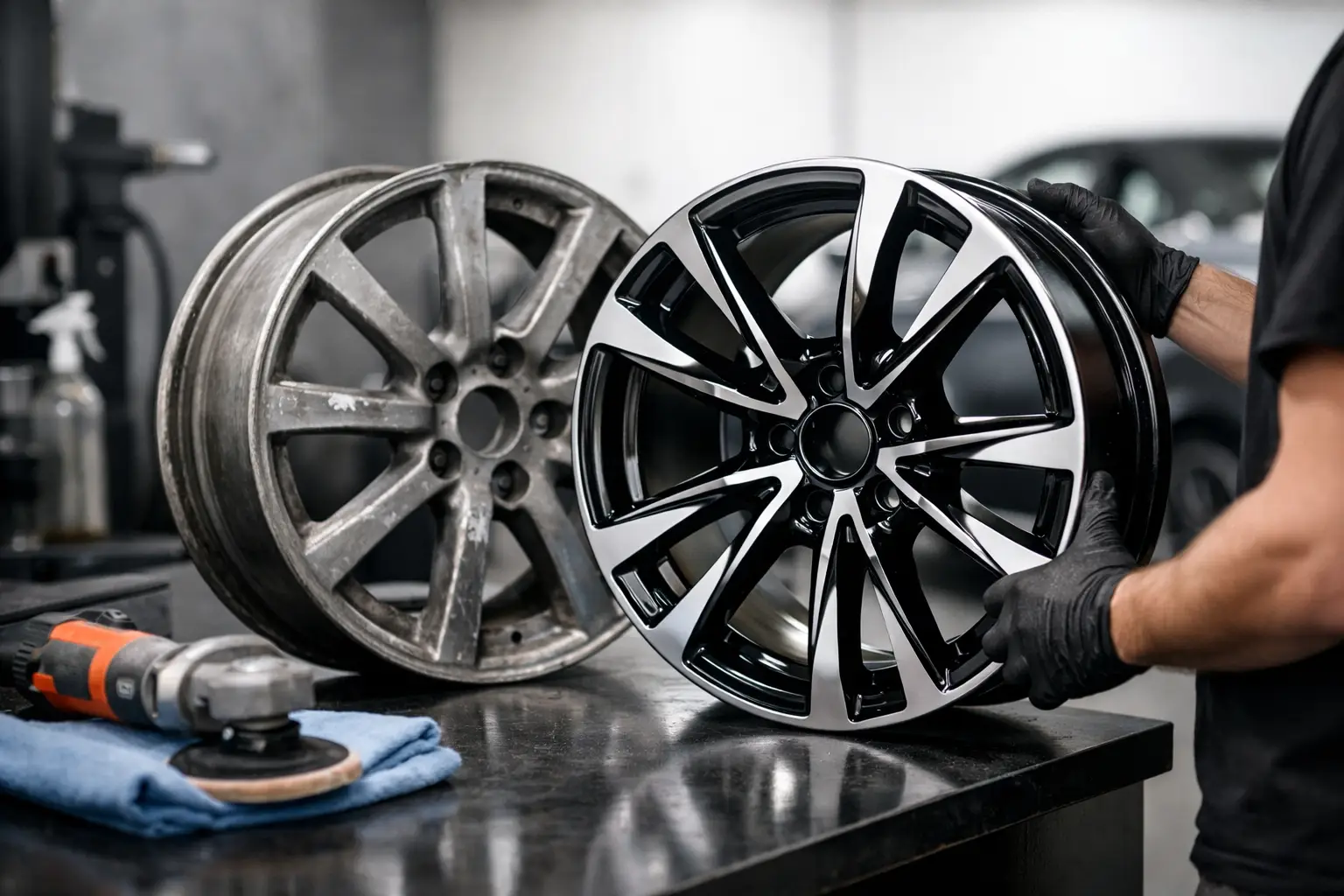
One badly kerbed alloy can make the whole car look tired. It does not matter whether you drive a daily commuter, a leased hatchback or a set of OEM BMW wheels you want to keep right – damaged rims stand out straight away. A proper wheel refurbishment service is not just about making alloys look cleaner. Done correctly, it helps protect the finish, maintain value and keep your wheels looking right for the vehicle.
What a wheel refurbishment service actually does
A good refurbishment service goes further than a quick cosmetic tidy-up. The aim is to restore the wheel as closely as possible to a sound, presentable finish, while checking for the sort of wear and damage that can shorten the life of the wheel.
That usually starts with stripping the old finish, cleaning away brake dust and contamination, and inspecting the wheel properly once the surface is exposed. Kerb marks, lacquer peel, corrosion around the lip and damage around the bolt holes or centre bore all become easier to assess at that stage.
From there, the process depends on the wheel and the condition it is in. Some alloys need minor filling and surface prep before repainting or powder coating. Others may need more involved attention if there is heavier corrosion or previous poor-quality repairs. Diamond cut wheels are their own category again, because the finish and machining process are different from a standard painted alloy.
When refurbishment makes sense
Not every marked wheel needs replacing. In many cases, refurbishment is the more sensible option, especially if the wheel is structurally sound and the damage is mainly cosmetic.
Kerbing is the obvious example. Light to moderate scuffs around the outer edge can often be repaired neatly, and once refinished, the wheel can look dramatically better. Corrosion is another common reason to book the work, especially on older alloys where lacquer has started to fail. Left alone, that bubbling and flaking tends to get worse rather than stay where it is.
Refurbishment also makes sense if you are preparing a car for sale or handing back a leased vehicle. Tired wheels can make an otherwise well-kept car look neglected. Freshly refurbished alloys improve the overall presentation quickly, and for many owners that is cheaper than sourcing a replacement set.
There is also the question of originality. If you have a genuine manufacturer wheel in the correct size, offset and fitment for the vehicle, keeping and restoring it is often a better route than replacing it with something that is merely close. That matters even more on premium marques where the right wheel finish and specification affect the whole look of the car.
When a wheel refurbishment service is not the answer
This is where experience matters. Refurbishment is not a cure-all, and any reputable workshop should say so.
If a wheel is cracked, badly buckled or heavily compromised, cosmetic work alone is not enough. Structural damage needs proper assessment, and in some cases replacement is the safer and more cost-effective choice. The same applies where corrosion has gone too far into critical areas of the wheel. A tidy finish on top of a poor base is not a proper repair.
It also depends on your expectations. A heavily damaged wheel can often be improved substantially, but that does not always mean it will return to factory-fresh condition. Some finishes are easier to replicate than others, and some older wheels arrive with years of wear, poor previous repairs or pitting that limits the final result.
Painted, powder coated and diamond cut wheels
Customers often use the term refurbishment as if every alloy is treated the same way, but the finish on the wheel changes both the process and the outcome.
Standard painted alloys are generally the most straightforward to refurbish. Once prepared correctly, they can be refinished in silver, anthracite, black and other popular colours, with a protective top coat to help resist the usual road grime and brake dust.
Powder coating is a popular option because it gives a durable finish and suits many everyday road cars well. For drivers who want a clean, practical result that stands up to normal use, it is often the right choice.
Diamond cut wheels need more care. These are machined on the face to create that bright, precise metal finish under lacquer. They can look excellent when done properly, but they are not endlessly repeatable because each recut removes a small amount of material. If a wheel has already been cut before, there may be limits on what can be done next. That is why an honest inspection matters before any work starts.
Why fitment knowledge matters even in refurbishment
Refurbishment is not only about paint and prep. Wheels still need to be treated as technical components, not just cosmetic items.
Correct fitment details matter when wheels are removed, inspected and refitted. Centre bore, bolt pattern, offset, tyre condition and TPMS compatibility all sit in the background of what should be a straightforward job. If you are dealing with staggered fitments, larger aftermarket wheels or premium manufacturer setups, getting those details right avoids unnecessary problems later.
That is one reason many drivers prefer a specialist that deals with wheels and tyres every day, rather than somewhere offering refurbishment as a side line. If a wheel needs further advice on replacement, matching or tyre refitting, it helps to have that handled in one place.
What to expect from the process
A proper wheel refurbishment service should start with a clear assessment of the wheels and a realistic conversation about condition, finish and expected turnaround.
Some sets come in with simple kerb damage and need little more than prep and refinishing. Others reveal corrosion under the lacquer, previous filler work or finish damage on the inner barrel once the tyres are removed. That can affect both price and timescale, so it is better to know at the start than be surprised halfway through.
You should also expect advice on whether all four wheels should be done together or whether one or two can be matched well enough to the rest. In some cases, refurbishing a full set gives the best result because finish ageing on the untouched wheels can make a newly repaired wheel stand out. In other cases, localised work is perfectly sensible.
If the tyres are being removed and refitted, it is also worth checking their condition at the same time. There is little point spending money on wheel appearance while ignoring damaged tyres, poor tread or mismatched fitments.
Is it worth refurbishing cheaper wheels?
Sometimes yes, sometimes no. It depends on the wheel itself, the level of damage and the replacement cost.
If you are dealing with a common budget alloy that is easy to replace used, refurbishment may not always be the best value. But if the wheel is hard to source, matched to the rest of the set, or the damage is fairly light, refurbishment can still be the smarter route.
For OEM wheels and better-quality aftermarket alloys, the case is usually stronger. Replacement costs can be significant, and finding a single wheel in the right size, finish and condition is not always easy. Restoring the wheel you already have often keeps the car looking more consistent and avoids fitment guesswork.
Choosing the right workshop for a wheel refurbishment service
The quality gap in this trade is real. A quick blow-over might look acceptable for a few weeks, but it rarely lasts. Proper prep, correct materials and realistic advice are what separate a durable finish from a short-term cover-up.
Look for a specialist that understands wheel condition beyond surface marks, can advise honestly on painted versus diamond cut finishes, and can deal with tyre removal and refitting without turning the job into a hassle. For local drivers in Dorset, having workshop support from a wheel and tyre specialist makes the process much more straightforward, especially if the car needs fitment advice at the same time.
At The Tyre Barn, that combination of stock knowledge, fitment experience and workshop service is exactly why refurbishment sits naturally alongside tyre supply and wheel sales. It is practical support, not guesswork.
Wheels take more abuse than most drivers realise, from kerbs and potholes to brake dust and winter grime. If yours are looking tired but still worth keeping, refurbishment is often the sensible middle ground between living with the damage and paying for replacements. The best time to sort them is usually before the wear gets any worse.