
Audi Alloy Wheel Fitment: What Must Match

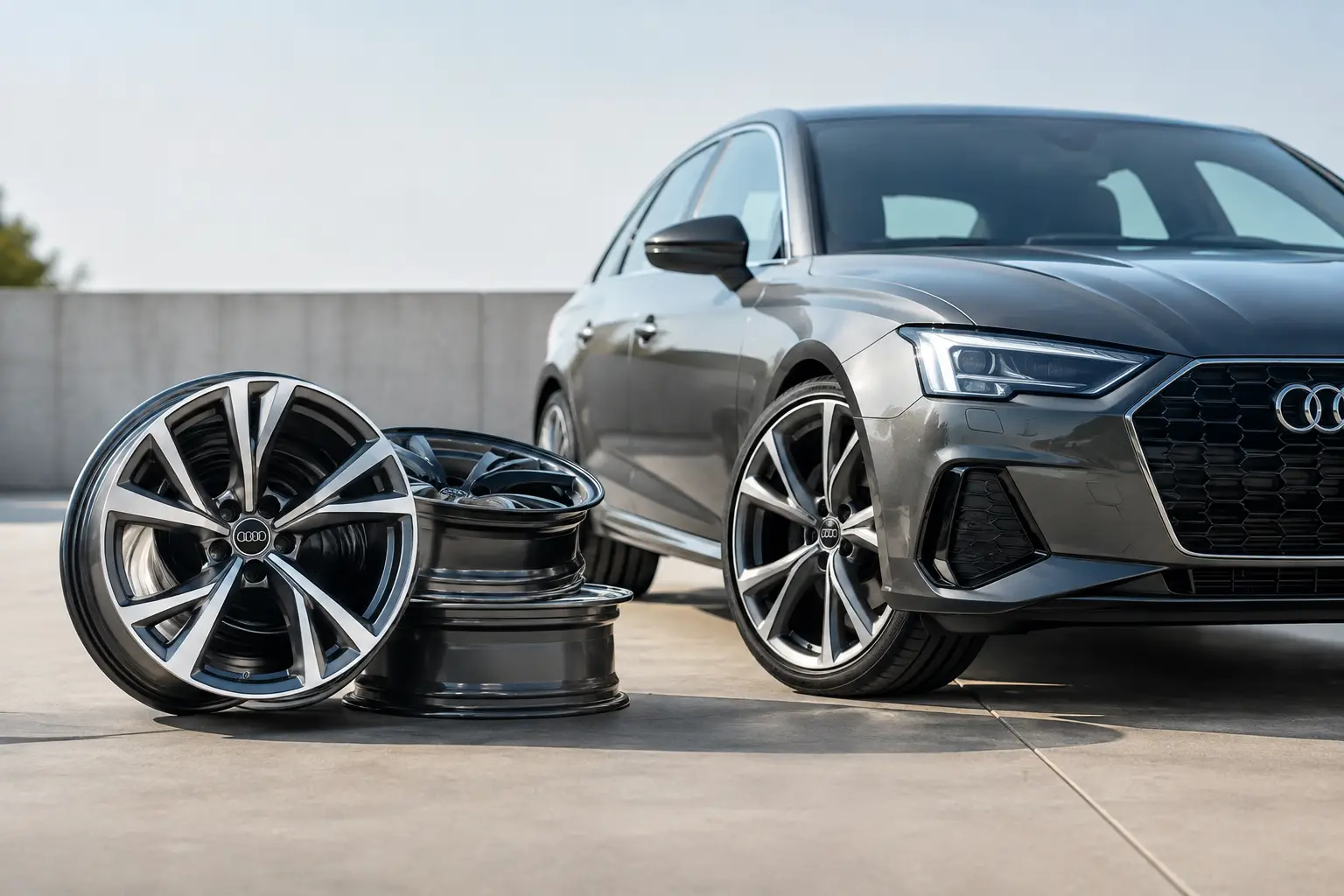
An Audi can look completely right on a new set of wheels, yet still be wrong where it matters. Audi alloy wheel fitment is not just about choosing the diameter, finish or spoke design you prefer. The PCD, offset, centre bore, bolt seat, load rating and tyre size all need to work together with your exact model, brakes and suspension.
That is why two wheels advertised as suitable for Audi are not automatically suitable for every Audi. A wheel that fits an A3 may not clear the brakes on an S3. A set removed from a Q5 may have the wrong width or offset for an A4. Get the details right before ordering and the result is safer, better looking and far less likely to cause rubbing, vibration or premature tyre wear.
Audi Alloy Wheel Fitment: The Numbers That Matter
The first figure most buyers see is the diameter, such as 17, 18, 19 or 20 inches. It matters, but it is only one part of the specification. A wheel marked 8J x 18 ET45, for example, is 18 inches in diameter, 8 inches wide and has an offset of ET45. You also need its bolt pattern and centre bore before it can be confirmed for the car.
Audi has used several fitments across its range and model generations. Many modern cars use a 5×112 PCD, meaning five wheel bolts on a 112 mm pitch circle diameter. However, this should never be treated as a blanket rule. Earlier models, performance variants and different platforms can vary. Always check the vehicle registration details, original wheel markings or manufacturer specification for the exact car.
Centre bore is equally important. Many Audi applications use a 57.1 mm centre bore, but again, confirmation is essential. The centre bore supports the wheel concentrically on the hub. A wheel with a bore that is too small will not fit. A larger bore can sometimes be used with correctly sized, high-quality hub-centric spigot rings, provided every other fitment measurement is right.
Then there is the bolt hardware. Original Audi wheels commonly use ball-seat bolts, while many aftermarket alloys require tapered or cone-seat bolts. Using the wrong bolt seat can stop the wheel clamping correctly, even when the bolt thread itself fits. If spacers are being fitted, bolt length must also be reassessed rather than guessed.
Offset and Width Decide Where the Wheel Sits
Offset, shown as ET, is one of the most misunderstood parts of Audi wheel fitment. It describes where the mounting face sits in relation to the wheel centreline. A higher ET number usually pulls the wheel further in towards the suspension. A lower ET pushes it outward towards the arch.
Changing offset alters clearances on both sides of the wheel. Too much positive offset can bring the inner rim or tyre close to suspension components. Too little can make the wheel sit proud of the arch, catch the wheel arch liner on compression or place unnecessary load on bearings and steering components.
Wheel width has the same effect. Moving from an 8J wheel to a 9J wheel adds width on the inside and outside unless the offset is adjusted to compensate. This is why an 18-inch wheel is not automatically interchangeable with another 18-inch wheel. The full width and ET specification are what tell you where it will sit.
A more aggressive, flush stance can be achieved on some Audi models, but it should be planned around real measurements rather than appearance alone. Lowered cars need particular care because the suspension has less room to travel before tyre-to-arch contact becomes a problem. The best setup depends on the car, tyre profile, ride height and how it is used.
Brake Clearance Cannot Be Assumed
Large-diameter wheels do not always clear large brakes. Spoke shape and the internal barrel design make a major difference. An 18-inch wheel may clear standard brakes but foul an upgraded caliper, while another 18-inch design with a different spoke profile may fit without issue.
This is especially relevant for S, RS and Black Edition models, as well as cars with factory performance brake options. Check caliper clearance before committing to a wheel, ideally using the wheel manufacturer’s brake template where one is available. Never rely solely on a photograph or on the fact that the wheel fitted a different Audi.
Match the Tyres to the Wheels and the Car
A correctly fitting alloy still needs an appropriate tyre. Tyre width must suit the wheel width, and the overall rolling circumference needs to remain close to the original specification. Moving up in wheel diameter usually means moving to a lower-profile tyre to keep the outside diameter under control.
For example, a larger wheel with an overly tall tyre can affect speedometer accuracy, gearing, ABS and traction control calibration. It may also rub under steering lock or when the suspension compresses. Going too low in profile brings its own trade-off: sharper steering response and appearance, but a firmer ride and greater risk of pothole damage to both tyre and wheel.
Load index and speed rating matter as much as the tyre dimensions. This is particularly important on heavier Audi models, SUVs and electric vehicles, where vehicle weight and torque can be substantial. Fit tyres that meet or exceed the requirements for the vehicle, and consider reinforced or manufacturer-approved specifications where appropriate.
If your Audi has a staggered setup, with wider rear wheels and tyres than the front, keep that arrangement unless there is a clear, compatible reason to change it. Rotating tyres front to rear may no longer be possible, but the handling balance intended for the car is maintained.
Genuine, Aftermarket and Used Audi Wheels
Genuine Audi wheels offer the reassurance of original styling and model-specific engineering, although the same design can still have different part numbers and specifications across the range. Check the casting marks on the rear of each wheel for size, ET, part number and load information rather than relying on the face design.
Quality aftermarket wheels give far more choice in style, weight and finish. The key is to buy vehicle-specific wheels from a reputable source and verify the complete specification. A correctly engineered aftermarket wheel can be an excellent choice, but a cheap universal-fit wheel may require rings, different bolts and closer scrutiny of its load rating and brake clearance.
Used wheels can represent very good value, particularly when replacing a damaged original or buying a second set for winter tyres. Inspect them carefully for cracks, buckles, welding repairs, corrosion around the bead seat and damage around the bolt holes. A wheel can look presentable from the front while hiding a problem on the inner rim.
Refurbishment can restore kerb-damaged alloys, but it is not a substitute for structural assessment. Cosmetic scuffs are one thing; cracks, serious distortion and unsuitable previous repairs are another. If there is any doubt, have the wheel checked before fitting a tyre and putting it back into service.
Checks to Make Before You Buy
Before choosing Audi alloys, confirm the exact model year, engine and trim, then compare the proposed wheel against the original specification. Check the PCD, centre bore, diameter, width, offset, load rating, bolt seat and brake clearance. Follow this with tyre size, tyre load index and the likely clearance at full lock and full suspension travel.
It is also worth checking whether your car uses tyre pressure monitoring sensors. Some systems use sensors inside each wheel, while others monitor wheel-speed data through the ABS system. If sensors are required, they need to be compatible, correctly installed and programmed where necessary.
For drivers fitting wheels after a suspension change, body kit or brake upgrade, the original factory fitment data is only the starting point. Those modifications can change the clearances that matter most. A professional test fit is often the sensible option.
The right wheel should fit without force, sit centrally on the hub, clear the brakes and suspension, and use the correct fixings at the specified torque. If you want the reassurance of stock depth and hands-on fitting advice, The Tyre Barn can check the details and fit suitable wheels and tyres at its Wimborne workshop. A few accurate measurements before purchase are always cheaper than correcting the wrong fitment afterwards.