
Best Wheels for Track Days That Suit Your Car

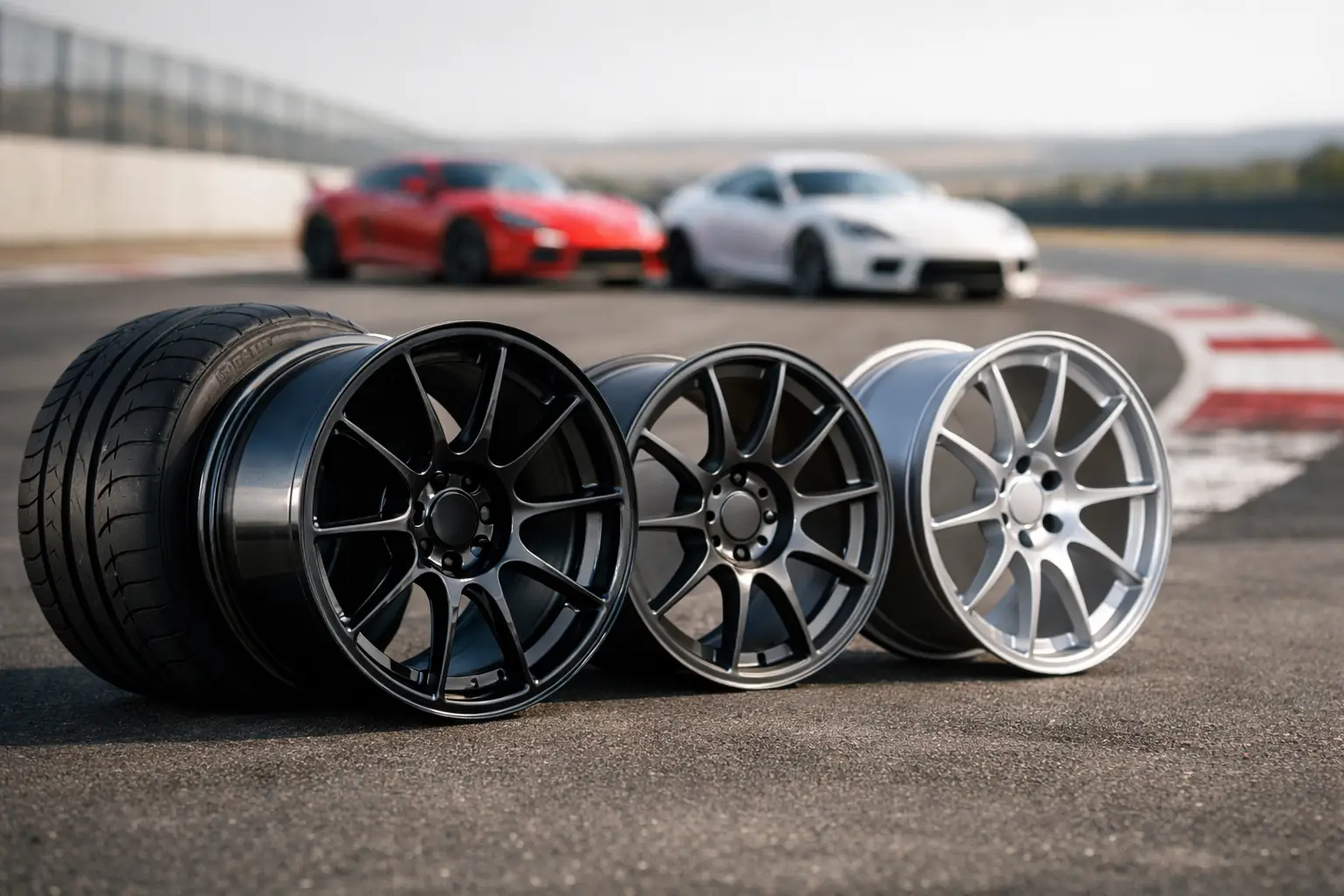
A wheel that looks right outside the circuit can be the wrong choice by the second hard session. Heat, kerbs, repeated braking and sticky tyres put far more load through a wheel than normal road driving. The best wheels for track days are not simply the lightest or most expensive option. They are the wheels that fit your car correctly, clear the brakes, support the tyre you intend to use and stand up to sustained circuit use.
For most drivers, a sensible track wheel setup also needs to work in the real world. It should allow for readily available tyres, straightforward replacements and reliable fitting. That matters just as much whether you are preparing a hot hatch for its first outing or running a dedicated track car.
What makes the best wheels for track days?
A good track wheel balances five things: correct diameter and width, low but sensible weight, strength, brake clearance and accurate vehicle fitment. Get one of those wrong and the advantage of an expensive wheel soon disappears.
Weight matters because it is unsprung and rotating mass. A lighter wheel helps the suspension react more quickly over kerbs and uneven surfaces, and it can make the car feel sharper when changing direction. However, chasing the lightest possible wheel is not always the right answer. A wheel with insufficient strength may crack or bend after repeated kerb strikes, especially on heavier cars such as performance BMWs, Audis, Mercedes and modern hot hatches.
The right choice is usually a reputable, motorsport-proven wheel with a realistic load rating for the vehicle. It must also be suited to the condition of the track and how the car is driven. A light wheel that survives smooth laps but suffers on a rough circuit is a false economy.
Diameter: smaller can be smarter
Many road cars leave the factory on 19-inch or 20-inch wheels, yet a smaller diameter is often better for track use if it clears the brakes. Moving to an 18-inch wheel can reduce weight, increase tyre sidewall and open up a wider choice of track-focused tyres. On lighter or older vehicles, 17-inch wheels can be an excellent option for the same reasons.
More sidewall gives the tyre room to work and can make the car less nervous over kerbs. It also gives a little more protection to the rim. The limitation is brake clearance: large factory calipers and aftermarket brake kits may require an 18-inch or 19-inch wheel, and not every wheel of the same nominal diameter has the same internal barrel shape.
Never assume that an 18-inch wheel will clear an 18-inch brake package. Spoke design, barrel profile and the position of the caliper all affect clearance. A confirmed brake template or a known successful fitment is the safe way to buy.
Width should match the tyre, not fashion
Wheel width determines how the tyre sits and behaves. A tyre mounted on a wheel that is too narrow can feel vague and allow more sidewall movement. Put the same tyre on a wheel that is too wide and it can become stretched, less protected and harder to manage at the limit.
A wider wheel and tyre can improve mechanical grip, but there are compromises. They add weight, may cause rubbing under compression and can make steering heavier. On a front-wheel-drive car, an overly wide front tyre may also increase tramlining and torque steer on the road.
As a starting point, choose a wheel width recommended for the tyre size, then confirm that the assembly will fit under the arches at full steering lock and full suspension compression. The tyre manufacturer’s approved rim-width range is more useful than relying on a photo of another car online.
Fitment is non-negotiable on track
Track driving magnifies small fitment errors. The pitch circle diameter, centre bore, offset, stud or bolt specification and wheel load rating must all be correct for the vehicle. Wobble bolts, spigot rings and spacers can have a place in a properly planned setup, but they should never be used to disguise a wheel that is fundamentally unsuitable.
Offset is particularly important. It determines where the wheel sits in relation to the hub, suspension and arch. A lower offset pushes the wheel outward; a higher offset pulls it inward. Too far inboard and the tyre or wheel can contact the strut, spring perch or inner arch. Too far outward and you risk arch contact, altered steering behaviour and unnecessary load on wheel bearings.
Spacers may be needed for brake clearance or to achieve safe arch clearance, but quality is essential. Use hub-centric spacers of the correct type and make sure the wheel still has proper hub location. Stud and bolt engagement must also be sufficient after any spacer is fitted. This is not an area to guess at in the driveway before an early-morning track session.
Wheel nuts or bolts deserve the same attention. Check their seat type – tapered, radius or flat – matches the wheel exactly. Torque them to the vehicle or wheel manufacturer’s specification with a calibrated torque wrench, then recheck after the first heat cycle. Never use an impact gun as the final tightening method.
Cast, flow-formed or forged wheels?
Construction affects weight, price and resistance to abuse. A conventional cast alloy wheel is often the most affordable route into track days. A high-quality cast wheel from an established manufacturer can be a dependable choice for occasional track use, provided it has the appropriate load rating and correct fitment.
Flow-formed wheels are a strong middle ground. The barrel is formed under pressure after casting, improving material properties and usually reducing weight compared with a standard cast design. For many regular track-day drivers, this offers an excellent blend of strength, price and performance.
Forged wheels are made from a solid billet or forged blank and can provide exceptional strength at a very low weight. They are often the right choice for serious circuit cars, high-power builds or vehicles where brake clearance and precise specification are critical. Their cost is higher, and that only makes sense if the rest of the setup – tyres, alignment, brakes and driver experience – can take advantage of it.
Avoid treating a wheel’s style as proof of quality. A dramatic multi-spoke design may be heavy, difficult to clean and more vulnerable to damage. A simpler motorsport-inspired design often provides good brake cooling, easier inspection and a practical route to replacement.
Choose tyres and wheels as one package
A wheel cannot be selected in isolation. Tyre availability is one of the biggest reasons experienced drivers choose common track sizes. An 18-inch wheel carrying a popular tyre size is easier to support when you need a replacement after a puncture, a corded shoulder or an unexpectedly wet day.
Consider the conditions you will actually drive in. Semi-slick tyres can deliver excellent dry grip but need temperature and may be demanding in standing water. A quality road-legal track tyre may be more predictable for a driver who uses the same car to travel to and from the circuit.
Tyre sidewall, overall rolling radius and wheel width also affect gearing, speedometer accuracy and electronic systems. A large change in rolling radius can upset traction control, ABS calibration and gearbox behaviour on some modern cars. Keeping close to the original overall tyre diameter is usually sensible unless the car has been set up around a deliberate change.
A square setup – the same wheel and tyre size on all four corners – is popular because it allows tyre rotation between front and rear. That can reduce running costs on cars that wear front tyres quickly. Staggered setups can suit cars designed around different front and rear widths, but they limit rotation options and can make carrying spares more complicated.
Do not ignore brake cooling and clearance
Track wheels need room around the brakes, not merely enough space to avoid contact while stationary. A wheel design with open spokes can help airflow reach the discs and calipers, assisting cooling during longer sessions. This is especially relevant on heavier cars and any vehicle running standard brakes close to their thermal limit.
Clearance should account for wheel flex, caliper movement and balance weights inside the barrel. A wheel that just clears a caliper on the ramp may touch when loaded hard through a fast corner. If you are fitting a big brake kit, check the manufacturer’s wheel-clearance drawing before ordering.
Are used or refurbished wheels suitable for track days?
Used wheels can be a sensible way to build a spare track set, particularly where original-equipment wheels are strong, readily available and correctly sized for the car. They must be inspected carefully for cracks, buckles, previous weld repairs, corrosion around the bead seat and damage to stud holes or bolt seats.
Refurbishment can restore the finish of sound wheels and protect them from further corrosion. It cannot turn a structurally damaged wheel into a safe track component. Any concern about a crack, serious buckle or poorly repaired wheel should be resolved before the car sees a circuit.
At The Tyre Barn, the benefit of dealing with a wheel and tyre specialist is being able to check the complete package: wheel condition, fitment, tyre size, valve choice, balancing and installation. For drivers in Dorset, having that work carried out at the fitting centre also removes the uncertainty of ordering parts separately and hoping they work together.
Before every event, inspect each wheel inside and out, check tyre pressures cold and take a torque wrench with you. Start with the correct wheel rather than the biggest-looking one, and you will have a setup that inspires confidence when the circuit gets quick.