
Can Cracked Alloys Be Repaired Safely on Your Car?

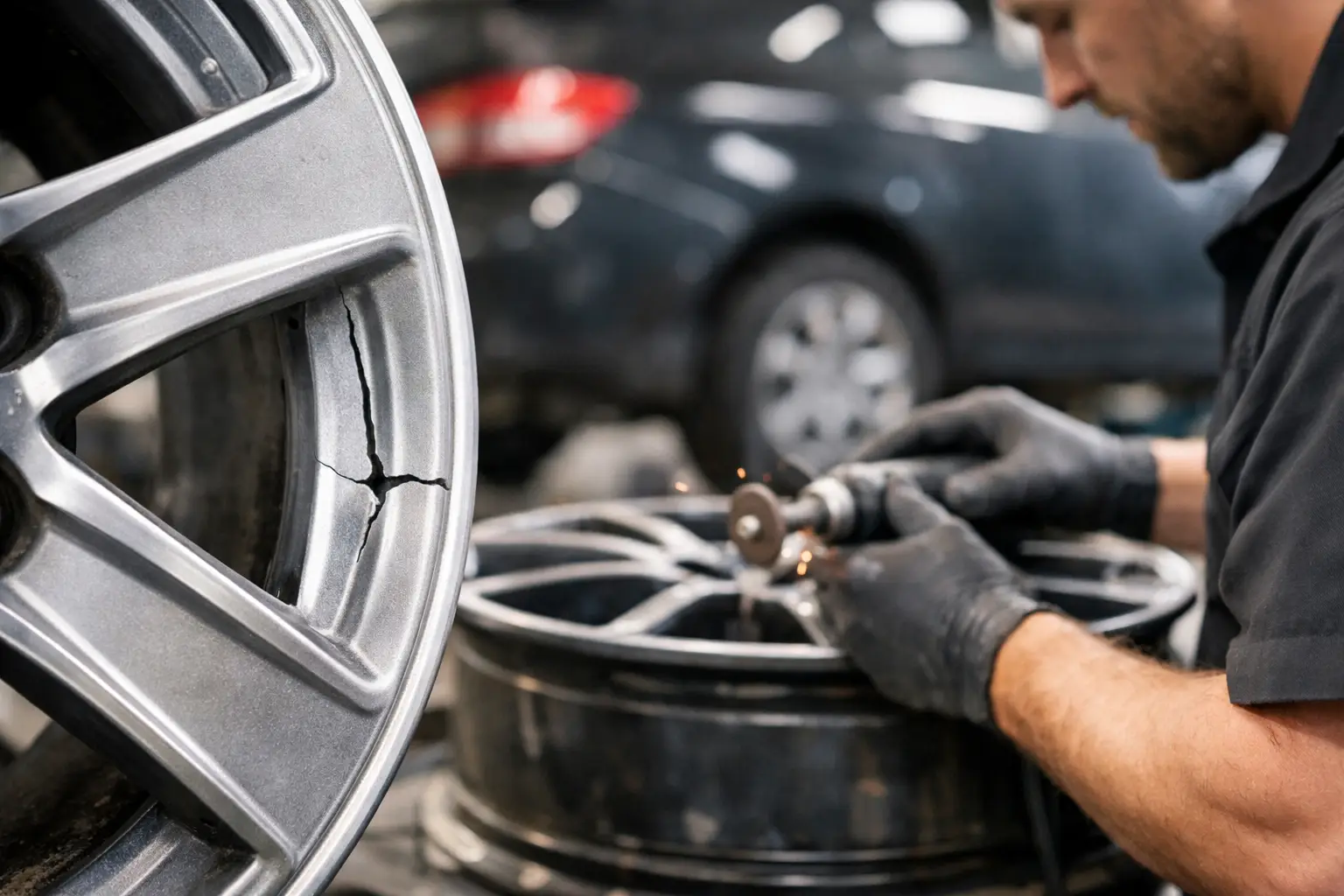
A crack in an alloy wheel is not the same as kerb damage. A scuff may affect appearance; a crack can affect how the wheel holds air and carries the vehicle’s load. So, can cracked alloys be repaired? Sometimes, yes – but only after a proper inspection confirms that a safe, lasting repair is realistic.
The position, length and cause of the crack matter far more than how tidy it looks from the outside. A wheel that has cracked after a sharp pothole strike may also be bent, weakened or hiding damage on the inner barrel. That is why alloy crack repairs should be assessed by a wheel refurbishment specialist, not treated as a quick cosmetic job.
Can Cracked Alloys Be Repaired Safely?
A professional repair is often possible where the crack is limited, accessible and located in a suitable part of the wheel. The usual process involves removing the tyre, cleaning and inspecting the wheel, preparing the damaged area and carrying out specialist alloy welding. The wheel should then be checked for distortion and air leaks before it is refinished, fitted with a tyre and balanced.
However, welding does not automatically make every cracked alloy safe. An alloy wheel is a safety-critical component. It supports the vehicle, tyre and suspension loads while dealing with braking force, cornering force and repeated impacts from uneven roads. A poor repair can leak, crack again or fail when the wheel is under stress.
A reputable workshop will tell you when replacement is the better answer. That may feel frustrating when you have a premium factory wheel or an expensive aftermarket set, but fitting a sound replacement wheel is always preferable to taking a chance on structural damage.
Where the Crack Is Makes a Major Difference
The wheel barrel is the cylindrical section that sits beneath the tyre. Cracks in certain areas of the inner or outer barrel can sometimes be welded successfully, provided the surrounding metal is in good condition and the damage is not extensive. These cracks are often found when a tyre repeatedly loses pressure or when a wheel is removed for a tyre change.
Cracks around the spokes, bolt holes, centre bore or hub mounting face need much more caution. These areas transfer significant loads between the car and the wheel. Damage here can indicate a wheel that has suffered a serious impact, and a repair may not be appropriate. The same applies to a crack that runs through a spoke or extends across more than one structural section.
The edge of the rim also needs careful assessment. A small crack near the bead seat may be repairable, but the tyre must still seal correctly afterwards. If the bead seat is badly damaged, corroded or distorted, welding the visible crack alone will not solve the underlying issue.
What Causes Alloy Wheels to Crack?
Potholes are a common cause, particularly on low-profile tyres where there is less sidewall to cushion the impact. A hard strike can pinch the tyre and force the wheel against the road surface, leaving a buckle, a crack or both.
Kerb impacts, poorly repaired previous damage, corrosion around the rim, overloading and incorrect tyre pressures can also contribute. Larger wheels with low-profile tyres may look excellent and sharpen steering response, but they offer less protection from poor road surfaces. This is one of the practical trade-offs to consider when choosing a wheel and tyre package.
Repeated loss of tyre pressure is another warning sign. It may be caused by a puncture, a faulty valve or corrosion at the bead, but it can also point to a hairline crack. Do not keep inflating the tyre and carrying on without having the wheel checked.
Signs You Should Stop Driving and Book an Inspection
If you notice a visible crack, a sudden or recurring pressure loss, vibration after an impact, or a tyre that will not stay inflated, arrange an inspection promptly. A wheel can crack on the inside where it is not obvious while the vehicle is parked, so the problem may first show up as a slow leak.
Avoid driving on a flat tyre. Continuing to drive can damage the tyre sidewall, score the wheel barrel and turn a repairable issue into a replacement job. It can also make the vehicle unpredictable under braking or cornering.
A steering vibration does not always mean a cracked alloy. It could be wheel balance, a bent wheel, tyre damage, worn suspension parts or incorrect fitment. The right approach is to inspect the wheel and tyre together rather than guessing from one symptom.
How a Proper Alloy Crack Repair Should Be Carried Out
The tyre should be removed first. This allows the inside of the barrel and bead seat to be examined properly, including areas hidden by the tyre. The wheel can then be cleaned to reveal corrosion, previous welds and fine cracks that paint or brake dust may conceal.
A specialist will assess whether the wheel is straight and whether the crack has spread. If repair is suitable, the damaged section is prepared and welded using the correct equipment and technique for the alloy. Simply filling the area, applying paint or using a sealant is not a structural repair.
After welding, the wheel should be checked for leaks and run-out. Run-out is the measure of how true the wheel runs when rotated. Excessive run-out can cause vibration, uneven tyre wear and poor ride quality, even if the wheel holds air. The repair area is then refinished as required, and the tyre is refitted and balanced.
Refurbishment can make the wheel look far better, but appearance comes after safety. Powder coating or a smart painted finish should never be used to hide a crack or avoid a proper assessment.
When Replacement Is the Better Option
Replacement is generally the sensible choice when there are multiple cracks, serious buckling, damage around the spokes or bolt holes, or evidence that the wheel has already been repaired unsuccessfully. It is also worth replacing a wheel where corrosion is advanced or the tyre bead area is too damaged to provide a dependable seal.
For some vehicles, sourcing the exact replacement matters. Offset, width, diameter, centre bore, PCD and load rating all need to be correct. A wheel that physically bolts on is not necessarily the right wheel for the car. This is particularly relevant for Audi, BMW, Mercedes, Porsche and Range Rover fitments, where specifications can vary between models and even trim levels.
A good used original wheel can be a practical alternative to buying a new set, provided it has been inspected for cracks, buckles and previous poor-quality repairs. Matching the correct specification protects handling, brake clearance and tyre fitment.
Is a Repaired Alloy Suitable for Everyday Use?
It depends on the nature of the original damage and the quality of the repair. A properly assessed and professionally welded minor barrel crack can be suitable for normal road use. A wheel with structural damage, repeated cracking or a questionable repair history is not one to compromise on.
Be honest about how the vehicle is used as well. A family car used for local driving has different demands from a heavily loaded van, a performance car driven enthusiastically, or a vehicle that sees track use. In higher-load or higher-speed applications, the margin for uncertainty is smaller.
At The Tyre Barn, a wheel and tyre inspection can help establish whether refurbishment is sensible or whether a correctly matched replacement is the safer investment. Checking the tyre at the same time is worthwhile, especially after a pothole impact, as sidewall damage is not always visible from the outside.
If your alloy has cracked, do not judge it by appearance alone. Have the wheel removed, inspected and measured before deciding on repair or replacement. A clear answer from a specialist is worth far more than a wheel that merely looks repaired.