
Do Tyres Need Matching Pairs? Safety Explained

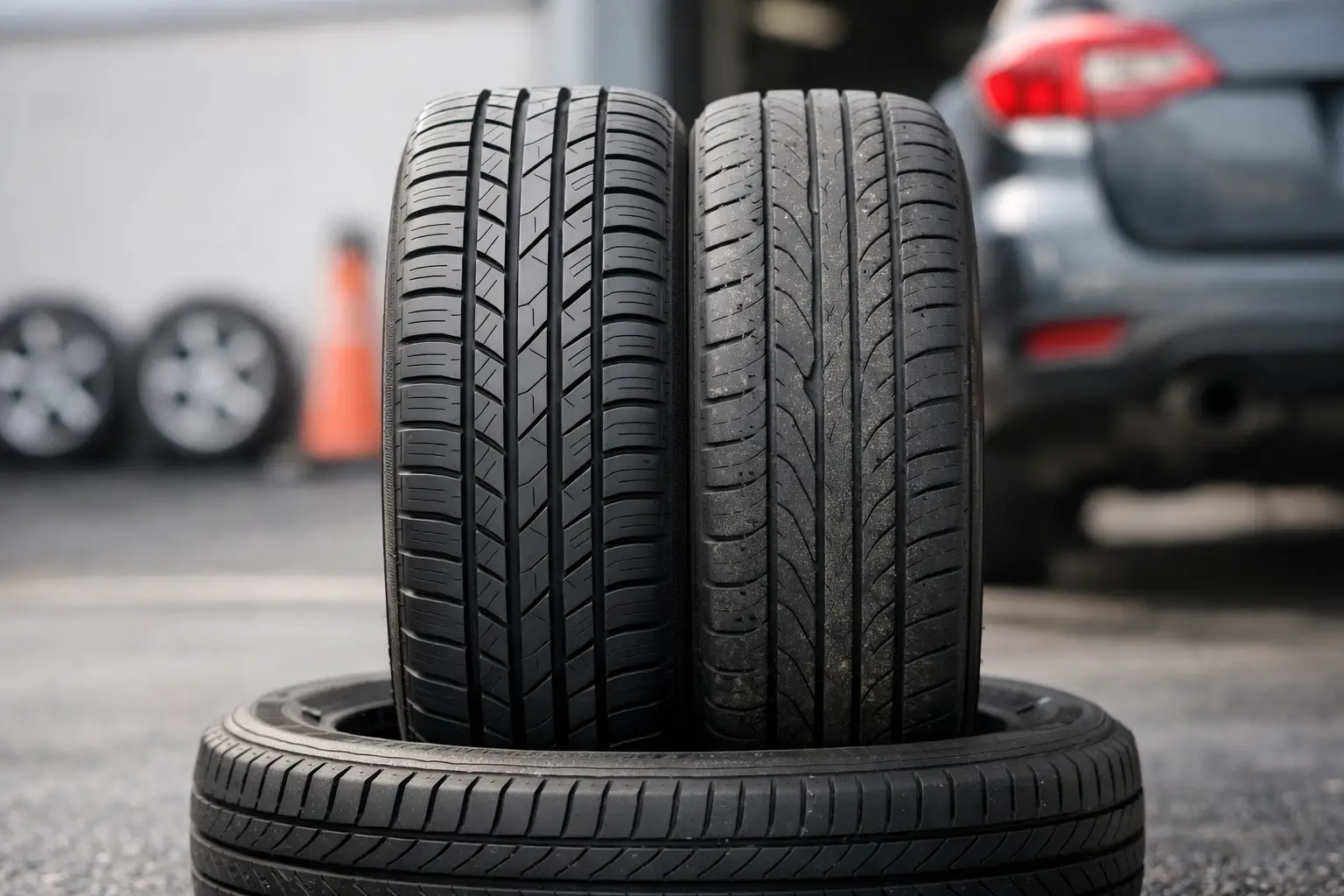
A puncture on one corner, an advisory at MOT time, or a tyre worn down on the shoulder can leave drivers asking: do tyres need matching pairs? The short answer is that tyres on the same axle should usually be matched as closely as possible. That means the same size, construction, load rating, speed rating and, ideally, the same make and model.
It is not simply a matter of making the car look right. A matched pair helps the vehicle brake, steer and respond predictably, especially in heavy rain, on uneven roads and during an emergency manoeuvre. There are situations where replacing one tyre is acceptable, but they need to be assessed properly rather than treated as a one-size-fits-all answer.
Do tyres need matching pairs on the same axle?
For most cars, yes. The two tyres across the same axle should be a matching pair. At a minimum, they must be compatible in their key specifications: tyre size, radial or cross-ply construction, load index, speed rating and intended use. Fitting one standard road tyre beside a more aggressive all-season, run-flat or performance tyre can change how each side of the car grips and flexes.
Matching the exact tyre model is the best approach. Different brands and patterns can have very different wet braking, sidewall stiffness, noise levels and tread depths, even when the sidewall size appears identical. If one tyre has a firm, responsive sidewall and the other is designed for comfort, the car may pull slightly under braking or feel less settled when cornering.
UK roadworthiness rules also matter. Tyres fitted to the same axle need to be of the same basic construction type. Mixing radial and cross-ply tyres on the same axle is not acceptable. The tyres must also be suitable for the vehicle, have sufficient tread, and be free from damage such as exposed cords, serious cuts or bulges.
Matching does not always mean four identical tyres
A normal front-wheel-drive or rear-wheel-drive car does not always need four identical tyres. It is common for drivers to run one tyre model on the front axle and another matching pair on the rear, provided each tyre is correctly specified for the vehicle.
That said, a full matching set gives the most consistent feel and is particularly worthwhile on performance cars, heavier SUVs and vehicles that regularly cover motorway miles. Premium marques can be more sensitive to tyre choice because their suspension, stability systems and original equipment set-up are designed around particular tyre characteristics.
If your vehicle has staggered wheels – wider tyres at the rear than the front – the front and rear pairs will naturally be different sizes. They should still be matched side-to-side on each axle.
When replacing one tyre can make sense
Replacing a single tyre can be reasonable if the tyre on the opposite side of the axle is relatively new, undamaged and has very similar remaining tread depth. The replacement must match its partner exactly wherever possible.
For example, if you have picked up a nail in a nearly new front tyre and the other front tyre has only covered a few thousand miles, fitting one identical replacement may be the sensible and cost-effective option. The key is not just the amount of tread left, but whether the existing tyre has worn evenly and remains in good condition.
Once the difference in tread depth becomes more noticeable, replacing both tyres on that axle is usually the better decision. A meaningful difference can affect grip in wet conditions because the deeper-tread tyre clears water more effectively than the worn one. That imbalance is most apparent during hard braking and when driving through standing water.
There is no universal tread-depth gap that suits every vehicle and tyre manufacturer. As a practical rule, the closer the two tyres are in age, model and tread depth, the better. A tyre specialist can measure the existing tyre and advise whether a single replacement is appropriate.
Why tread depth differences matter in the wet
A legal tyre can still be a long way from performing like a new one. The UK minimum tread depth is 1.6mm across the central three-quarters of the tread, around the full circumference, but wet-weather performance reduces well before that point.
When one tyre on an axle has much less tread than the other, it may struggle to disperse water at the same rate. Under braking, that can make the car feel unsettled. In a bend, one side of the axle can lose grip earlier than the other, particularly on a greasy road or in deep surface water.
This is one reason matched pairs are about more than compliance. They help preserve the predictable balance that the car had when it was properly set up.
Where should new tyres be fitted?
If you are replacing two tyres, new tyres are commonly fitted to the rear axle, even on a front-wheel-drive car. This can sound counterintuitive because the front tyres handle steering and, on many cars, propulsion. However, placing the tyres with the best wet grip on the rear helps reduce the risk of rear-end grip loss, which can be harder for most drivers to control.
If the rear tyres lose grip first in a wet bend, the car can oversteer or rotate. Better rear tread helps keep the vehicle stable. The front tyres may run wide first if they lose grip, but that is generally easier to recognise and manage by easing off the throttle and reducing steering input.
There are exceptions. Always follow the vehicle handbook where it gives a specific instruction, particularly for high-performance, four-wheel-drive and staggered-fitment vehicles. A tyre professional should also consider the condition of all four tyres, not just the pair being replaced.
Four-wheel drive and matching tyres
Four-wheel-drive, all-wheel-drive and many modern SUV systems deserve extra care. These drivetrains can be sensitive to differences in rolling circumference between tyres. A change in tread depth, tyre model or actual fitted diameter can make one wheel turn at a slightly different speed from the others.
Over time, that difference can place unnecessary strain on components such as the transfer case, centre differential or clutch pack. The risk varies by manufacturer and system, so the vehicle handbook is the first place to check. Some manufacturers specify a maximum allowable difference in tread depth across all four tyres.
For these vehicles, replacing all four tyres may be the right answer if the existing set is well worn. If that is not necessary, fitting the exact same tyre as the others and checking tread-depth differences carefully is particularly important. Do not assume that two tyres carrying the same size marking will have identical rolling circumference – brands and patterns can vary.
Do run-flat, winter and all-season tyres need to match?
They do, especially across the same axle. Run-flat tyres have reinforced sidewalls and behave differently from conventional tyres after pressure loss. Mixing a run-flat with a standard tyre on the same axle can create an uneven response and may not suit the vehicle’s approved fitment.
Winter, all-season and summer tyres also have different rubber compounds and tread designs. Mixing them can be legal in some circumstances if all tyre requirements are met, but it is rarely the best choice for balanced handling. Keep the same seasonal tyre type on each axle at the very least. For the most dependable year-round behaviour, fit a complete matching set suited to how and where you drive.
Directional tyres must be fitted to rotate in the marked direction. Asymmetric tyres must have the sidewall marked “outside” facing outward. Getting either wrong can compromise water clearance and grip, even if the tyres themselves are a matching pair.
What about part-worn tyres?
A good-quality part-worn tyre can be a practical option when matched carefully to an existing tyre, particularly where the other tyre has useful tread remaining. It must be thoroughly inspected for repairs, sidewall damage, uneven wear, age-related cracking and internal problems before it is fitted.
The tread depth alone does not tell the whole story. A tyre with plenty of visible tread may have suffered impact damage or may have worn unevenly because of poor wheel alignment. Matching a part-worn tyre by size is not enough – its condition, construction and remaining tread should be assessed against the tyre already on the car.
Check the cause before fitting replacements
If a tyre has worn much faster on one edge, replacing it without checking the cause can waste money. Incorrect wheel alignment, worn suspension components, underinflation and overinflation can all shorten tyre life and make a new pair wear unevenly.
A fitting appointment is a sensible time to inspect the wheels and valves, check tyre pressures and assess alignment. This matters even more after a pothole strike, kerb damage or wheel refurbishment work. A straight, properly balanced wheel and correctly inflated tyre will protect both handling and tyre life.
For drivers in Dorset who need tyres supplied and fitted, The Tyre Barn can assess the existing tyres rather than simply sell the nearest available replacement. That makes it easier to choose between one tyre, a matching axle pair or a complete set based on the vehicle and the condition of what is already fitted.
The best decision is usually straightforward: keep tyres matched across each axle, replace in pairs when tread or condition differs significantly, and take extra care with four-wheel-drive systems. A quick inspection before buying can turn an urgent tyre replacement into a safer, better-value choice that keeps the car feeling as it should.