
How to Choose Van Tyres for Work and Safety

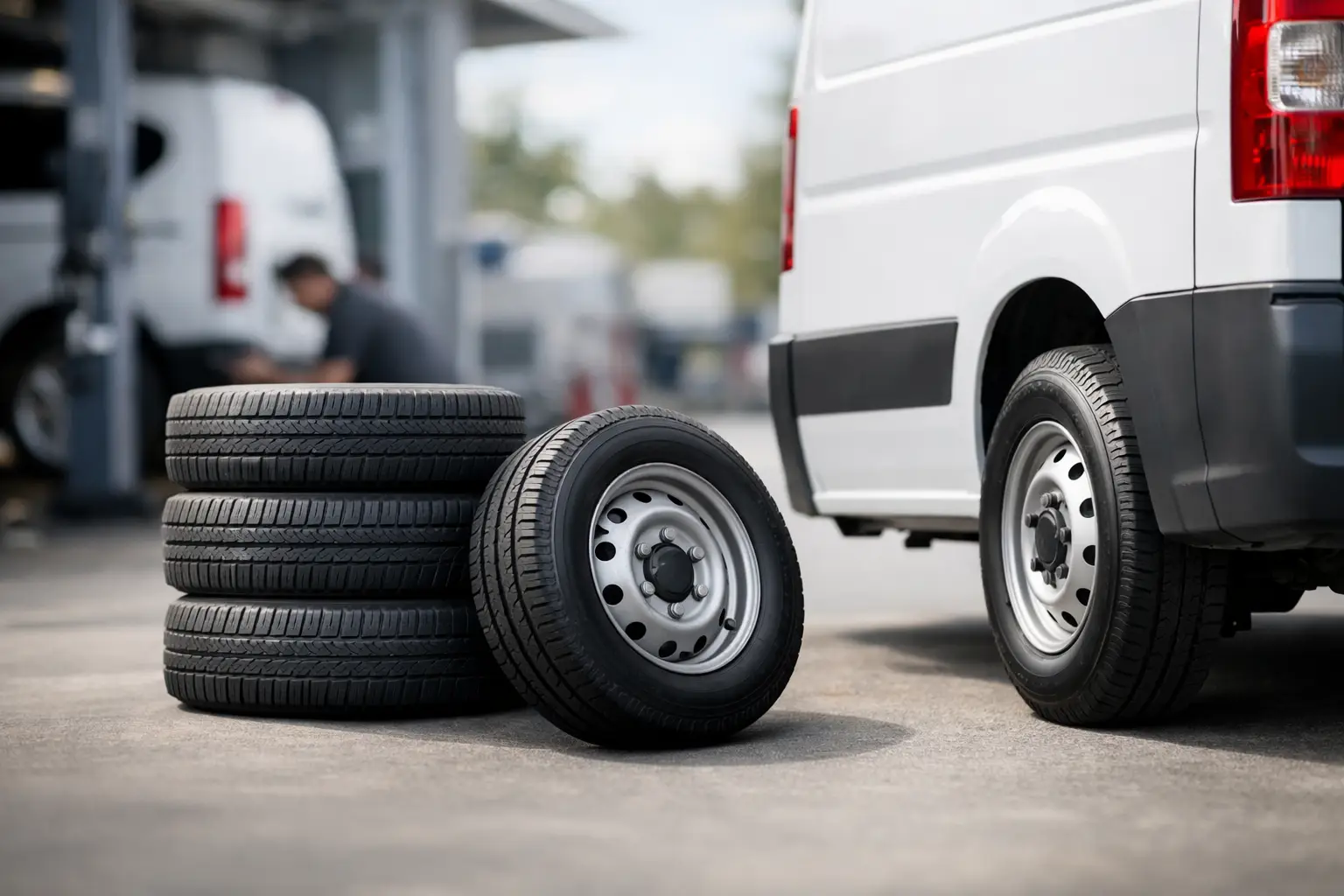
A van tyre can look fine on the driveway and still be wrong for the job. Fit a passenger-car tyre to a heavily loaded Transit, Transporter or Vivaro and it may wear quickly, feel unstable and struggle with the demands of daily work. Knowing how to choose van tyres starts with the vehicle’s actual workload, not simply the cheapest tyre available in the right diameter.
For a courier covering motorway miles, durability and fuel efficiency may lead the decision. For a tradesperson carrying tools, materials and a roof rack, load capacity and sidewall strength matter more. If the van spends its week on wet rural roads, drainage and wet braking performance deserve extra attention.
Start with the correct van tyre size
The existing tyre sidewall is the quickest place to find the basic specification. A marking such as 215/65 R16C gives you the width, profile, construction, rim diameter and, crucially, the commercial designation. The C means commercial. These tyres are built with the stronger construction needed for many vans and light commercial vehicles.
Your vehicle handbook, door-shut sticker or fuel flap label will confirm the manufacturer-approved sizes, tyre pressures and axle loads. This is particularly useful if the van has been bought used, has aftermarket wheels, or is fitted with tyres that may not be correct.
Do not choose a size simply because it is close. A change in width or profile can affect speedometer accuracy, steering response, wheel-arch clearance and the load the tyre can carry. It can also cause problems at MOT time or with insurance if the wheel and tyre combination is unsuitable for the vehicle.
If you are replacing just one tyre, matching the size is essential. Matching the pattern and brand across an axle is also sensible where possible, as different tread designs can alter wet grip and handling. On many vans, fitting the newer or deeper-tread pair to the rear axle helps maintain stability in wet conditions.
Load rating is not optional
A van’s load index is one of the most important numbers on the sidewall. It states the maximum weight that each tyre can carry at its specified pressure. A tyre marked 109, for example, is rated for a higher load than one marked 99. The number may look like a minor detail, but it is a safety limit rather than a performance preference.
Check the vehicle’s gross vehicle weight and its front and rear axle limits, then think about how the van is genuinely used. A vehicle that is empty when visiting a tyre supplier may be carrying several hundred kilograms of stock, tools or equipment the following morning. Rear tyres in particular can be under significant pressure on a loaded vehicle.
Choose tyres that meet or exceed the manufacturer’s required load rating. Never compensate for a lower-rated tyre by increasing pressure beyond the tyre or vehicle recommendation. Overinflation can reduce the contact patch, compromise ride quality and increase centre-tread wear, while an overloaded tyre can overheat and fail.
Some vans use reinforced or extra-load specifications, while motorhomes and camper conversions may require CP tyres designed for their particular weight distribution and prolonged standing loads. These are cases where the registration number alone may not tell the full story. The conversion plate, axle weights and current wheel specification all need checking.
Speed rating still matters
The speed rating is the letter after the load index, such as R, T, H or V. Most working vans do not need a high-performance rating, but the tyre must meet the vehicle manufacturer’s minimum requirement. A higher speed rating can sometimes bring a firmer construction or different price point, so it is not automatically the best choice unless it suits the van and its use.
Match the tread to the routes you drive
There is no single best van tyre for every job. The right option depends on mileage, surfaces, weather and whether the vehicle is regularly loaded.
A motorway-based delivery van usually benefits from a tyre designed for long wear, predictable steering and lower rolling resistance. These tyres can help control running costs when the vehicle covers substantial weekly mileage. A tyre that lasts well but offers poor wet braking, however, is a false economy for a van travelling in all weathers.
For mixed urban and rural work, look for an all-round commercial tyre with strong wet-grip credentials and a tread pattern that clears water effectively. Dorset lanes, building sites and winter downpours can expose the limits of a budget tyre quickly, particularly when a loaded van is braking or turning on a greasy surface.
If your work involves loose ground, muddy access roads or fields, an all-terrain pattern may be worthwhile. The trade-off is usually more road noise, potentially less fuel efficiency and sometimes shorter life on tarmac. It is a practical choice only if the off-road grip is used often enough to justify those compromises.
Winter or all-season tyres can make sense for vans that must operate through cold weather, early starts and exposed routes. All-season tyres are often the more convenient solution for a mixed-use van, while a dedicated winter set generally gives stronger cold-weather traction. Neither removes the need to drive to the conditions.
Use the tyre label, but do not shop by label alone
The UK tyre label gives a useful comparison for fuel efficiency, wet grip and external noise. Wet grip is particularly relevant for vans because stopping distances increase with vehicle weight. When two tyres are similarly priced and suitable for the same load, a stronger wet-grip rating is often worth considering.
Fuel-efficiency ratings are useful too, especially for fleet operators and high-mileage drivers. A lower rolling-resistance tyre can reduce fuel use over time, but the real saving depends on pressure management, payload, driving style, alignment and route type.
The label cannot tell you everything. It does not fully account for wear rate, casing strength, steering feel under load or how a tyre behaves on rough ground. Brand reputation, the specific commercial range and the experience of a tyre specialist all add context that a label alone cannot provide.
Budget, mid-range or premium?
Budget tyres can suit a lightly used van that covers modest mileage, provided the tyre has the correct size, commercial construction and load rating. They are not automatically unsafe, but quality and consistency vary, so the saving should be weighed against likely lifespan and wet-weather performance.
Mid-range tyres often offer a sensible balance for many small businesses and owner-drivers. Premium commercial tyres typically justify their price through tested wet grip, long service life, casing quality and predictable performance when loaded. For a van that earns its keep every day, the cheapest fitted price is rarely the clearest picture of value.
Part-worn van tyres need extra caution. The visible tread depth is only one part of the inspection. Their age, repairs, previous loading history, internal condition and sidewall integrity matter just as much. A reputable supplier should assess suitability carefully, but for a heavily worked or regularly loaded van, new commercial tyres are usually the more dependable choice.
Pressures, alignment and rotation protect your investment
Even the right tyre will not last if it is run at the wrong pressure. Use the vehicle manufacturer’s pressure settings for the load being carried, not a generic figure found online. Many vans have separate recommendations for light and fully laden use. Check pressures when tyres are cold, ideally every two weeks and before a long journey.
Underinflation creates heat, increases shoulder wear and makes the tyre work harder. Overinflation can reduce grip and wear the centre of the tread. Uneven wear on one edge may point to alignment issues, worn suspension parts or an overloaded vehicle rather than a problem with the tyre itself.
The legal minimum tread depth is 1.6mm across the central three-quarters of the tyre, around its full circumference. For a working van, waiting until that point leaves little wet-weather margin. Replacing tyres at around 3mm can provide more effective water clearance and helps avoid a last-minute tyre problem taking a vehicle off the road.
Get fitment checked when the van is not standard
Aftermarket alloy wheels, lifted suspension, upgraded brakes and camper conversions all make tyre selection more technical. The wheel width, offset, tyre profile, load rating and clearance must work together. A tyre that fits onto the rim is not necessarily safe or suitable once the steering is on full lock and the van is carrying weight.
This is where a hands-on fitting centre can save time and prevent expensive mistakes. The Tyre Barn team in Wimborne can check size, load requirements and wheel fitment before fitting, particularly where a van has non-standard wheels or a specific commercial application.
Choose for the miles and weight your van will carry next week, not the empty journey it makes today. That approach gives you safer handling, better tyre life and fewer interruptions to the work that keeps your van moving.