
What Is the Depth of New Tyres?

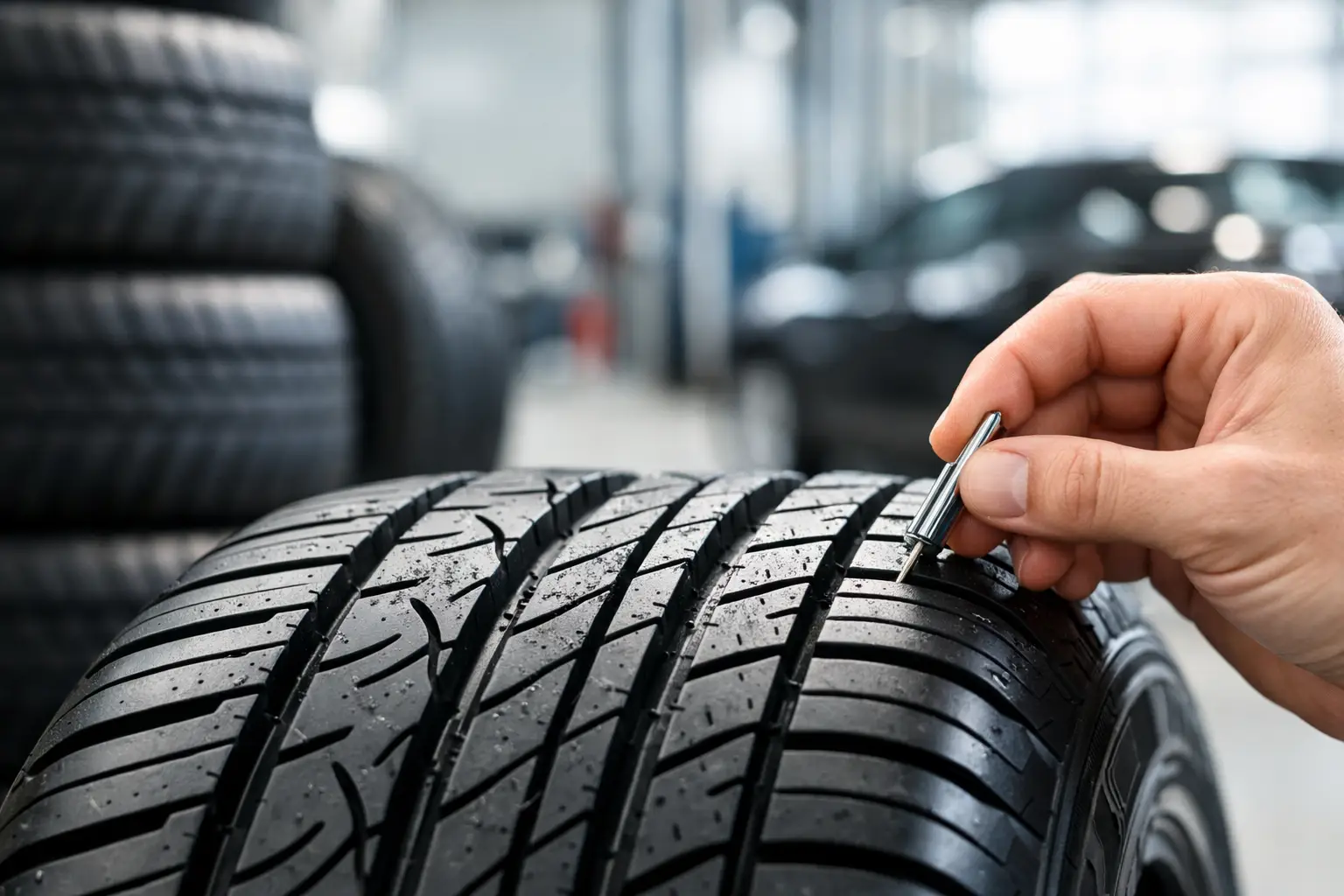
You usually only start asking what is the depth of new tyres when a fitter mentions tread readings, or when a nearly-new tyre looks quite different from the one beside it. It is a fair question, because the answer is not one fixed number. Most new road car tyres start with around 7mm to 8mm of tread depth, but that can vary by tyre type, brand, size and intended use.
That variation matters more than many drivers realise. Tread depth affects how a tyre clears water, how it wears over time, how it feels on the road and, in simple terms, how much useful life you are buying. If you are comparing budget, premium, SUV, van or performance tyres, tread depth is one of the details worth understanding properly rather than treating every new tyre as identical.
What is the depth of new tyres in real terms?
For most passenger cars in the UK, a brand-new tyre will often measure somewhere between 7mm and 8mm across the main grooves. Some may come in slightly above or below that. A high-performance summer tyre may not be the same as an all-season tyre, and a commercial tyre may be built with different priorities again.
The first point to keep clear is that new tyre tread depth is not the same thing as the legal minimum. In the UK, the legal minimum tread depth for cars is 1.6mm across the central three-quarters of the tyre, around the entire circumference. So if a new tyre starts at roughly 8mm, only a small part of its life is anywhere near that legal threshold. From a safety point of view, especially in wet weather, many specialists would advise replacing before you get close to 1.6mm.
A tyre can still be legal and yet be well past its best in standing water. That is why depth is not just a compliance figure. It is a performance figure too.
Why new tyre tread depth varies
If you line up several new tyres of the same nominal size, they may not all show exactly the same tread depth. That is not automatically a fault or a sign of lower quality. It often comes down to design.
Tyre category makes a difference
A touring tyre built for comfort and mileage may have a different tread depth from an ultra-high-performance tyre built for steering response and dry grip. A van or commercial tyre may be engineered for load carrying and durability, while an all-terrain or SUV pattern may have deeper blocks to suit mixed conditions.
There is always a trade-off. More tread can support longer wear and stronger water evacuation, but tread design, compound and carcass construction matter just as much. A tyre with slightly less starting depth is not necessarily the worse tyre. It may simply be aimed at a different kind of driving.
Brand design choices matter
Premium manufacturers spend a lot of time balancing wet grip, rolling resistance, noise and wear. Budget brands do the same, but often with different priorities. Two new tyres can both be safe and road legal while offering quite different starting depths and tread patterns.
That is one reason we always recommend comparing tyres as complete products rather than fixating on one number alone. Depth matters, but not in isolation.
How tread depth affects grip and safety
The clearest reason tread depth matters is wet weather performance. The grooves in the tyre are there to disperse water. As tread depth reduces, the tyre has less capacity to shift water away from the contact patch, which increases the risk of aquaplaning.
In dry conditions, a worn tyre may still feel reasonably acceptable to some drivers, which is why tread often gets ignored. Then heavy rain arrives and the difference becomes obvious very quickly. Braking distances can increase, steering confidence drops and the car can feel less settled on standing water.
This is why many drivers choose to replace around 3mm rather than running all the way down to 1.6mm. It depends on mileage, driving style and conditions, but if you regularly drive on fast roads in poor weather, that extra margin is worth paying attention to.
More tread is not the whole story
It would be easy to assume deeper always means better, but tyre compound and pattern design still play a major role. A poor tyre with generous tread depth may still underperform compared with a well-designed premium tyre with similar or even slightly lower depth.
That is particularly relevant on premium cars, performance models and heavier SUVs where tyre choice has a big effect on handling and braking. Correct fitment comes first, then tread design and quality, then price.
How to check the tread depth on a new tyre
If you want to know the actual depth of a new tyre before fitting, the simplest method is to measure it with a tread depth gauge. This gives a more useful answer than guessing by eye.
Place the gauge in one of the principal grooves and check more than one point across the tyre. On a truly new, unfitted tyre, readings should be consistent, though some patterns are intentionally shaped differently across the tread. If you are checking a fitted tyre that has only covered a short distance, make sure it has not already started to wear unevenly because of pressure or alignment issues.
You can also look for the tyre wear indicators moulded into the grooves. These do not tell you the original depth, but they do show where 1.6mm sits. Seeing how much tread stands above those bars gives a rough visual sense of what remains.
What is the depth of new tyres compared with part-worns?
This is where buyers often make a quick price comparison that does not tell the whole story. A part-worn tyre may be substantially cheaper up front, but the real value depends on its remaining tread, age, condition and brand.
If a new tyre starts around 7mm to 8mm and a part-worn has 4mm, you are not getting half a tyre. You are getting a tyre already much closer to the point where wet grip starts to fall away and replacement becomes sensible. That does not mean part-worns have no place. For some vehicles and budgets, they can be a practical option when sourced properly and checked carefully. But they should be assessed on usable life, not simply purchase price.
That is why measured tread depth matters so much when comparing options. Two tyres that look similar can offer very different value once you know the actual readings.
Does a deeper new tyre last longer?
Often, yes, but not automatically. Starting with more tread can mean more mileage before replacement, but wear rate depends on far more than the opening depth. Compound hardness, driving style, road surface, alignment, tyre pressures and vehicle weight all affect how quickly tread disappears.
A heavier electric SUV, for example, may wear tyres faster than a lighter hatchback even if both start with similar tread depth. Likewise, an enthusiastic driver on a powerful rear-wheel-drive car will rarely see the same tyre life as a careful motorway commuter.
The better question is not just how deep the tyre is when new, but how well it wears over time while maintaining grip and stability. That is where branded quality and correct fitment pay off.
When depth should influence your buying decision
Tread depth is worth considering when you are choosing between tyre categories, comparing new against part-worn, or trying to judge long-term value. It is especially relevant if your car covers high annual mileage or spends a lot of time on motorways in poor weather.
Still, it should sit alongside load rating, speed rating, vehicle compatibility, seasonal use and intended driving style. There is little value in choosing a tyre just because it starts with a little more tread if it is the wrong fitment or the wrong type for the vehicle.
For drivers who want the balance right, the best approach is to look at the full picture. Choose the correct size and specification first. Then compare quality, tread pattern, expected wear and actual use. A BMW, Audi, Range Rover or Porsche may all need a more considered choice than simply picking the cheapest legal option.
The practical answer most drivers need
So, what is the depth of new tyres? In most cases, expect roughly 7mm to 8mm, with some variation depending on the tyre. That figure gives you a useful benchmark, but it is not the only thing that determines safety, lifespan or value.
If you are replacing tyres, the smartest move is to use tread depth as one part of the decision rather than the whole decision. A properly matched tyre with the right specification, sound wet grip and the correct fitment for your vehicle will always serve you better than chasing one number in isolation.
If you are ever unsure whether a tyre is offering good value, ask for the actual tread reading and compare it with the tyre type, age and intended use. That simple question usually tells you far more than the price tag alone.