
What Wheels Fit My Car? A Clear Answer

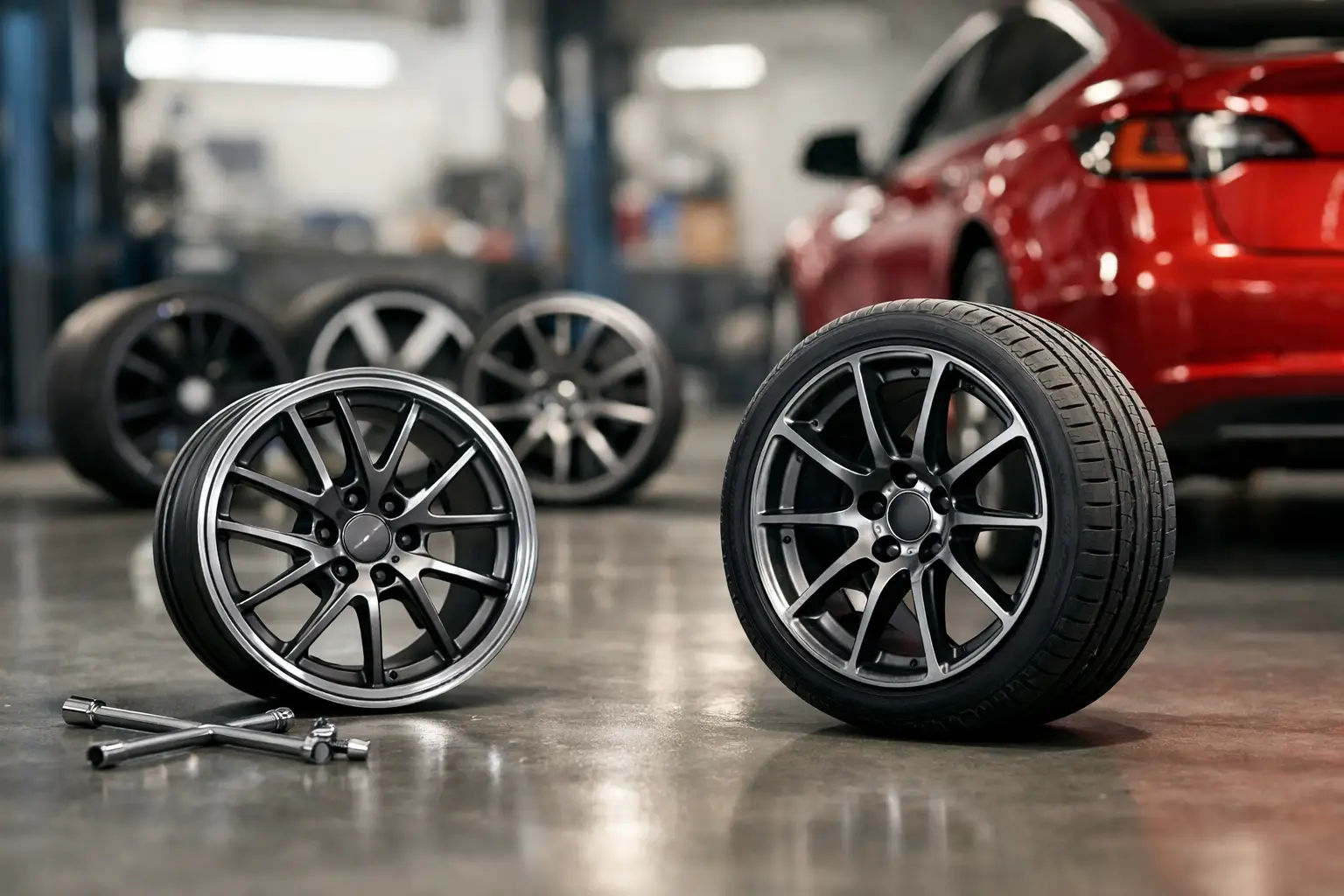
You do not find out what wheels fit my car by looking at the stud pattern alone. That is where plenty of costly mistakes start. A wheel can share the right bolt pattern and still rub the arch, catch the brake caliper, sit too far out, or fail to carry the vehicle safely.
If you are buying replacement alloys, upgrading the look of the car, or moving to a second set for winter or track use, fitment needs to be checked properly. The right wheel is a combination of diameter, width, offset, centre bore, PCD, brake clearance and load rating. Get all of those right and the car drives as it should. Get one wrong and you can end up with vibration, poor handling, tyre wear or a wheel that simply will not fit.
What wheels fit my car depends on more than size
Most drivers begin with the visible part – 17 inch, 18 inch, 19 inch and so on. Wheel diameter matters, but it is only one part of the answer. Width matters just as much. An 8J wheel and a 9.5J wheel may share the same diameter, but they will not sit the same way on the car and they will not suit the same tyre sizes.
Offset is another big one. This is the distance between the wheel’s mounting face and its centreline. Small changes in offset can move the wheel noticeably inward or outward. That affects suspension clearance, arch clearance and the way the car sits on the road. A wheel that looks close enough on paper can still be wrong if the offset is off.
Then there is PCD, or pitch circle diameter, which is the bolt pattern. A 5×112 wheel will not fit a 5×114.3 hub, and even very close measurements are not interchangeable. Centre bore matters too. If the centre bore is too small, the wheel will not go on. If it is larger, it may still fit with the correct spigot rings, but that needs checking rather than guessing.
The key measurements to check
If you want a straight answer to what wheels fit my car, these are the measurements that actually decide it.
Wheel diameter and width
Your current wheel size is a sensible starting point because the manufacturer has already balanced ride quality, handling and clearance. If you are staying with the same diameter and width, fitment is usually more straightforward. If you are changing either, tyre size and clearance both need to be reviewed.
Going wider can improve stance and grip, but it can also create issues on full lock or over bumps. Going larger in diameter can sharpen the look of the car, but lower-profile tyres may affect comfort and increase the risk of damage on poor roads.
PCD and stud pattern
This must match the vehicle exactly. Five-stud wheels are common, but that tells you nothing on its own. 5×112, 5×120 and 5×10⁸ are all different patterns. Premium marques in particular often have manufacturer-specific fitment details, so this is not an area for approximation.
Offset
Offset is often where aftermarket wheel choices go wrong. Too high, and the wheel may sit too far inward and foul suspension parts or brake components. Too low, and it may push out too far towards the arch. Even if it physically fits, the wrong offset can alter steering feel and place extra stress on components.
Centre bore
A hub-centric fit helps the wheel sit correctly on the hub. If the centre bore matches, ideal. If it is larger, spigot rings may be used depending on the setup. If it is smaller, the wheel is not suitable.
Brake clearance
This is especially important on performance models and larger brake packages. A wheel may match all the basic dimensions and still not clear the front calipers. Wheel design plays a part here, not just size. Two 19 inch wheels with the same width and offset can have very different spoke profiles and barrel shapes.
Load rating
This tends to be overlooked, but it matters. The wheel must be rated appropriately for the vehicle. Heavier cars such as SUVs, estates and vans place greater demands on wheels than lighter hatchbacks. A wheel that fits physically is not enough if it is not up to the job.
How to check your current wheel fitment
The easiest place to start is with the wheel already on the car. Many wheels have sizing details cast or stamped on the back, including diameter, width, offset and sometimes PCD. Your tyre size can also give clues about what the wheel is likely to be, though it does not tell the full story.
The vehicle handbook may list approved wheel and tyre combinations. A manufacturer plate, service data, or existing order paperwork can also help. If the car has been modified by a previous owner, though, do not assume what is fitted now is the original or correct spec.
VIN-based fitment checks are useful, especially for newer models with multiple factory wheel options. They help narrow down compatible sizes, but a proper check should still consider brake setup, trim level and whether the car has been lowered or otherwise modified.
OEM fitment vs aftermarket fitment
There is a difference between wheels that match original manufacturer specification and wheels that are safely compatible in the aftermarket.
OEM fitment usually keeps things simple. The wheel is designed for the vehicle, so load rating, brake clearance and geometry are already accounted for. That makes OEM-style replacement wheels a good option for drivers who want a straightforward result without changing the way the car feels.
Aftermarket fitment gives you more choice on style, finish and size, but it needs more care. There is often more than one workable setup for the same car. That is where the answer becomes it depends. If you want a flush look, you may choose a different width and offset than someone who wants a winter wheel setup or a factory-style replacement. Both can be correct if the numbers are right.
Common mistakes when asking what wheels fit my car
The most common mistake is assuming all wheels from the same brand family fit across multiple models. For example, not every BMW wheel fits every BMW, and the same goes for Audi, Mercedes and Porsche. Bolt pattern, centre bore, offset and brake clearance can vary a lot.
Another mistake is focusing only on appearance. A wheel might look perfect in photos, but if the tyre choice becomes too stretched or the wheel sits outside the arch, you have a practical problem as well as a legal one.
Using universal fitment claims without checking the exact vehicle is another risk. Terms like fits most cars or should fit your model are not enough when you are spending serious money on wheels and tyres.
Finally, many buyers ignore whether they need new bolts, nuts, spigot rings or TPMS compatibility. Those details are not exciting, but they matter when it is time to install the wheels properly.
What if you want to change wheel size?
Upsizing or downsizing can work well, but the tyre size must be adjusted so the overall rolling radius stays close to standard. If it changes too much, speedometer readings, gearing and electronic systems can be affected.
Larger wheels often improve appearance and steering response, but they usually come with lower-profile tyres, which can make the ride firmer. Smaller wheels can improve comfort and are often useful for winter setups, but they still need to clear the brakes.
This is why wheel fitment is never just about what physically bolts on. It has to suit the vehicle, the tyre, the intended use and the kind of driving you actually do.
The safest way to get the right answer
If you are buying wheels for a daily driver, a prestige car, or something performance-focused, the safest route is to match the wheel to the exact vehicle details rather than relying on guesswork. Registration checks, OE references and experienced fitment advice save far more time than trial and error.
At The Tyre Barn, this is where specialist stock and workshop experience make a real difference. When a supplier understands manufacturer fitments, brake clearance issues and practical installation, you are less likely to buy a wheel that looks right online but causes problems once it arrives.
If you are local to Dorset, having wheels supplied and fitted in one place can remove another layer of uncertainty. If you are buying for delivery, accurate fitment advice matters even more, because returns on wrongly chosen wheels are a hassle no one needs.
The short version is this: the right wheel for your car is the one that matches every key measurement, clears the brakes, supports the vehicle properly and works with the tyre size you intend to run. If you are unsure, pause before buying. A proper fitment check is always cheaper than correcting the wrong set after the fact.